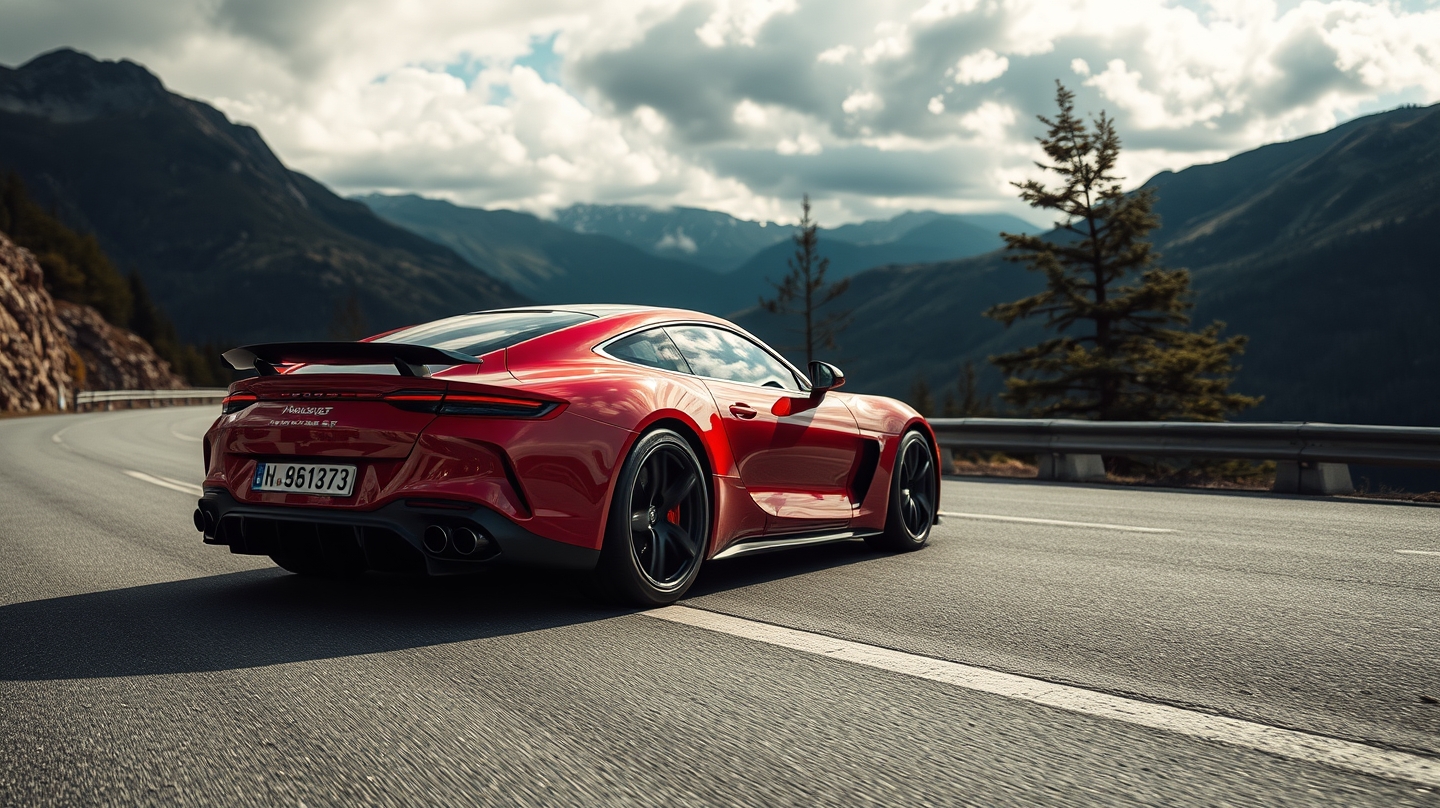
When Marc Philipp Gemballa first displayed the off‑road Marsien in 2024, the automotive world noted its rugged silhouette and raw power. Less than a year later, the firm has turned that concept on its head, delivering the Marsien GT – a road‑legal reinterpretation of the classic Porsche 959 built on a 992‑generation 911 Turbo S chassis. The result is a carbon‑fiber‑clad machine that produces 830 horsepower, carries an active aerodynamic package, and is limited to just 30 examples.
At first glance, the Marsien GT is a visual homage. Its body panels echo the angular lines of the 959, while the central hood‑mounted fuel cap and active rear wing reinforce the retro‑futurist theme. Beneath the surface, however, the car is a showcase of modern manufacturing automation. Gemballa’s workshop employs CNC‑milled molds for carbon‑fiber layup, robotic placement of pre‑impregnated sheets, and a closed‑loop curing process that reduces material waste by 15 percent compared with traditional hand‑built methods. The only components carried over from the original Marsien are the doors and roof, which now house an intercooler‑feeding scoop – a detail that required precise 3‑D scanning and digital twin validation before production.
The powertrain underscores the blend of heritage and technology. A twin‑turbocharged flat‑six, tuned by RUF, pushes 830 hp and 603 lb‑ft of torque. RUF’s engineers used advanced engine mapping software and automated dynamometer testing to extract the output while preserving reliability. According to Gemballa, a 0‑60 mph sprint can be achieved in 2.4 seconds, provided the car runs on Michelin Pilot Sport Cup 2 tires. The company hints at a future iteration exceeding 900 hp, which would likely involve further integration of AI‑driven calibration tools.
Beyond performance, the Marsien GT illustrates a shift in the ultra‑exclusive automotive market. Collectors who once chased the $2 million Porsche 959 now face a conversion price of $888,660, not including the donor 911 Turbo S. The limited run of 30 units creates scarcity, while the bespoke nature of the build appeals to buyers seeking a vehicle that blends classic aesthetics with contemporary engineering. For Porsche purists, the GT offers a legal avenue to experience 959‑style dynamics without compromising daily drivability.
From an industry perspective, the project highlights how automation is reshaping low‑volume, high‑value production. Traditional coachbuilding relied heavily on manual labor, limiting scalability and driving up costs. Gemballa’s adoption of digital workflow – from CAD modeling to robotic carbon‑fiber fabrication – reduces lead times and improves repeatability, setting a template that other niche manufacturers may emulate. This trend dovetails with broader technology adoption in automotive aftermarkets, where data‑driven design and automated assembly are becoming essential to meet the expectations of a tech‑savvy clientele.
Media coverage of such specialized vehicles also benefits from automation. Outlets like Car and Driver employ content management systems that ingest technical specifications directly from manufacturers’ data feeds, allowing journalists to focus on contextual analysis rather than data gathering. The result is faster publication of accurate, depth‑rich stories that satisfy both casual readers and informed enthusiasts.
Potential buyers must consider the full cost of ownership. The base conversion price excludes the donor 911 Turbo S, which can range from $150,000 to $250,000 depending on condition, and optional customizations – ranging from bespoke interior trims to performance‑oriented suspension upgrades – can add six figures. Nevertheless, the Marsien GT offers a unique proposition: a modern supercar that looks, feels, and performs like a 959, built with the precision of today’s automated manufacturing.
In summary, the Marsien GT is more than a stylistic exercise; it is a tangible example of how technology‑driven automation can revitalize classic automotive designs, create new market niches, and influence the way niche vehicles are reported. As the line between heritage and innovation continues to blur, projects like Gemballa’s may define the next chapter of collector car culture.




















