U.S. utilities are staring at a paradox: while artificial‑intelligence‑driven data centers are set to add roughly 125 GW of load over the next five years, the regulated utility sector is on track to deliver just 93 GW of accredited new capacity. The resulting shortfall—over 100 GW—has analysts at Bank of America warning of a looming reliability gap.
The bank’s latest outlook, built on projections from its semiconductor team, translates AI’s rapid adoption into a 4.1 % compound annual growth rate in electricity demand from 2026 through 2030. Historically, U.S. electricity consumption has been flat, thanks to efficiency gains, LED lighting, and distributed solar. AI‑intensive workloads, however, are reversing that trend, demanding power‑dense servers and specialized chips that consume far more energy than traditional cloud workloads.
Utilities have already nudged their demand forecasts upward for three consecutive years, reflecting the speed at which AI‑related load is materializing. Yet the pipeline for new, dispatchable generation is constrained. Large gas turbines—once the workhorse for flexible power—are largely booked through 2030, and the lead time from order to operation can span several years.
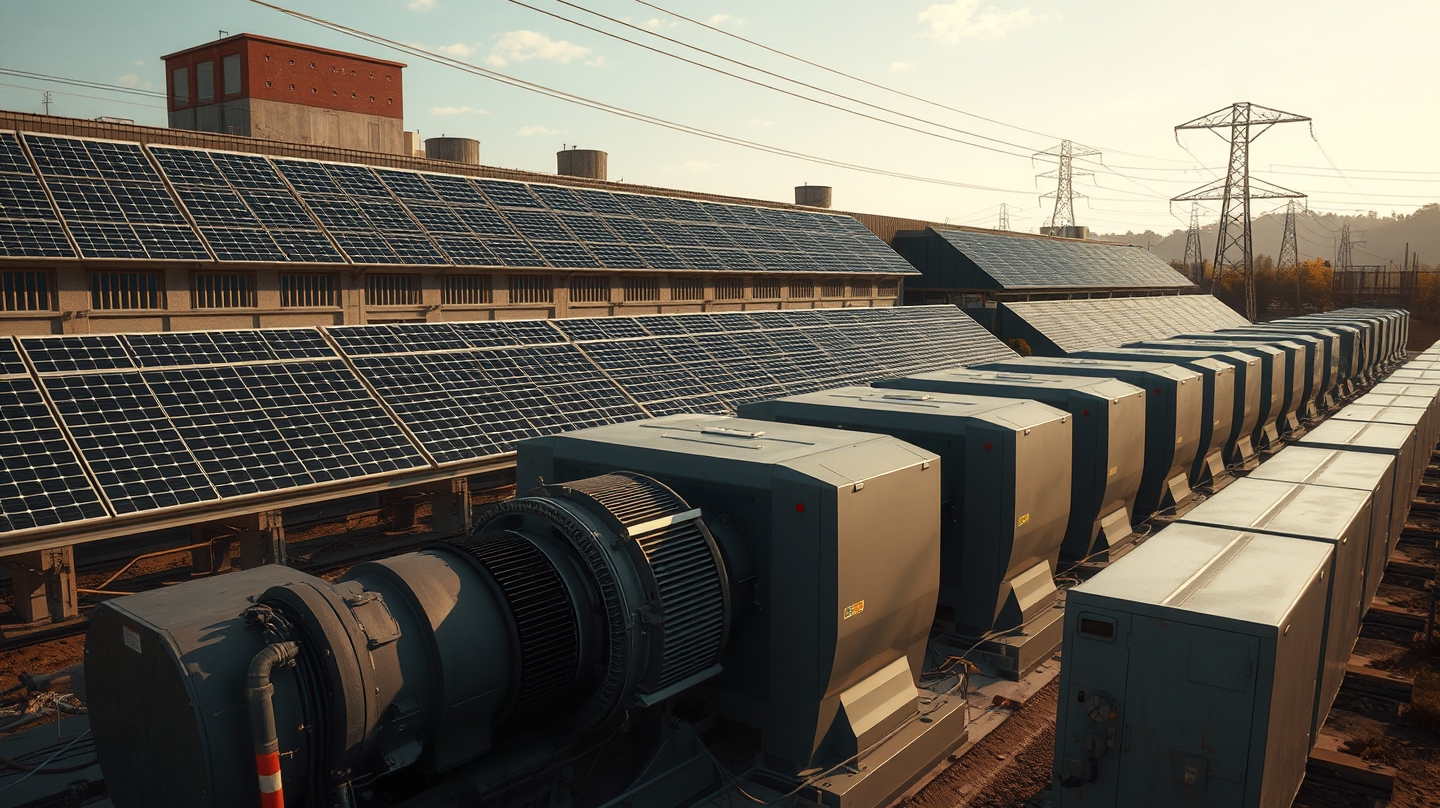
Faced with these constraints, data‑center developers are increasingly looking inward. More than 7.5 GW of projects with on‑site generation are under construction, and another 60 GW‑plus sit in pre‑construction phases. Rather than going fully off‑grid, developers plan hybrid configurations that pair behind‑the‑meter generation with grid connections, a strategy aimed at boosting reliability while shaving months off project timelines.
Because the traditional turbine market is saturated, the focus is shifting to natural‑gas reciprocating engines. Companies such as Caterpillar, INNIO, Rolls‑Royce and Wärtsilä have expanded production lines to meet the demand for engines that can be installed quickly and ramp up or down in response to AI‑driven load spikes. These engines, while smaller than utility‑scale turbines, offer the speed and flexibility that data centers need.
At the same time, utilities are extending the life of existing coal plants in states ranging from Maryland to Utah, postponing retirements to preserve dispatchable capacity. Battery storage, transmission upgrades, and regulatory tweaks that increase utilization of existing assets are also part of the response. The Champlain Hudson Power Express—a 16‑year‑long transmission project—illustrates how permitting and construction timelines can delay needed capacity.
The broader market implication is a shift toward a more fragmented generation landscape. Instead of a smooth transition to renewable‑only portfolios, the grid will likely see a mix of accelerated gas‑engine deployment, prolonged coal operation, and targeted battery installations. Investors may see new opportunities in mid‑size gas‑engine manufacturers, while regulators could face pressure to streamline transmission siting and to revisit capacity market rules.
For consumers, the most tangible impact could be higher electricity rates, especially in regions where data‑center clusters grow fastest, such as the Pacific Northwest and the Southeast. Grid operators will also need to manage tighter operating reserves, which could affect reliability metrics and trigger new demand‑response programs.
In short, AI is not just reshaping computing—it is redefining the electricity supply chain. The gap highlighted by Bank of America forces utilities, developers, and policymakers to rethink long‑standing assumptions about how quickly new capacity can be brought online and what technology mix will sustain the grid through the AI‑driven decade ahead.




















