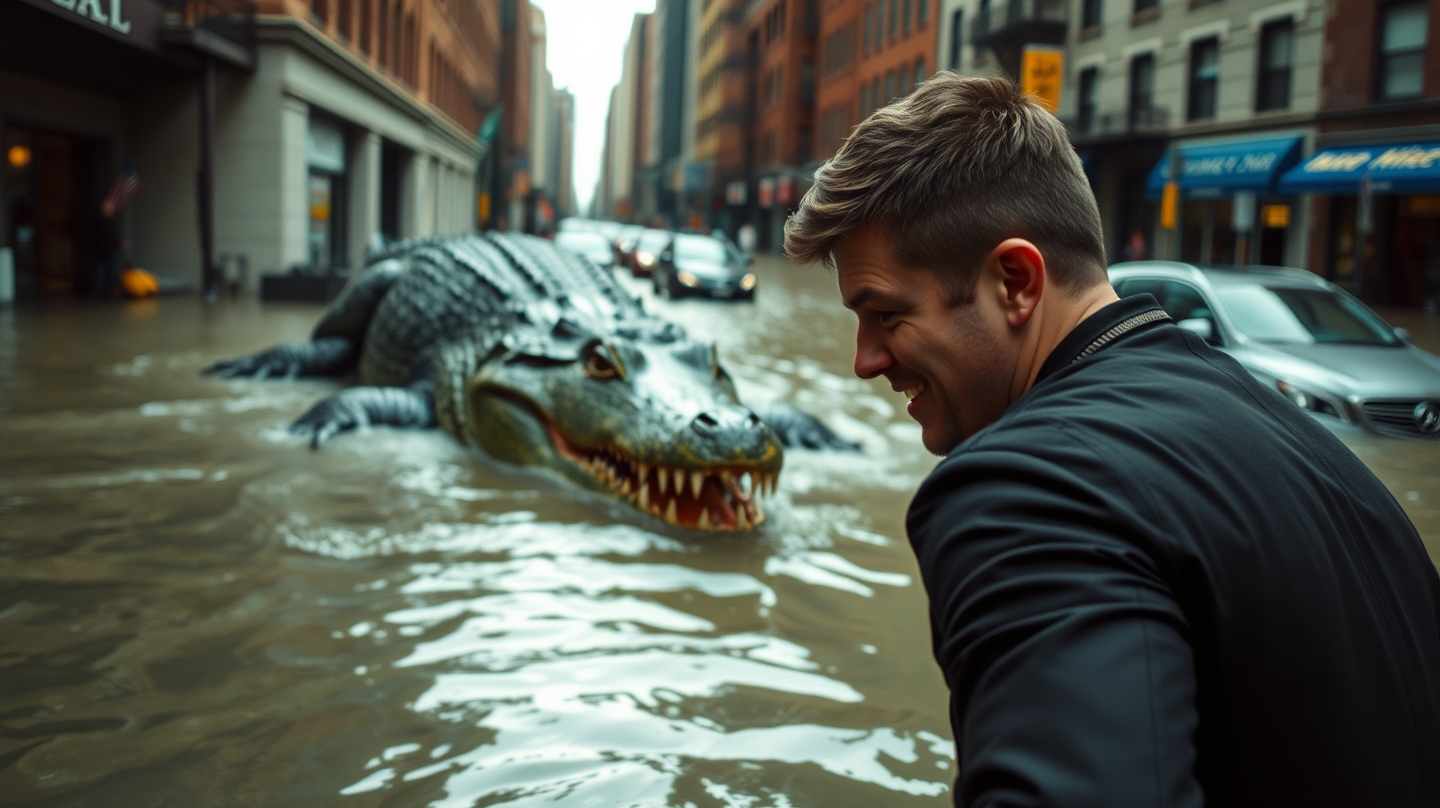
When a Category 5 storm turned a Florida home into a death trap in 2019, audiences cheered the gritty survival thriller Crawl. Now the same relentless gators are set to stalk the streets of New York City, as Paramount Pictures greenlights a sequel starring Mason Gooding and Emily Rudd, with director Alexandre Aja returning to the helm.
The sequel, slated to begin production in Hungary later this month, moves the action from swamps to subway tunnels and flooded avenues. Gooding, fresh from Netflix’s Hours and the cult‑favorite Scream franchise, will lead a new duo navigating a post‑hurricane Manhattan. Rudd, known for Netflix’s record‑breaking One Piece live‑action adaptation, joins as the female lead. The screenplay, co‑written by Jason Harry Pagan, Andrew Deutschman, and Aja, adds Gregory Levasseur as a producer and Zainab Azizi as executive producer.
The original film proved a low‑budget powerhouse, grossing $91.5 million worldwide on a sub‑$14 million budget. Its profitability demonstrated that modestly budgeted horror can outpace big‑budget blockbusters, especially when streaming platforms amplify word‑of‑mouth buzz. Paramount’s decision to revisit the franchise reflects a broader industry trend: leveraging proven IP to feed both theatrical windows and digital distribution pipelines.
Beyond the shift in geography, the sequel marks a technological turning point. Production will employ a hybrid workflow that blends on‑location shooting with virtual‑production stages, allowing VFX teams to map gator movements in real time. Automation tools powered by AI are slated to streamline rotoscoping and water‑simulation, cutting post‑production time by an estimated 20 percent. This workflow transformation mirrors a larger migration toward technology‑driven pipelines that reduce costs while preserving cinematic scale.
Equally significant is the talent pipeline that bridges traditional cinema and streaming giants. Gooding’s recent work with Netflix and Rudd’s starring roles on Netflix and Amazon‑produced series illustrate how studios are courting actors whose fan bases live primarily on digital platforms. The sequel’s eventual release strategy is expected to be a hybrid window—limited theatrical run followed by a rapid rollout on Paramount+, with ancillary licensing to Netflix and Amazon Prime in international markets. This approach underscores the ongoing transition from legacy theatrical‑first models to digital‑first distribution.
For the industry, the project serves as a case study in how studios can repurpose successful, low‑budget concepts with modern production efficiencies. Automation reduces the need for large on‑set crews, while virtual production lowers location costs—a boon for productions filming in tax‑friendly hubs like Hungary. Meanwhile, the involvement of streaming‑savvy talent ensures built‑in audience reach, driving subscription growth for platforms that eventually host the film.
On the ground, the sequel’s production promises economic spillover for Hungarian studios, which have become a hotspot for VFX and virtual‑production work. Local crews gain exposure to AI‑assisted pipelines, potentially reshaping the regional job market. For viewers, the shift signals more genre‑focused content arriving first on streaming services, shortening the gap between theatrical hype and home‑viewing.
As Hollywood continues to balance box‑office ambition with the efficiencies of digital workflows, the new Crawl installment illustrates how a modest horror franchise can evolve into a technologically sophisticated, cross‑platform property—one that keeps audiences on edge while keeping studios on budget.




















