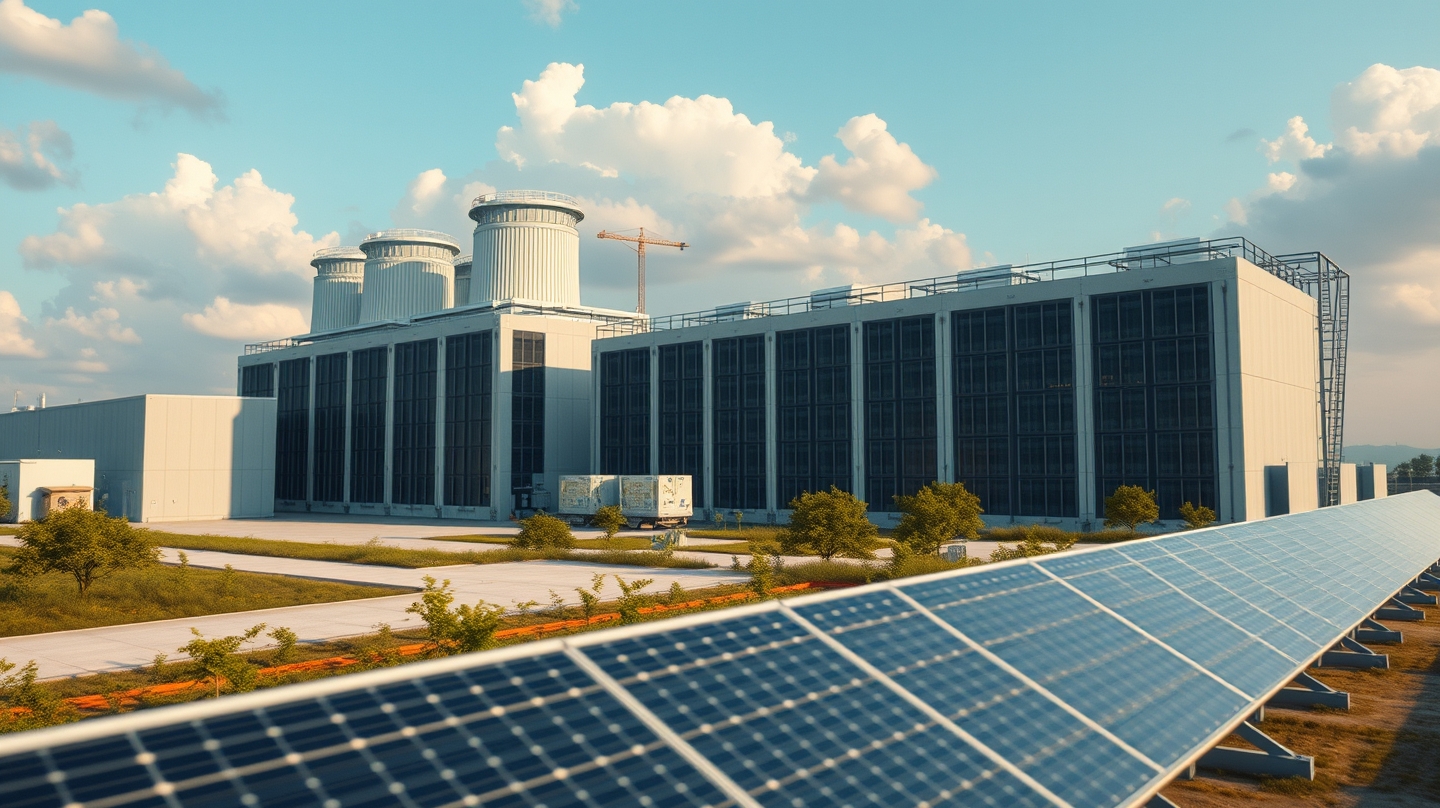
Policymakers and community leaders are confronting a stark paradox: the digital services that power modern life are driving a surge in electricity and water consumption that could outstrip regional resources. A Kansas Health Institute (KHI) study released this week estimates U.S. data centers used 183 terawatt‑hours (TWh) of electricity in 2024—just over 4% of national demand—and projects a 133% jump to 426 TWh by 2030.
Water use tells a parallel story. In 2023, data centers drew roughly 17 billion gallons of water for cooling and other processes. The KHI model, which incorporates scenarios from Lawrence Berkeley National Laboratory, suggests that consumption could double or even quadruple by 2028, depending on technology adoption and climate conditions.
These figures are more than abstract statistics; they translate into concrete challenges for local communities. Five years ago, one‑fifth of U.S. data centers already sat in regions classified as experiencing water stress. As the footprint expands, the risk of exacerbating drought conditions and straining municipal supplies grows, prompting a wave of local opposition.
"The analysis is intended to give policymakers, public‑health professionals and communities objective information," said Emma Uridge, KHI analyst and lead author. "Only with clear data can decisions balance economic benefits with health and environmental safety."
Energy composition deepens the concern. Today, 56% of the power feeding data centers comes from fossil fuels, 22% from renewables, and 21% from nuclear sources. The report links this mix to delayed coal‑plant retirements and slower progress toward clean‑energy targets, noting that renewable capacity alone cannot meet the projected load of hyperscale facilities.
Financial analysts at Bank of America echo the supply‑side strain. Their forecast calls for more than 230 GW of new generating capacity in the United States over the next five years, yet regulated utilities are slated to add only about 93 GW. The shortfall—exceeding 100 GW—means data centers could alone contribute roughly 125 GW of electric load by 2031, intensifying competition for limited generation.
State and local governments are already responding. New York became the first state to impose a one‑year moratorium on new data‑center construction, citing the need to assess environmental impacts. Across the country, zoning boards and planning commissions are tightening permitting standards, often after community groups raise concerns about heat islands, water withdrawals, and noise.
These policy moves illustrate a broader tension: states aim to attract high‑tech investment and jobs, while municipalities prioritize resident health and resource sustainability. The KHI report finds that most state‑level actions focus on energy reporting and rate‑payer protections, whereas local authorities are more likely to intervene on land‑use and water‑use permits.
For the technology sector, the implications are twofold. First, developers must factor energy efficiency and water‑recycling technologies into design to stay viable in stricter regulatory climates. Second, the pressure may accelerate adoption of alternative cooling methods—such as liquid immersion or AI‑optimized workload distribution—that reduce reliance on traditional water‑intensive chillers.
In the longer view, the data‑center surge could reshape national infrastructure planning. Grid operators may need to prioritize flexible, low‑carbon generation sources near major hubs, while water agencies could integrate digital‑infrastructure demand into drought‑management models. The convergence of digital growth with climate resilience planning is likely to become a defining feature of U.S. policy over the next decade.




















