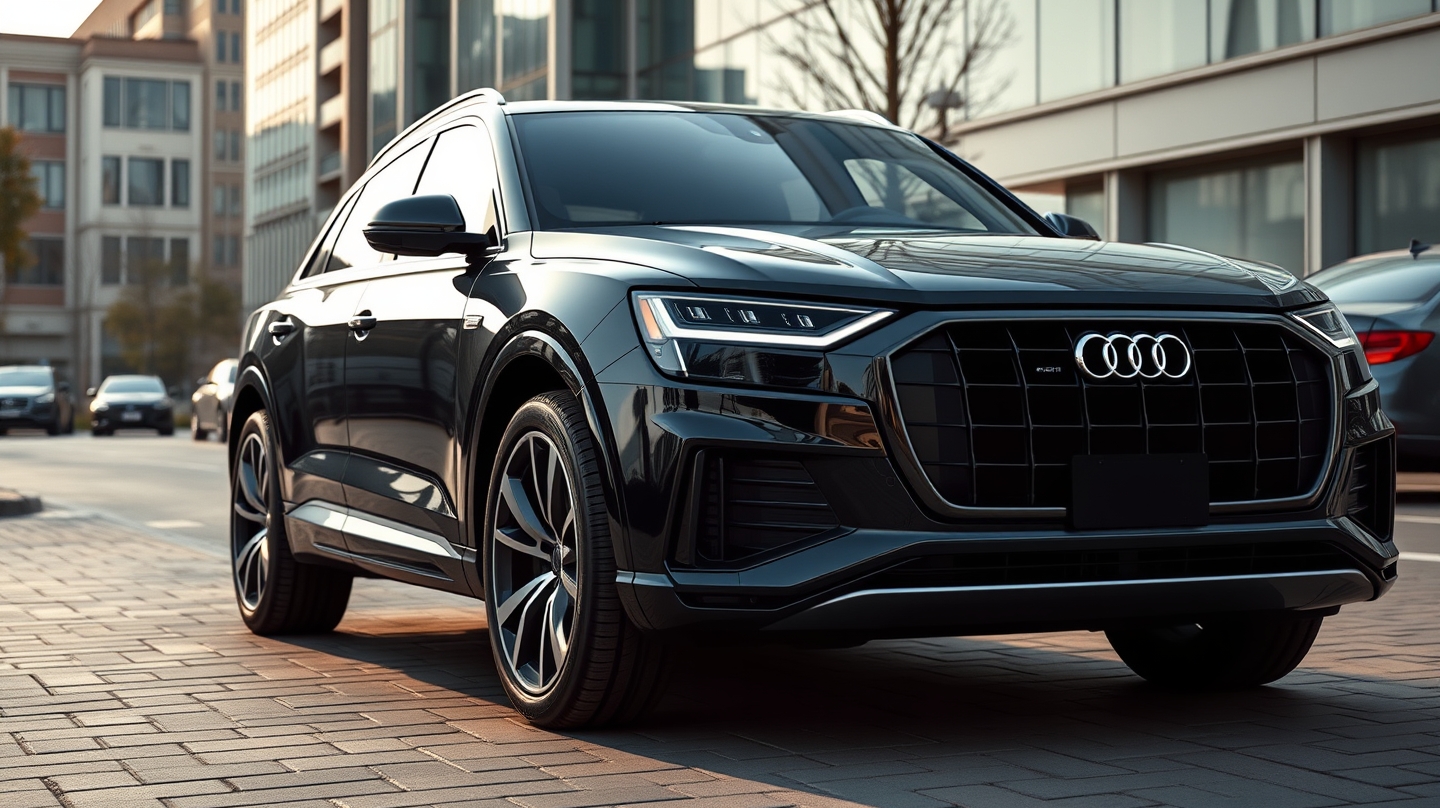
When Audi announced the 2027 Q9, the surprise wasn’t just that the German marque finally entered the full‑size SUV arena—it was the depth of automation baked into every chassis, screen and steering column.
The Q9 rides on the same platform as the newer Q7 but adds a longer wheelbase, higher roofline and a 2.9‑liter turbocharged V‑6 that delivers 429 horsepower through an eight‑speed automatic. All‑wheel drive is standard, and an air‑spring suspension with adaptive damping can be raised or lowered at the push of a button. A rear‑wheel‑steering system, reserved for higher trims, turns the rear wheels up to five degrees, sharpening maneuverability in tight city streets.
Beyond raw power, the Q9 showcases a digital cockpit that signals Audi’s broader push toward technology‑driven automation. A 14.5‑inch central touchscreen, a secondary 12‑inch display for the driver, and a fully digital instrument cluster are all powered by a unified software architecture that supports over‑the‑air updates. The infotainment suite integrates three smartphone charging pads, voice‑activated controls and a suite of driver‑assistance algorithms that learn from daily routes to suggest optimal climate settings, adaptive cruise speeds and even parking maneuvers.
This architecture is more than a convenience feature; it reflects a growing trend where automotive manufacturers treat vehicles as rolling data centers. By standardising software layers across the Q9’s powertrain, suspension and infotainment, Audi can push firmware upgrades that improve fuel efficiency, refine torque vectoring or add new media services without a dealer visit. The move mirrors automation trends in other tech‑heavy industries, where workflow transformation is achieved through continuous, remote software deployment.
Performance figures place the Q9 solidly among its peers. Audi claims a 0‑60 mph time of 4.9 seconds—quick for a vehicle of its size, though still a beat behind the BMW X7 xDrive40i’s 4.6 seconds. The Q9’s towing capacity tops out at 7,700 pounds, edging out the X7’s 7,500 pounds and sitting just shy of the Cadillac Escalade’s 8,100 pounds. These numbers suggest Audi is targeting buyers who need utility without sacrificing the high‑tech cabin experience.
Inside, the three‑row layout can accommodate up to seven passengers, with optional captain’s chairs in the second row reducing capacity to six for added comfort. Premium materials such as wood trim and alpaca‑wool upholstery sit beneath a panoramic sunroof that can dim in sections and automatically turn opaque when the vehicle is parked. Climate‑control vents, heated and ventilated seats, and ambient lighting are all controllable via the touchscreen, reinforcing the Q9’s identity as a mobile living room.
From an industry perspective, the Q9’s heavy reliance on software and sensor fusion signals a shift in how luxury SUVs are engineered. Automation‑driven design tools allow Audi to iterate chassis geometry and electronic control strategies faster than traditional mechanical prototyping would permit. Moreover, the vehicle’s infotainment platform opens a new channel for media companies to deliver content directly to passengers, effectively turning the cabin into a personalized broadcast environment.
Consumers who gravitate toward the Q9 are likely to be early adopters of connected services—streaming high‑definition video, participating in immersive AR navigation, or using the vehicle as a remote office. As these use cases expand, the automotive supply chain will see increased demand for high‑bandwidth antennas, edge‑computing modules and AI‑powered content recommendation engines, echoing automation trends seen in cloud‑based media infrastructure.
In short, the 2027 Audi Q9 is more than a new entrant in the luxury SUV market; it is a testbed for the automation and workflow transformations that are reshaping both automotive manufacturing and in‑car media delivery. Its success could accelerate the industry’s move toward vehicles that are as much software platforms as they are mechanical machines.




















