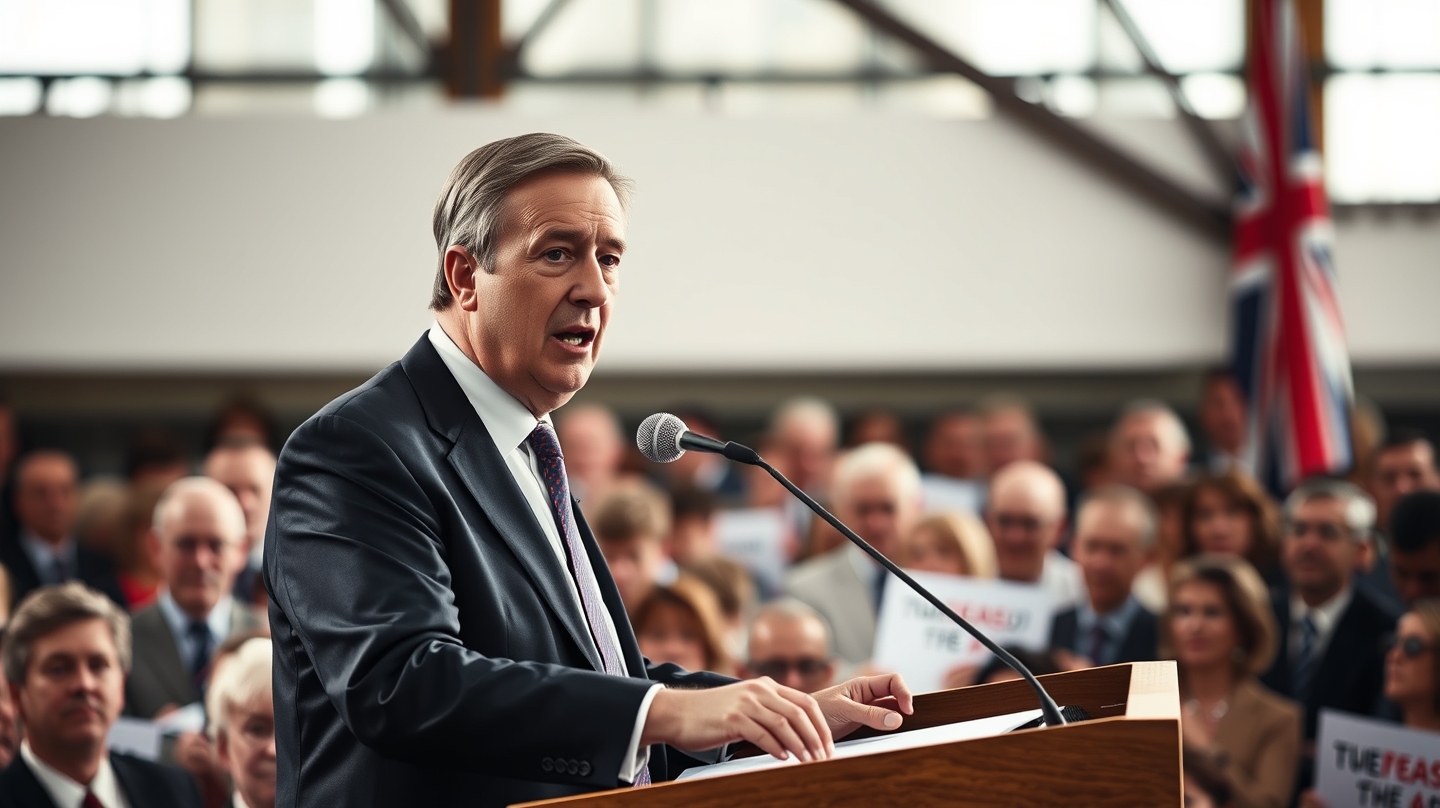
When an MP dies or is forced out, a by‑election is called; when a sitting member with a comfortable majority voluntarily resigns, the reaction is bewilderment. This week, Reform UK leader Nigel Farage announced he will vacate his Clacton seat, a decision that appears designed to let voters judge a series of undisclosed donations rather than let the media set the narrative.
Farage’s resignation follows two high‑profile investigations. First, The Sunday Times revealed that he received a £5 million gift from cryptocurrency investor Christopher Harborne before the 2024 election, a sum he did not list in the parliamentary register of financial interests. Second, the same outlet reported that George Cottrell – a former political aide convicted of wire fraud in the United States – paid for security staff, social‑media support and even a Buckingham‑Palace‑adjacent property for Farage during the campaign. Both donors were long‑standing allies of the Reform Party.
In a video statement, Farage insisted he had “done nothing wrong” and framed the by‑election as a direct appeal to constituents: “If you want to stick two fingers up to the establishment, vote for me again.” He also accused opposition parties of weaponising parliamentary investigations, calling them a “political tool.”
The procedural aspect is noteworthy. By‑elections are normally triggered by death, resignation, or disqualification. An MP voluntarily stepping down while holding an 8,000‑vote majority is rare; the last comparable case was in 1997 when a Labour MP resigned to force a test of the newly introduced “all‑postal” voting system. Farage’s move pushes the boundaries of electoral convention and forces the House of Commons to confirm the date – Reform UK has suggested Thursday, 6 August, but the formal motion is still pending.
What makes the contest unusual is the near‑absence of major party challengers. Labour, the Conservatives, the Liberal Democrats, the Greens and the newly formed Restore Britain have all pledged not to field candidates, branding the election a “gimmick” and a “circus.” The field is likely to consist of independents, including comedian Jon Harvey, who habitually runs under the moniker “Count Binface.” This creates a de‑facto referendum on Farage’s personal brand rather than a traditional party‑politics battle.
Financially, the by‑election could cost taxpayers up to £150,000 for staffing, polling stations and security – a sum Farage’s party has offered to cover, though Downing Street has clarified that election expenses must be borne by the public purse. The precedent of a candidate funding a by‑election could invite future attempts to sidestep campaign‑finance rules, prompting the standards commissioner to consider tighter safeguards.
Beyond the immediate drama, the episode highlights a broader market reaction: investors and donors are watching how the UK’s parliamentary standards system handles high‑value, undisclosed gifts. The ongoing inquiry into Harborne’s £5 million contribution may influence future donor‑screening practices across the financial services sector, especially for cryptocurrency‑linked assets that remain opaque to regulators.
Institutionally, the case could accelerate reforms already on the agenda. Labour’s recent proposals to lower the donation threshold, extend voting rights to 16‑ and 17‑year‑olds and tighten the register of interests are now being debated in the shadow of a real‑world test. If Farage is re‑elected, it could embolden other MPs to use by‑elections as a platform for personal vindication, challenging the long‑standing convention that by‑elections are a mechanism of democratic continuity rather than personal publicity.
For voters in Clacton, the decision will be practical as well as symbolic. A victory for Farage would keep Reform UK in the Commons, preserving its single‑seat influence on debates about Brexit‑related trade, immigration and financial regulation. A loss, however, could marginalise the party and signal that the electorate is unwilling to overlook alleged financial improprieties.
In sum, Farage’s resignation is less a personal crisis than a calculated gamble that pits procedural rarity against media scrutiny, donor transparency against party loyalty, and taxpayer cost against democratic choice. How the by‑election unfolds will offer a rare glimpse into the resilience of UK parliamentary norms when confronted with modern finance‑driven politics.




















