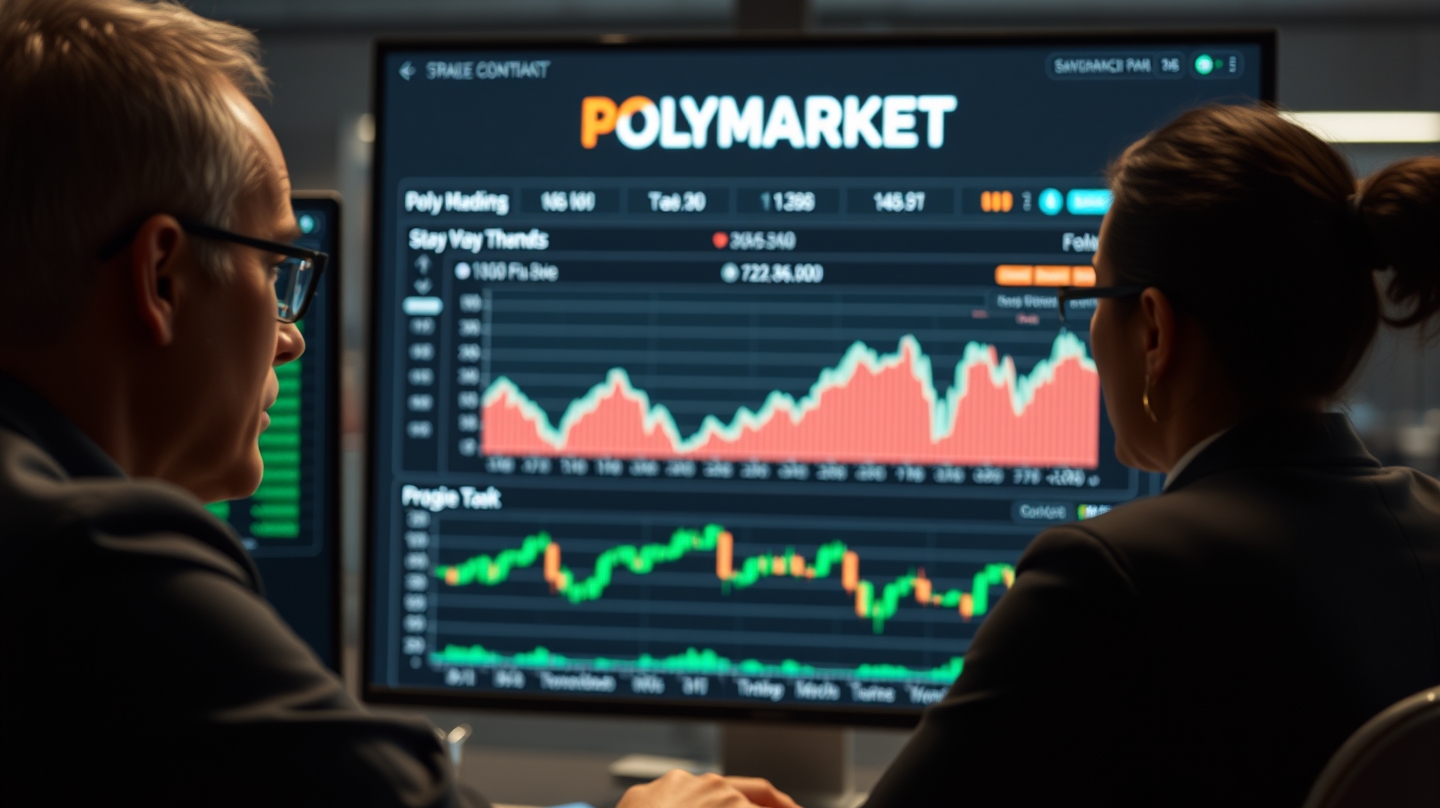
Polymarket, the crypto‑focused prediction‑market platform that withdrew from the United States in 2022, has filed a fresh request that could let American users trade on margin – a move that pits the company against both regulators and a rapidly expanding class of institutional investors.
The application, submitted by Polymarket’s U.S. affiliate Coming Home GBA LLC, asks the National Futures Association for a futures commission merchant license and anticipates a rule‑book amendment from the Commodity Futures Trading Commission (CFTC). If approved, users would be able to open positions with only a fraction of the capital normally required, mirroring the leverage tools long used in equities and futures markets.
Polymarket’s request follows a similar clearance granted to rival Kalshi in March, marking the second major prediction‑market operator to pursue leveraged trading in the United States. Both platforms allow participants to place binary wagers on outcomes ranging from weather events to political races, effectively turning collective knowledge into tradable contracts.
The timing is notable. Volume on U.S. prediction‑market platforms hit $51 billion in 2025 and Bloomberg estimates the sector could approach $240 billion by 2026. Wall Street broker Bernstein projects the market could reach $1 trillion by 2030, arguing that the space is evolving from niche wagering into broader “information markets.” Margin trading is the logical next step for that evolution, offering deeper liquidity and attracting capital that prefers higher‑risk, higher‑return strategies.
From a regulatory perspective, the move revives a delicate balance. In 2022 Polymarket settled with the CFTC for $1.4 million after the agency alleged the platform offered unregistered event‑based derivatives. The new application is accompanied by a public‑relations push aimed at policymakers, regulators, and potential users, emphasizing compliance and consumer protection. If the CFTC grants the needed amendment, it would signal a shift toward a more permissive stance on leveraged prediction contracts, potentially setting a precedent for other fintech innovators.
Institutional impact could be significant. Asset managers that have already begun allocating modest exposure to prediction markets may view margin capability as a way to amplify returns without scaling outright capital commitments. Moreover, the ability to hedge or speculate on macro‑economic events through binary contracts could complement existing strategies in futures and options desks, blurring the line between traditional derivatives and crowd‑sourced information products.
Real‑world implications are already emerging. A hedge fund that previously used Polymarket’s spot contracts to gauge election sentiment could now employ leveraged positions to double exposure during a tight race, altering risk‑return calculations. Likewise, sports‑betting firms may integrate margin‑enabled prediction contracts into their product suites, offering bettors a new class of financial instruments tied to game outcomes.
Structural insight: the push for margin trading reflects a broader market‑structure trend where platforms seek to monetize not just the underlying event data but also the financing mechanisms that enable larger, more frequent trades. This mirrors the evolution of crypto exchanges that added lending and futures products to capture additional fee streams.
Nevertheless, the path forward is not guaranteed. The CFTC’s review will focus on whether leveraged positions increase systemic risk, especially given the binary nature of the contracts and the potential for rapid, correlated losses. Critics warn that margin could amplify speculative bubbles, echoing concerns raised during the 2008 derivatives crisis.
For users, the immediate question is whether the convenience of lower upfront capital outweighs the heightened risk of margin calls. For regulators, the decision will test the agency’s ability to adapt existing futures oversight to a novel, information‑driven product class.
Polymarket’s application therefore sits at the intersection of technology‑driven automation, evolving regulatory frameworks, and a market hungry for new ways to price uncertainty. Its outcome will likely influence how quickly prediction markets transition from a hobbyist niche to a mainstream component of institutional portfolios.




















