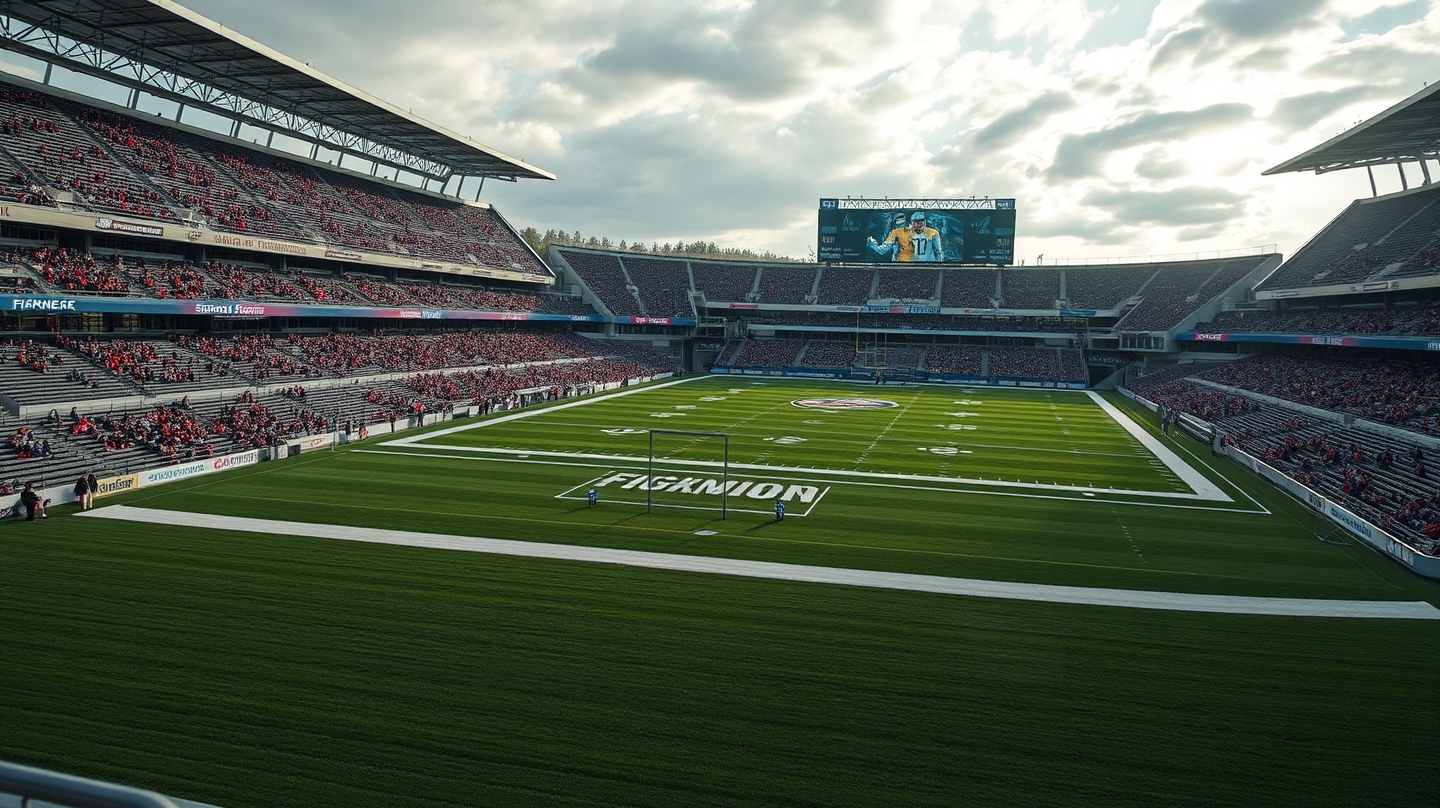
The wait is over for Buffalo Bills fans as the team's new home, Highmark Stadium, is now open for business. The $2.1 billion stadium, delivered by a Gilbane-Turner joint venture, represents a major milestone in the history of Western New York and the NFL.
With its 60,108-seat capacity and 360-degree canopy, Highmark Stadium is an engineering marvel that boasts some of the most advanced technology in the sports world. The stadium's design and construction were made possible by the collaboration of thousands of workers, who logged over 5 million labor hours to bring the project to life.
One of the key features of the stadium is its emphasis on fan experience, with heated concourses, radiant heating above some seats, and a state-of-the-art snow-melt system that will keep the stadium safe and accessible even in the harsh Buffalo winters.
The project's completion is also a victory for diversity and inclusion, as the team met its minority- and women-owned business contracting goals, paying over $490 million to MWBE participants and over $250 million to regional, Western New York MWBE firms.
The stadium's opening is not just a significant event for the Buffalo Bills, but also a testament to the power of technology-driven automation and workflow transformation in the construction industry. The use of advanced technologies such as building information modeling (BIM) and modular construction enabled the team to deliver the project on time and within budget.
As the NFL continues to evolve and embrace new technologies, Highmark Stadium is poised to be a model for future stadium construction projects. With its cutting-edge design and state-of-the-art amenities, the stadium is sure to provide an unparalleled experience for fans and players alike.
The next major NFL stadium project on the horizon is the $2.1 billion Nissan Stadium in Nashville, Tennessee, which is expected to be completed in February 2027. As the construction industry continues to adopt new technologies and workflows, it will be exciting to see how these advancements shape the future of sports venues and the fan experience.




















