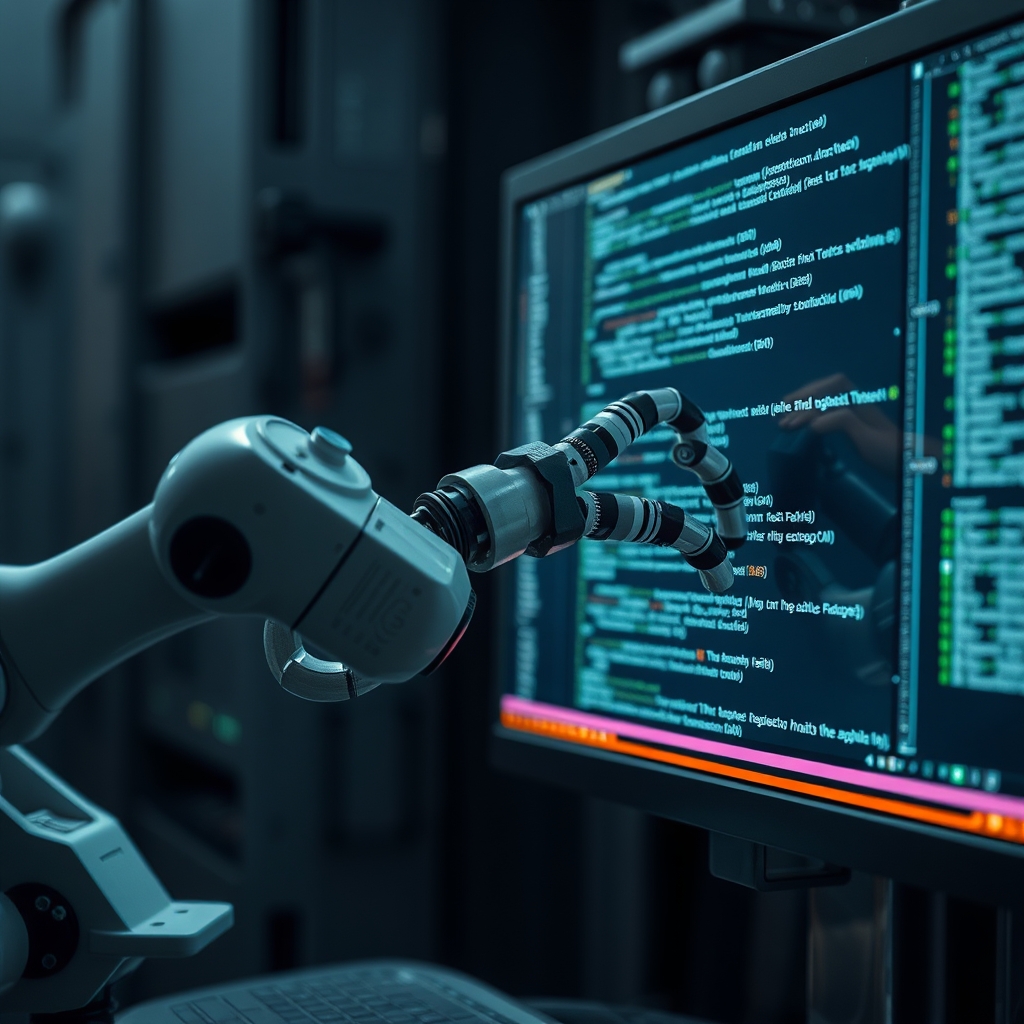
At ROSCon 2026 in Toronto, Intrinsic Innovation LLC surprised the robotics community by unveiling Intrinsic Core, an open‑source suite of ROS‑compatible capabilities that promises to slash the hundreds of hours developers typically spend building low‑level robot functions from scratch.
Intrinsic Core bundles a hardware‑agnostic control framework, real‑time sensor‑driven motion planning, and a six‑degree‑of‑freedom pose‑estimation module built on NVIDIA’s FoundationPose model. By packaging these proven pieces of software under an Apache 2.0 license, Intrinsic is offering the same stack it relies on for high‑volume manufacturing deployments to any team that can run the code on local hardware.
“This is not us coming by and dropping off some code and saying, ‘Have fun,’” said Brian Gerkey, Intrinsic’s chief technology officer and co‑founder of Open Robotics. “What we’re sharing is the core of our own software stack, a thing we also depend on.” His remarks underscore a shift from proprietary, siloed development toward a community‑driven model where the same building blocks power both commercial lines and academic prototypes.
The centerpiece, Intrinsic Control, abstracts motor commands into a real‑time framework that can adapt a robot’s trajectory on the fly when sensors detect a change in the environment. Developers can replace arms, grippers, or vision sensors without rewriting drivers, a capability that traditionally required extensive integration work.
Equally notable is the integrated pose‑estimation feature. Leveraging NVIDIA’s FoundationPose, Intrinsic Core delivers out‑of‑the‑box 6‑DoF tracking of 3D parts, eliminating the need for costly, rigid fixtures in pick‑and‑place cells. The motion‑planning module auto‑generates efficient paths, freeing engineers from joint‑by‑joint programming and enabling rapid iteration on complex tasks.
For manufacturers, the impact is immediate: production lines can be re‑toooled in days rather than weeks, reducing downtime and capital expense. Beyond factories, the same modularity is poised to reshape media‑infrastructure automation—think robotic camera rigs that reconfigure on demand for live events, or AI‑driven editing bots that handle physical media assets without custom wiring.
Geoffrey Biggs, CTO of the Open Source Robotics Foundation, framed the release as a bellwether for the industry. “We’re going to see robots being so much easier to produce, thanks to platforms like Intrinsic Core,” he told The Robot Report. The sentiment aligns with a broader trend of technology adoption where open‑source foundations accelerate sector‑wide transformation, allowing smaller firms and research labs to compete on equal footing.
Intrinsic’s decision on what to open was guided by gaps in the existing ROS ecosystem. “We looked at the software we’ve built for real deployments and asked which parts fill those gaps,” Gerkey explained. The result is a curated set of capabilities that complement ROS’s strengths while addressing its pain points—namely, the lack of plug‑and‑play hardware abstraction and turnkey perception modules.
By releasing the code on Alphabet’s GitHub platform, Intrinsic also signals confidence in community stewardship. The permissive license encourages commercial and non‑commercial use, fostering a feedback loop where improvements flow back to the core project.
In practical terms, a robotics team at a mid‑size electronics manufacturer can now download Intrinsic Core, connect a new collaborative arm, and have the system recognize and assemble components within a single workday. Media companies can similarly deploy robotic arms for set changes, leveraging the same pose‑estimation to track props without manual calibration.
The broader implication is a democratization of advanced automation. As more developers adopt Intrinsic Core, the collective knowledge base will expand, driving faster innovation cycles across manufacturing, logistics, and even creative industries that rely on physical automation.




















