U.S. manufacturers are racing to bring production home, but a deeper story is unfolding behind the headline numbers: a tightening labor market is forcing companies to double down on automation and skill‑building.
In a report released this week, MISUMI Americas quantified the reshoring trend, noting that more than 2 million jobs have been created since 2010, with 88 % of recent openings clustered in semiconductors, electronics and electric‑vehicle (EV) batteries. Yet the same data reveal a paradox – the industry will need an additional 3.8 million workers by 2033, and half of those positions could remain vacant.
The shortfall stems from two forces. First, an aging workforce will retire roughly 2.8 million workers, according to the Manufacturing Institute and Deloitte. Second, new growth tied to the CHIPS Act, the Inflation Reduction Act and the Infrastructure Investment and Jobs Act is expanding faster than the pipeline of trained talent.
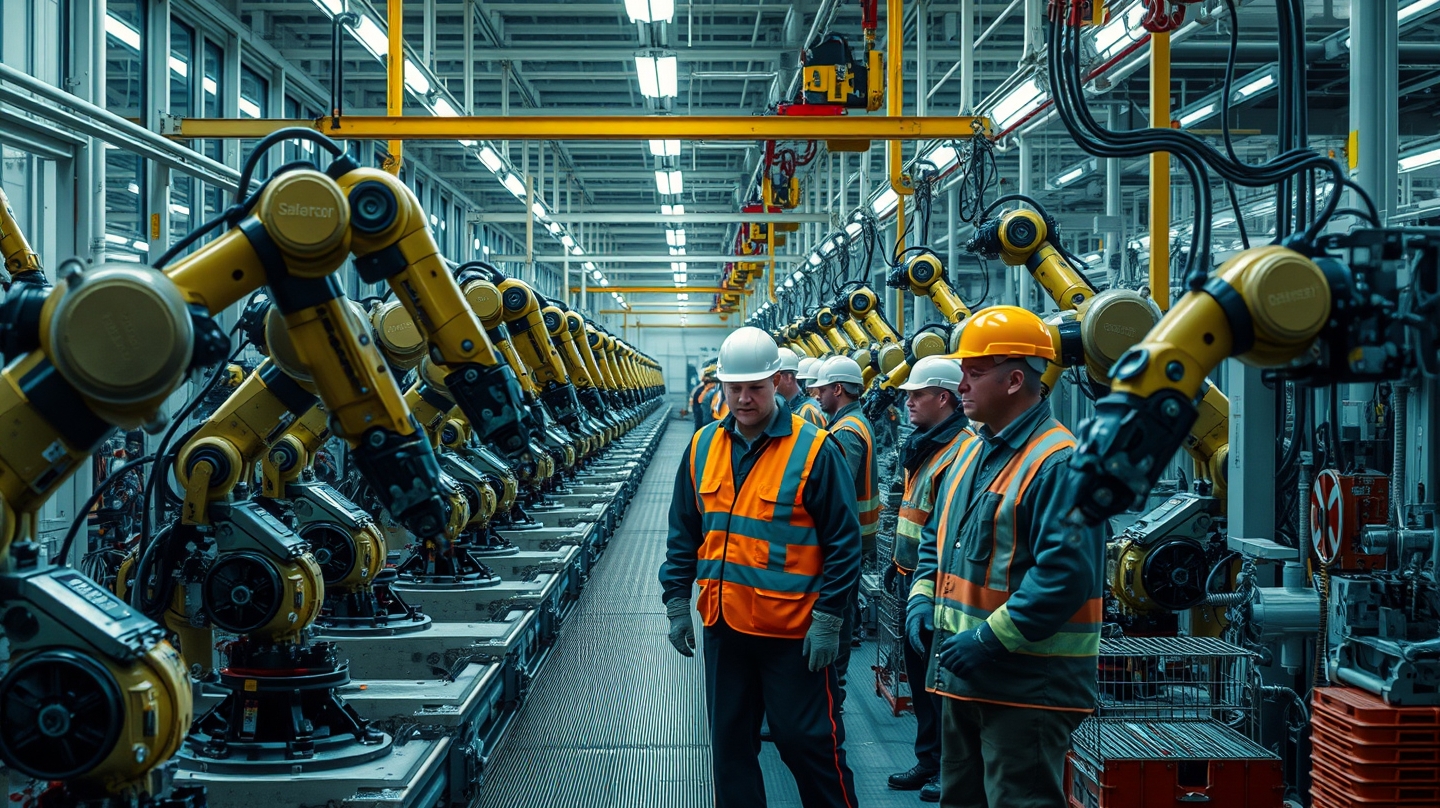
Manufacturers are responding with three interlocking strategies. Investment in advanced robotics and AI‑driven workflow automation is climbing, as firms seek to offset labor scarcity while maintaining the record $2.91 trillion manufacturing value added reported for 2024. The ISM Purchasing Managers’ Index, at 54 in May 2026, signals that demand for these high‑tech solutions remains robust.
At the same time, the sector is courting foreign capital. The Bureau of Economic Analysis and the World Bank estimate $2.42 trillion in foreign direct investment (FDI) flowing into U.S. factories, with Japan alone contributing $819 billion. This influx is financing the construction of new semiconductor fabs and EV battery plants, projects that are among the most automation‑intensive facilities in the country.
But capital alone cannot close the talent gap. Vocational enrollment has risen 20 % since 2020, according to the National Student Clearinghouse Research Center, and undergraduate certificate programs are expanding for a fourth consecutive year. Even so, total enrollment stays under one million – a fraction of the workforce manufacturers will need.
Dave Evans, president and CEO of MISUMI Americas, summed up the dilemma: “The next constraint isn’t capital. It’s having enough people with the right advanced skills to run these new facilities at full capacity.” To address this, MISUMI backed H.R. 9097, the American Manufacturing Revitalization Exchange Program Act, which would fund targeted apprenticeships and technical training.
The implications reach beyond factory floors. A more automated, domestically sourced supply chain reduces reliance on overseas logistics, potentially lowering carbon emissions and enhancing national security. For consumers, the shift could translate into shorter lead times for high‑tech products, from smartphones to EVs.
From a structural perspective, the reshoring surge is reshaping the U.S. economy’s geography. States with strong community‑college networks and existing industrial bases – such as Michigan, Texas and Arizona – are seeing a concentration of new facilities, creating regional clusters that echo the early 20th‑century manufacturing belts.
While the outlook is optimistic, the path forward hinges on synchronizing three variables: sustained foreign investment, accelerated automation adoption, and a scalable pipeline of skilled workers. If any one falters, the momentum built in the past six years could stall, leaving the United States with under‑utilized factories and unfilled jobs.




















