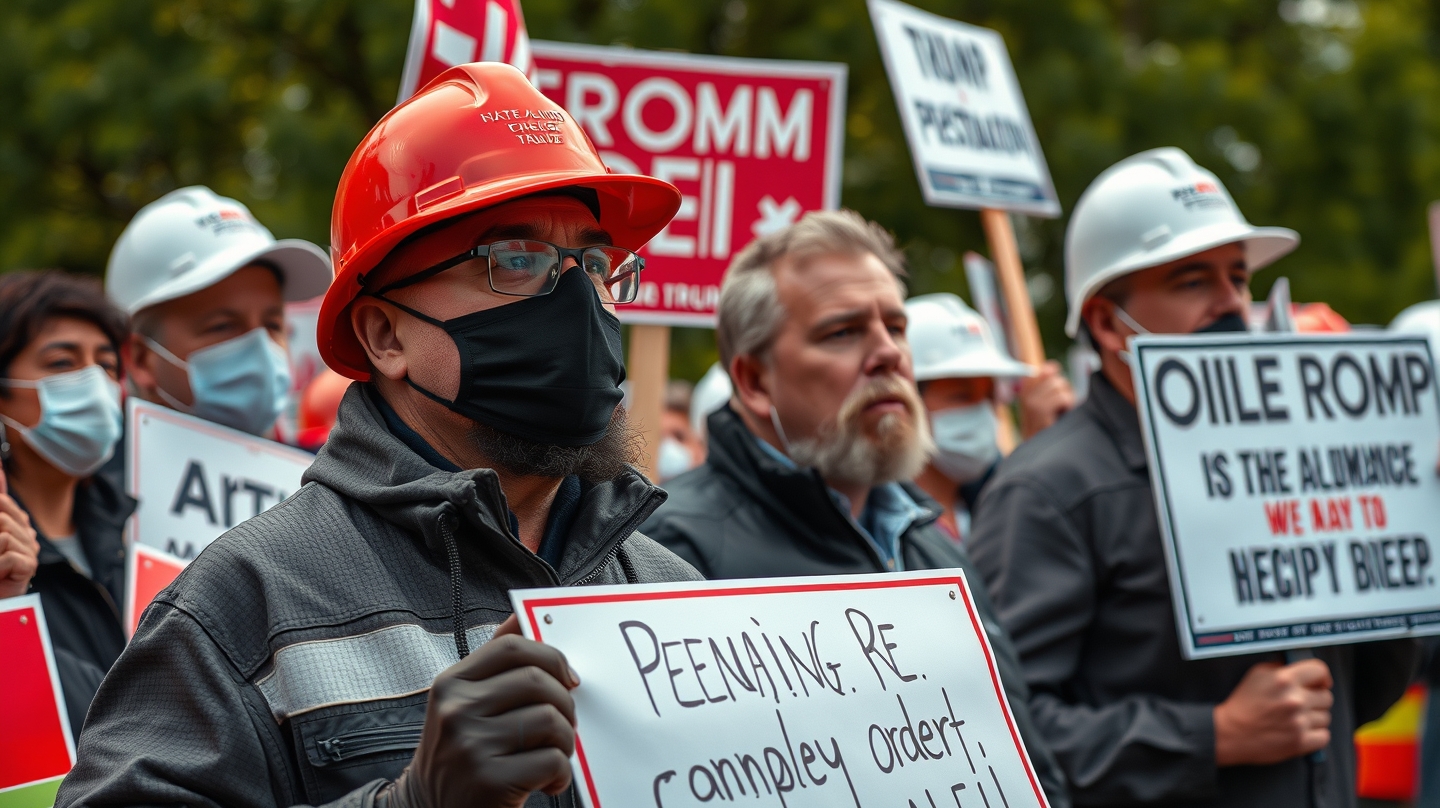
A coalition of plaintiffs, led by the National Association of Diversity Officers in Higher Education, has requested a Maryland judge to block President Donald Trump's executive order targeting diversity, equity, and inclusion (DEI) activities among federal contractors. The order, signed on March 26, directs executive departments and agencies to include a clause in federal contracts and subcontracts requiring partners to agree not to engage in any racially discriminatory DEI activities, or risk the cancellation of their contracts.
The plaintiffs argue that the order will cause irreparable harm if the court does not grant a preliminary injunction. They claim that the administration has put federal contractors in an impossible bind: sign away their freedoms of speech and association or forgo doing business with the government. The coalition, which filed a lawsuit against Trump on April 20, is represented by Democracy Forward and includes other groups such as the American Association of University Professors and the National Association of Minority Contractors.
The lawsuit argues that the order violates the 1st and 5th Amendments, as well as the Administrative Procedure Act. The plaintiffs are likely to succeed on the merits, they claim, as the order is an overreach of executive power and an attempt to suppress DEI initiatives. This is not the first time the Trump administration has faced legal challenges over its DEI policies. In January 2025, the administration issued two executive orders targeting public- and private-sector DEI, which were met with lawsuits from NADOHE and other groups.
The use of technology in implementing and enforcing this order is also a point of concern. As federal contractors increasingly rely on technology-driven automation and workflow transformation, the order's impact on their operations could be significant. The order's requirement for contractors to agree not to engage in racially discriminatory DEI activities could lead to the development of new technologies and tools to monitor and enforce compliance, potentially transforming the industry.
The case has implications beyond the federal contracting sphere. It raises questions about the role of the executive branch in shaping DEI policies and the limits of executive power. The outcome of the case could also impact the way technology is used to implement and enforce DEI initiatives, potentially leading to a shift in the way companies approach diversity and inclusion in the workplace.
As the case moves forward, it will be important to watch how the court balances the competing interests of the plaintiffs and the administration. The decision could have far-reaching consequences for federal contractors, DEI initiatives, and the use of technology in implementing and enforcing DEI policies.




















