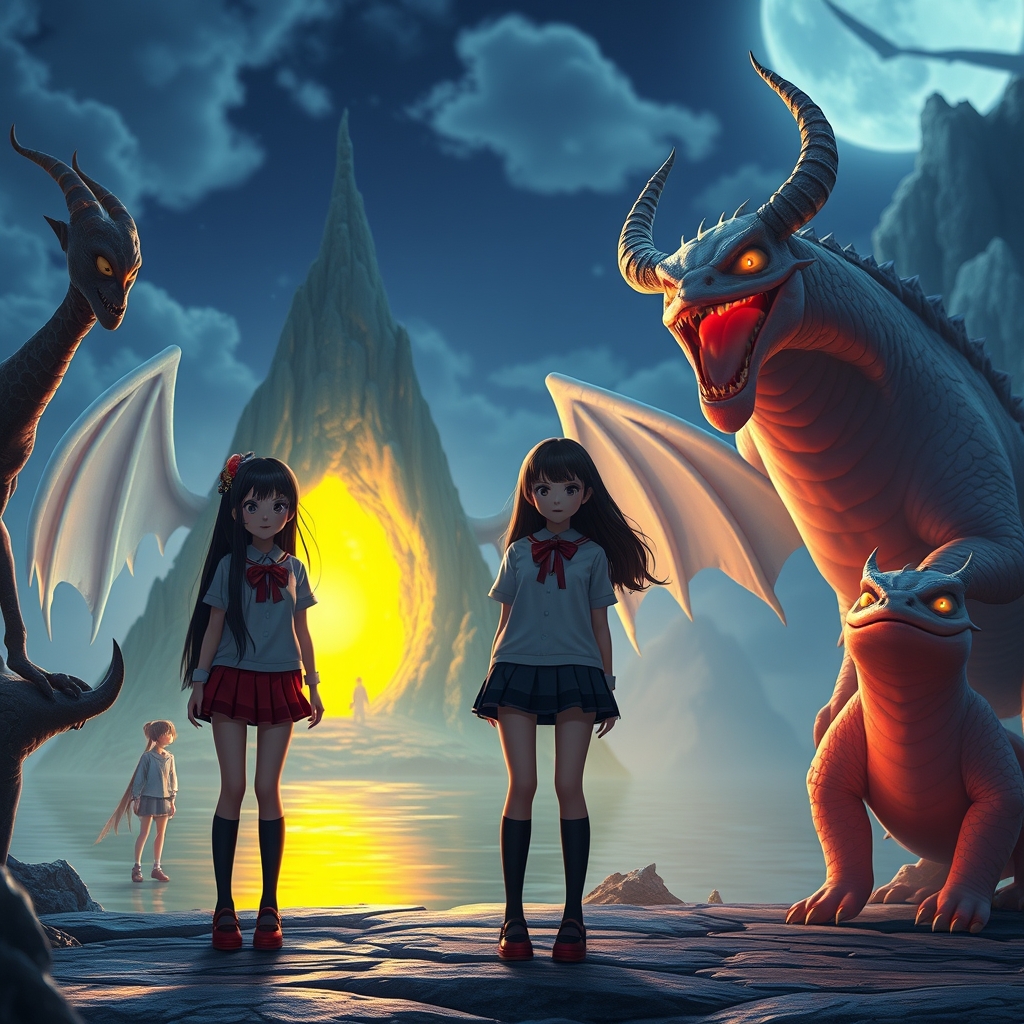
When DreamWorks Animation unveiled Forgotten Island, critics praised its vivid world‑building, but few noticed the silent revolution humming behind every frame: a suite of AI‑driven tools that compress months of manual labor into days of automated workflow.
Set in the Philippines of the 1990s, the film follows schoolgirls Jo and Raissa as they tumble through a portal into the mythic island of Nakali. Their journey—populated by were‑dogs, memory‑eating demons, and a split‑body giant named Manang—sparkles with visual flair reminiscent of Studio Ghibli and anime, yet the production timeline tells a different story. DreamWorks leveraged proprietary automation pipelines, including machine‑learning‑based rigging and procedural texture generation, to accelerate the traditionally labor‑intensive stages of character animation and environment rendering.
Why does this matter? By integrating automation, DreamWorks not only shortened the post‑production schedule for a 107‑minute feature but also opened space for creative risk‑taking. Director‑screenwriters Joel Crawford and Januel Mercado could populate Nakali with a larger cast of fantastical beings without the usual budgetary penalties. The result is a densely populated narrative that, while occasionally crowded, feels energetically alive—a direct byproduct of technology‑enabled storytelling.
The ripple effects extend beyond the studio walls. The same procedural tools are being adapted by broadcast graphics teams, including the NFL’s visual department, to generate real‑time, high‑resolution overlays for live games. This cross‑industry adoption illustrates a broader trend: animation pipelines are becoming a testing ground for automation that later migrates to other media sectors, reshaping how visual content is produced at scale.
From a market perspective, the film’s success could accelerate the shift from legacy, hand‑crafted pipelines to hybrid models that blend artist intuition with algorithmic efficiency. Studios that cling to fully manual processes risk falling behind as audience expectations for visual richness rise, while production costs stay under pressure. For animators, the change signals a new skill set—proficiency with AI‑assisted tools will become as essential as traditional drawing.
Structurally, DreamWorks’ workflow overhaul mirrors the automation wave sweeping the broader entertainment ecosystem. The company’s internal “Render Farm 2.0” platform, unveiled earlier this year, uses cloud‑based GPU clusters to distribute rendering tasks, cutting average render time by roughly 30%. This efficiency gain directly funded the film’s ambitious creature design, allowing for on‑the‑fly adjustments during storyboarding without incurring prohibitive delays.
Real‑world implications are already visible. Independent studios report adopting similar pipelines to compete with major players, while academic programs are revising curricula to include AI‑driven animation modules. Moreover, the NFL’s recent partnership with a visual‑effects vendor to prototype AI‑generated crowd simulations draws directly from techniques pioneered on projects like Forgotten Island.
Ultimately, the film stands as a case study in how technology adoption can enrich narrative ambition. While the story’s emotional core—two friends confronting memory loss—remains timeless, its delivery is undeniably modern, powered by automation that may soon become the industry norm.




















