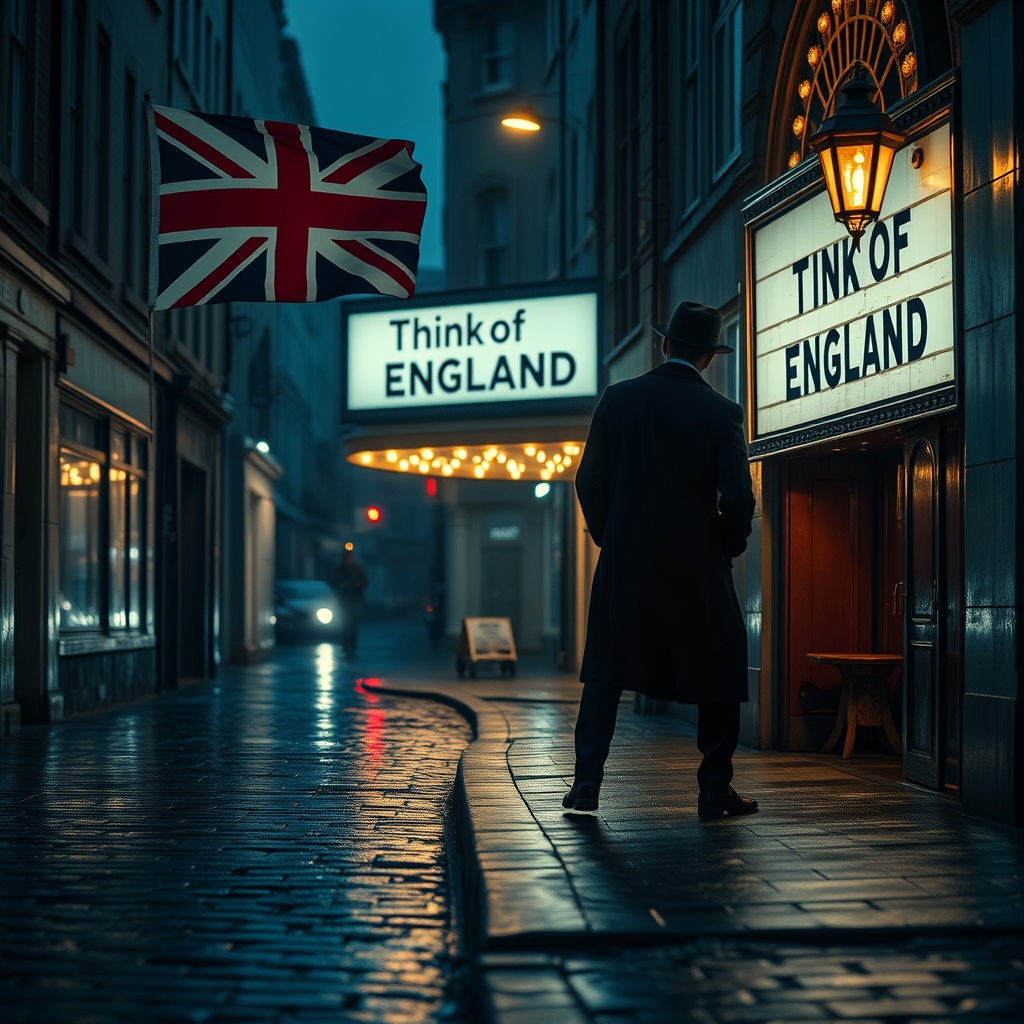
The new trailer for "Think of England" opens on a rain‑slick London alley, the wail of an air‑raid siren echoing off brick façades while a lone figure in a bowler hat pauses at a cracked cinema marquee. The title glows in muted amber, and a crumpled newspaper flutters, its headline proclaiming a mythic decree from Winston Churchill. In that moment, the camera lingers on the hesitation of a young clerk who, hand hovering over the door, decides whether to join the bustling crowd or stay behind.
What the trailer reveals about myth and memory
Richard Hawkins, BAFTA‑nominated for "Theory of Flight" and "Everything," uses satire not merely for laughs but to interrogate the collective memory of World War II. By juxtaposing the stiff formality of period uniforms with absurdist dialogue, the trailer creates a structural tension between reverence for sacrifice and the irreverent humor that can destabilise heroic narratives.
A cultural recalibration
This approach aligns with a broader cultural movement that re‑examines historic events through a contemporary lens, echoing recent series that blend fact with fiction to question national identity. The trailer's visual palette—muted greys punctuated by the flash of a Union Jack—anchors the satire in a tangible reality that feels both historical and immediate.
It matters because it forces a nation to confront the stories it tells itself about resilience.
Beyond the immediate shock of its humor, the film promises a dialogue about how societies construct myths to serve present needs, reminding viewers that the past is always being rewritten.
As the trailer fades, the siren's echo lingers, a reminder that every joke carries the weight of history.
In the coming months, audiences will watch how this satirical lens reshapes the conversation around Britain's wartime legacy.
Ultimately, the film invites us to listen more closely to the quiet doubts behind celebrated narratives.
It is a reminder that the past, however polished, remains a contested terrain.