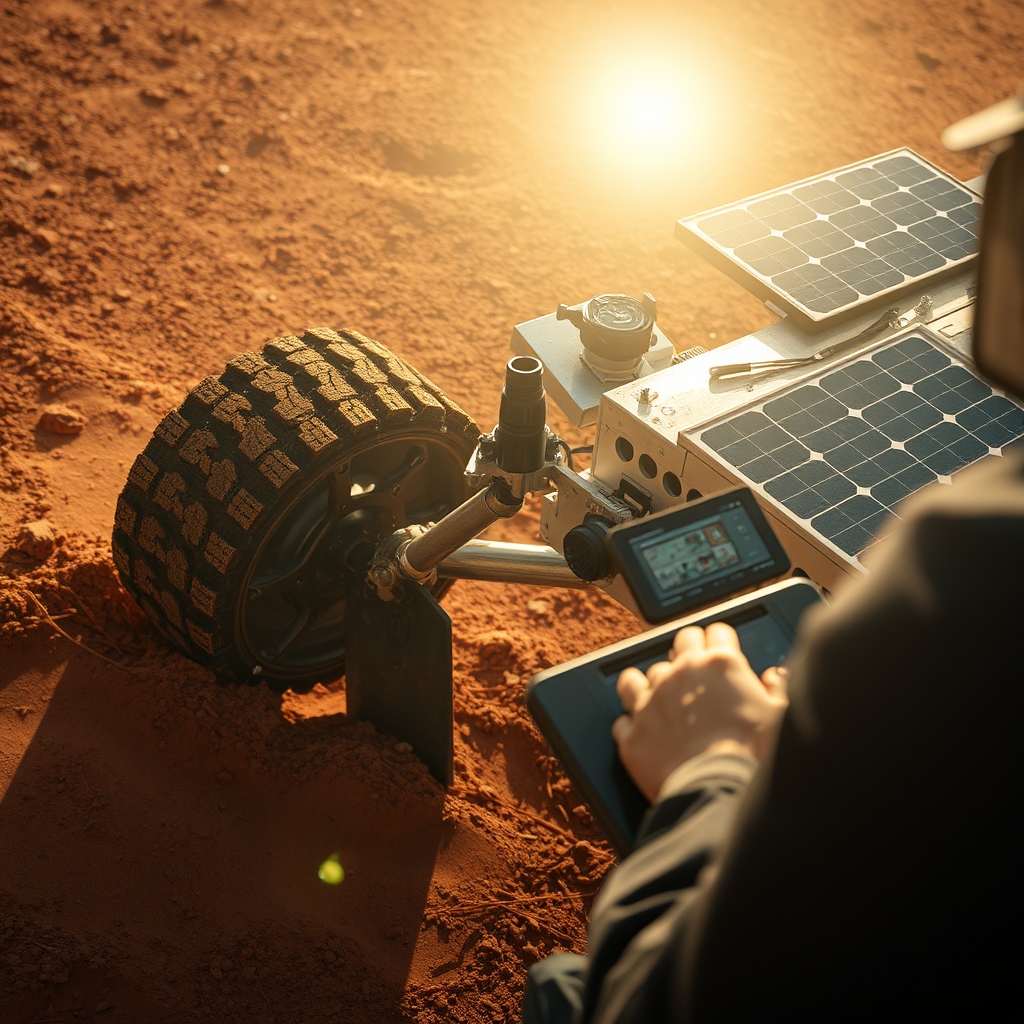
NASA's Perseverance rover has been traversing the Jezero crater with an unprecedented level of self‑direction. Using the Enhanced Autonomous Navigation (ENav) system, the rover decides its own path across boulder‑strewn terrain while running on a radiation‑hardened processor no more powerful than an iMac G3 from the late‑1990s. As of sol 1,312, roughly ninety percent of its 30 kilometers of travel has been autonomous, a stark contrast to the six‑percent figure recorded for Curiosity.
From human‑piloted routes to self‑driving on the Red Planet
Early in the mission, engineers at JPL lingered over a command upload, hesitating to relinquish control after the rover's first two months of guided moves. That pause marked a cultural shift: autonomy became the default, not the exception. ENav evaluates about 1,700 candidate paths within a six‑meter horizon, ranking them by travel time and terrain roughness before a heavier collision‑checking routine, ACE, runs on the top few. The result is a fluid motion that feels almost organic, the faint whir of the rover's wheels echoing across the thin, cold air.
The engineering of autonomy under radiation‑hardening constraints
The structural tension between computational efficiency and safety is resolved by allocating the most demanding calculations only to the most promising routes. This design choice reframes autonomy from a luxury feature to a necessity; without it, deep‑space probes would be forced to wait for delayed human input, losing valuable scientific time. The hardware itself is a legacy component, repurposed from Curiosity, which reduces cost and risk while surviving relentless cosmic rays.
Implications for future exploration
ENav's success signals a broader movement toward AI‑augmented robotics that can operate where communication delays exceed minutes. The algorithm's modest footprint suggests that future missions to more distant worlds—Europa, Titan—could rely on similarly lean processors, preserving power and mass budgets. Understanding how a rover can navigate autonomously with minimal computing power matters because it sets a blueprint for future deep‑space missions where real‑time human control is impossible.
Looking beyond the Martian horizon
As Perseverance continues its trek toward the ancient river delta, each autonomous mile writes a new chapter in the story of human ingenuity meeting planetary harshness. The rover's quiet progress across rust‑red dunes reminds us that the frontier of exploration is increasingly defined by machines that think as they move.
Autonomous navigation will shape every next step humanity takes beyond Earth.
Kadoo Click brings you daily AI-powered insights into beauty, fashion, cosplay, tech deals, and trending topics. Discover authentic products with real discounts.
Stay updated with the latest in 2026 trends – powered by Kadoo Store AI.