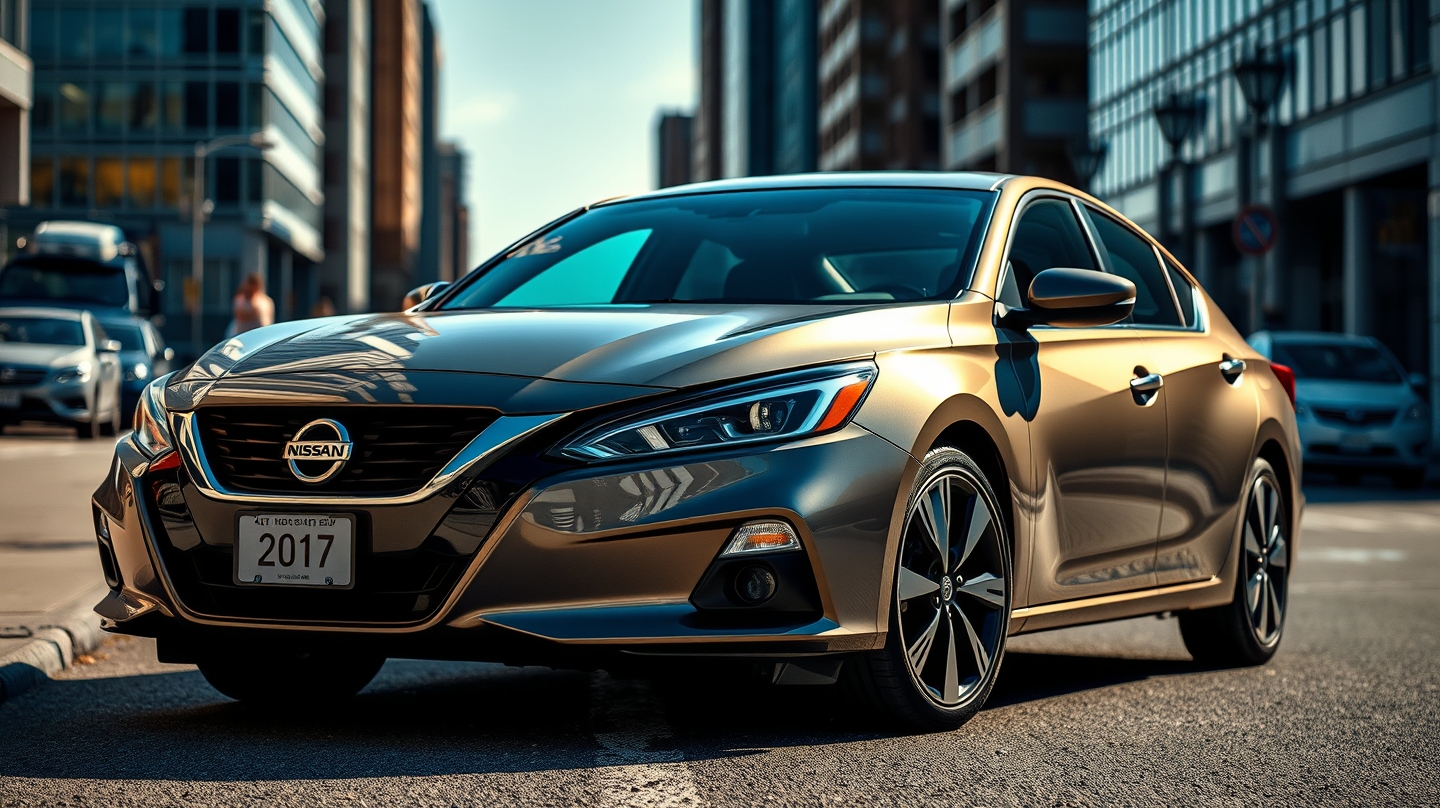
When Nissan’s North‑American product planning chief, Ponz Pandikuthira, confirmed that the Altima sedan will soon be retired, the announcement did more than signal the end of a long‑running model—it exposed a strategic realignment driven by automation and data‑focused decision‑making.
In an interview with WardsAuto, Pandikuthira explained that the Altima’s phase‑out will free up “grown‑up” Sentra space, allowing Nissan to streamline its sedan portfolio and concentrate resources on models that align with emerging market signals. The move follows a brief reversal in 2025, when Nissan hinted at a 2026 Altima refresh, only to reaffirm the discontinuation after internal modeling showed limited growth potential.
Beyond the obvious product shuffle, the decision reflects a deeper shift in how Nissan orchestrates its U.S. lineup. The automaker has been investing in technology‑driven automation across its planning, engineering, and manufacturing workflows. By leveraging predictive analytics, Nissan can now forecast demand for specific body styles with greater precision, reducing the risk of over‑producing models that no longer resonate with consumers.
For the Altima’s loyal customer base, the impact is immediate. Dealerships will see a tapering of new‑car inventory, while the used‑car market may experience a modest price uptick as the remaining Altimas become scarcer. More importantly, the gap left by the Altima will be filled by an upgraded Sentra, which Nissan positions as a more mature offering capable of covering the midsize segment without the overhead of maintaining two parallel sedans.
From an industry perspective, Nissan’s move underscores a broader trend: traditional sedans are losing ground to crossovers, SUVs, and increasingly, electric vehicles (EVs). The company’s recent cancellation of two U.S. EV sedan projects and the postponement of the Ariya’s 2026 model year further illustrate a cautious approach to electrification. Pandikuthira noted that Nissan does not anticipate a volume surge in the EV sedan segment until the end of the decade, when battery costs are projected to fall dramatically.
This timeline aligns with Nissan’s automation‑centric product strategy. By consolidating its sedan lineup now, the automaker can redirect engineering talent and production capacity toward platforms that support modular EV architectures. The shift also reduces the complexity of supply chains, a benefit amplified by automated procurement systems that adjust orders in real time based on market forecasts.
Dealers, too, are feeling the ripple effect. With fewer sedans to stock, showrooms will likely reallocate floor space to higher‑margin crossovers and the upcoming Sentra refresh. For consumers, the decision translates into clearer choices: a more robust Sentra lineup and a longer wait for Nissan’s next EV offering, which will be built on a platform designed for scalability and cost efficiency.
Analysts see Nissan’s Altima exit as a case study in how legacy automakers are using technology to prune legacy portfolios. The company’s internal data platforms, powered by machine‑learning models, have identified the Altima as a low‑growth asset, prompting the strategic cut. This mirrors a broader industry movement where manufacturers employ automation not just on the factory floor but also in product lifecycle management.
In the coming months, Nissan will likely reveal details of the Sentra’s redesign and outline its EV roadmap, both of which will be shaped by the same data‑centric processes that dictated the Altima’s fate. For the U.S. market, the story illustrates how automation is reshaping not only how cars are built, but also which cars are built.