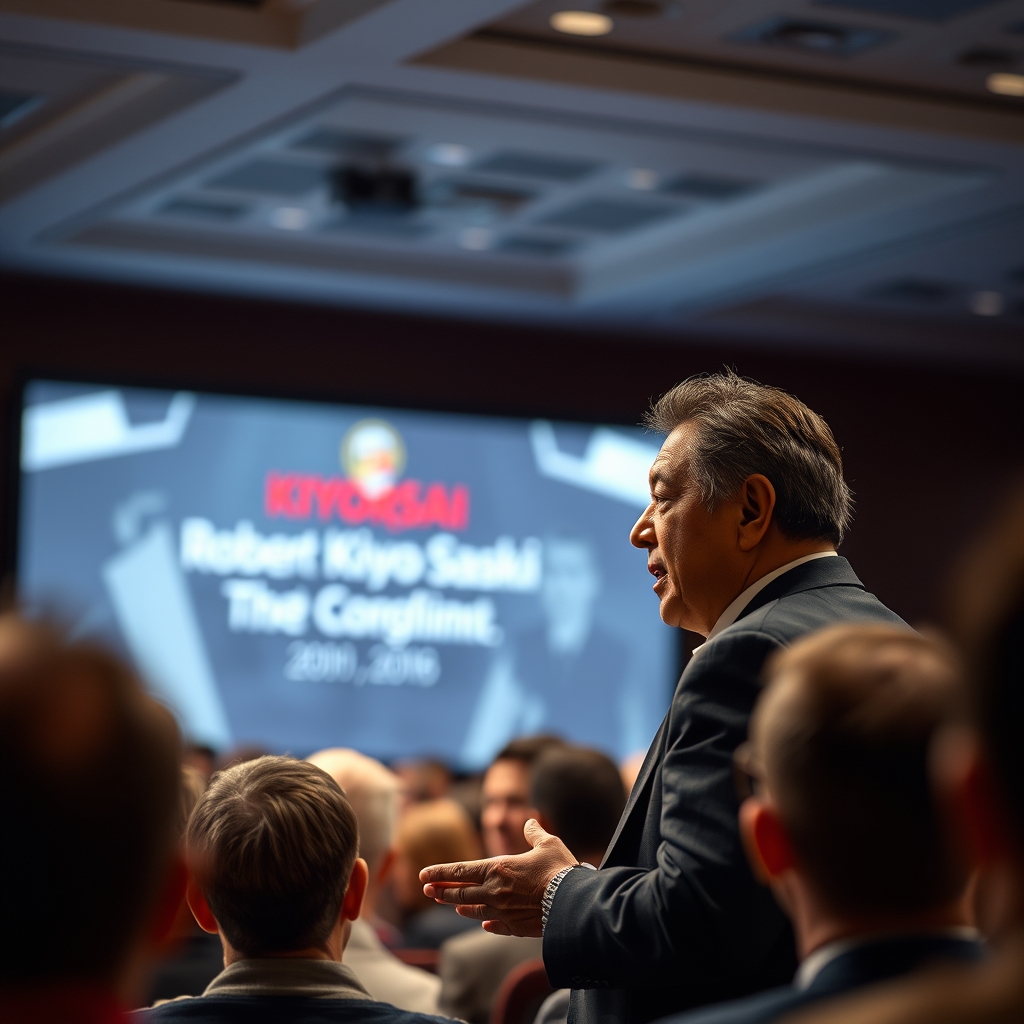
On September 23, Robert Kiyosaki posted a series of reflections on X that linked a biblical phrase to a personal finance mantra: the words we speak become our reality, and those words are the most valuable asset we own—yet they can also become our greatest liability. In the same thread, he reiterated his long‑standing hierarchy of income types—earned, portfolio, and passive—arguing that earned income is the most heavily taxed, portfolio income the second‑worst, and passive income the only stream that can largely escape taxation.
Kiyosaki’s commentary is not new; he has repeatedly championed cash‑generating businesses, real‑estate rentals, gold, and cryptocurrencies as pathways to passive cash flow. What is new is the framing of “words” as a free, intangible asset that can shape financial outcomes. By positioning mindset as a capital‑like resource, he blurs the line between personal belief and fiscal strategy, a blend that resonates with followers who already trust his “Rich Dad” philosophy.
The significance of this message lies in its timing. Institutional investors are increasingly deploying algorithmic platforms that automate the acquisition of dividend‑paying stocks, tokenized real‑estate, and crypto‑staking services—tools that embody the very passive‑income model Kiyosaki extols. As firms adopt technology‑driven automation to lower operational costs and scale asset management, the demand for tax‑efficient income streams has surged, prompting a measurable shift in market behavior.
Market reaction has been subtle but observable. After Kiyosaki’s post, trading volumes for Bitcoin (BTC) and Ethereum (ETH) rose modestly on the following day, reflecting heightened retail interest in the crypto assets he frequently recommends. More importantly, several large‑cap asset‑management firms announced new “buy‑borrow‑die”‑style funds that combine low‑interest margin loans with long‑term holdings of untaxed gains, a structure that mirrors Kiyosaki’s advocacy for borrowing against appreciating assets rather than selling them.
From an institutional perspective, the strategy raises compliance and risk‑management questions. Automated platforms must now incorporate tax‑loss harvesting, loan‑to‑value monitoring, and regulatory reporting for leveraged positions—processes that rely on sophisticated workflow automation. The rise of AI‑assisted tax planning tools, for example, enables both individual investors and hedge funds to model the after‑tax returns of passive‑income portfolios with unprecedented speed.
Structurally, Kiyosaki’s hierarchy underscores a long‑standing tax principle: the U.S. tax code treats earned wages as ordinary income, while dividends, capital gains, and qualified rental income receive preferential rates. By labeling earned wages as the “worst” income, he reinforces a narrative that encourages investors to reallocate capital toward assets that generate qualified dividends or rent—streams that can be largely automated through property‑management software or blockchain‑based leasing platforms.
Real‑world implications are already emerging. Small‑business owners are turning to fintech solutions that allow them to token‑ize their cash‑flow assets, effectively turning rental income into a tradable, passive‑income instrument. Meanwhile, the growing popularity of crypto staking services provides a digital analogue to traditional dividend payments, offering users a way to earn on holdings without active trading.
Critics note that Kiyosaki’s portrayal of passive income as “untaxed” oversimplifies a complex regulatory environment. The IRS has begun scrutinizing crypto‑staking rewards and real‑estate syndications, and recent guidance suggests that many of these streams will face reporting requirements. Nonetheless, the allure of low‑tax, technology‑enabled income continues to shape investor behavior, prompting both retail and institutional players to refine their automation pipelines.
In sum, Kiyosaki’s recent X post does more than reiterate a personal philosophy; it spotlights a broader shift toward automated, tax‑efficient wealth creation. As markets respond with higher crypto volumes and asset managers launch leveraged passive‑income funds, the conversation moves from abstract mindset to concrete financial engineering—a transition that will likely influence how both individuals and institutions design their long‑term portfolios.