Contemporary architecture has made significant strides in incorporating living matter into building design, from mycelium panels to algae systems and living walls. However, this same discipline often views mold as a contaminant, despite both being biological entities that respond to moisture, temperature, and material conditions. The distinction between the two is not based on science but rather on which forms of life architecture is willing to accept and which it seeks to eliminate.
Mold is not confined to abandoned buildings or poorly maintained interiors; it appears in homes, schools, offices, historic structures, and new constructions across various climates and contexts. This ubiquity makes it challenging to dismiss as a minor or isolated issue. If mold continues to resurface, what does it reveal about the environments buildings create? David Gissen's work highlights forms of nature like smoke, exhaust, dust, crowds, and mud that remain undertheorized, underdiscussed, and undervisualized in architecture, with mold falling into this category.
One of architecture's most enduring assumptions is that buildings are designed to separate the inside from the outside, with walls, roofs, and facades acting as barriers to protect a controlled interior from the external world. Yet, buildings are not static entities; they are shaped by what moves through them, even when these changes are hidden behind finished surfaces. Mold becomes more than a maintenance issue when it appears in areas where these changes leave a visible trace, such as on cold walls, near window frames, behind furniture, or in rooms with poor air circulation.
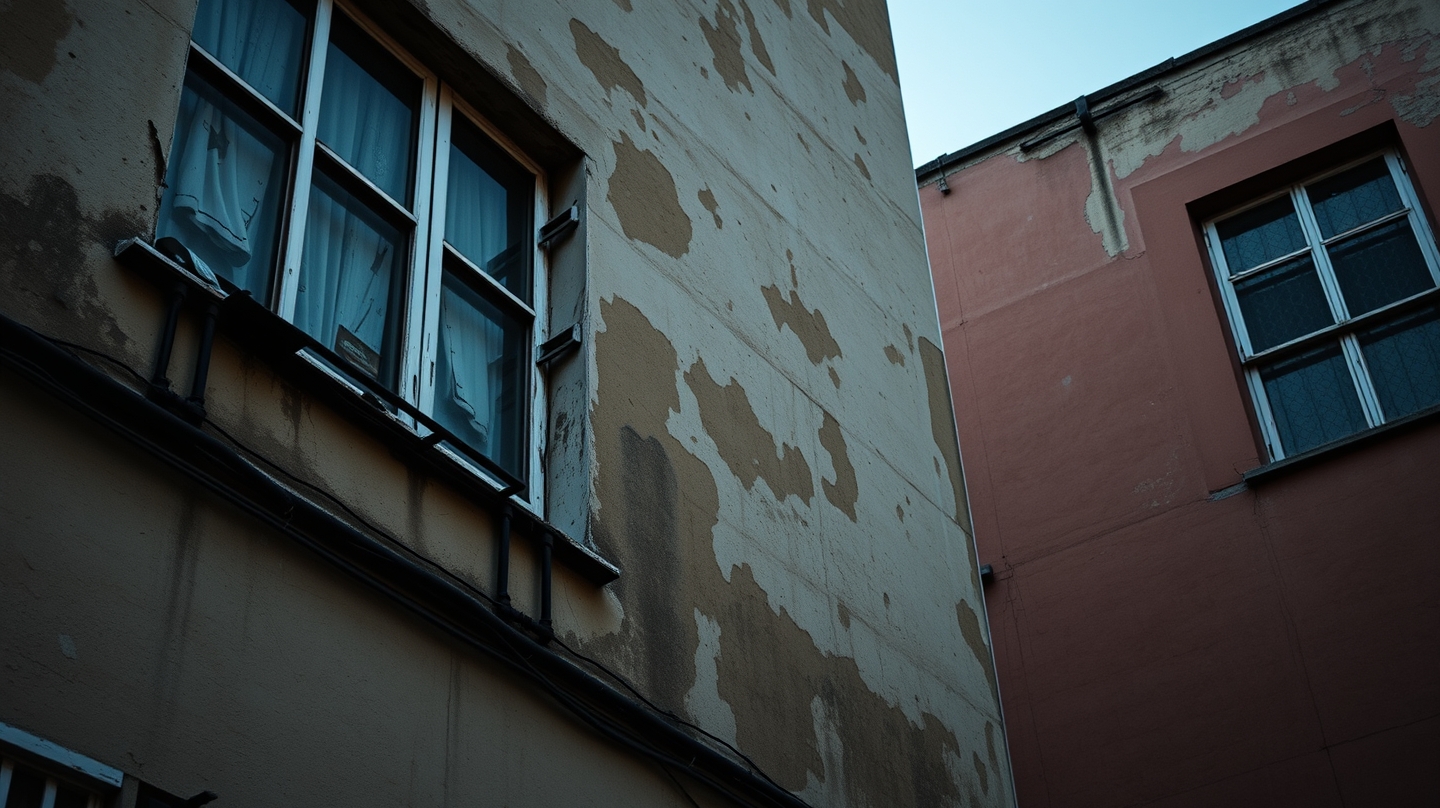
A stain may not tell the entire story, but it offers a clue about where the building is no longer functioning as a sealed object. Buildings continue to evolve after construction, influenced by weather, maintenance, occupation, and time. Air moves unevenly through rooms, some surfaces remain colder than others, and spaces are used with varying intensities, ventilation frequencies, and maintenance levels. In these differences, mold begins to describe the building as it is lived, not just as it was designed.
The issue is not only that buildings change but that architecture often represents them before this change begins. Drawings, renders, and photographs typically depict buildings at their most controlled moment: clean, complete, and finished. Mold appears later, through occupation, maintenance, weather, and time, reminding us that architecture does not end with construction. This tension is visible even in projects that circulate through architecture as carefully composed images.
For instance, at Le Corbusier's Convent of La Tourette, the concrete surfaces no longer appear solely as expressions of structure and mass but also carry stains, darkened areas, and traces of moisture, making the building feel exposed to climate and time. In Mole House by Adjaye Associates, these marks become part of the building's presence, with the facade being read not just through its form or material palette but through the exposed surfaces that have absorbed use, maintenance, moisture, and time. The Old Chapel by O-office Architects makes this relationship more explicit, with green growth and discoloration appearing on the concrete surface.
This perspective challenges traditional notions of architecture and forces us to reconsider the role of mold and other undertheorized elements in building design. By acknowledging and incorporating these factors, architects can create buildings that are more resilient, more responsive to their environments, and more reflective of the complex interplay between the built and natural worlds.