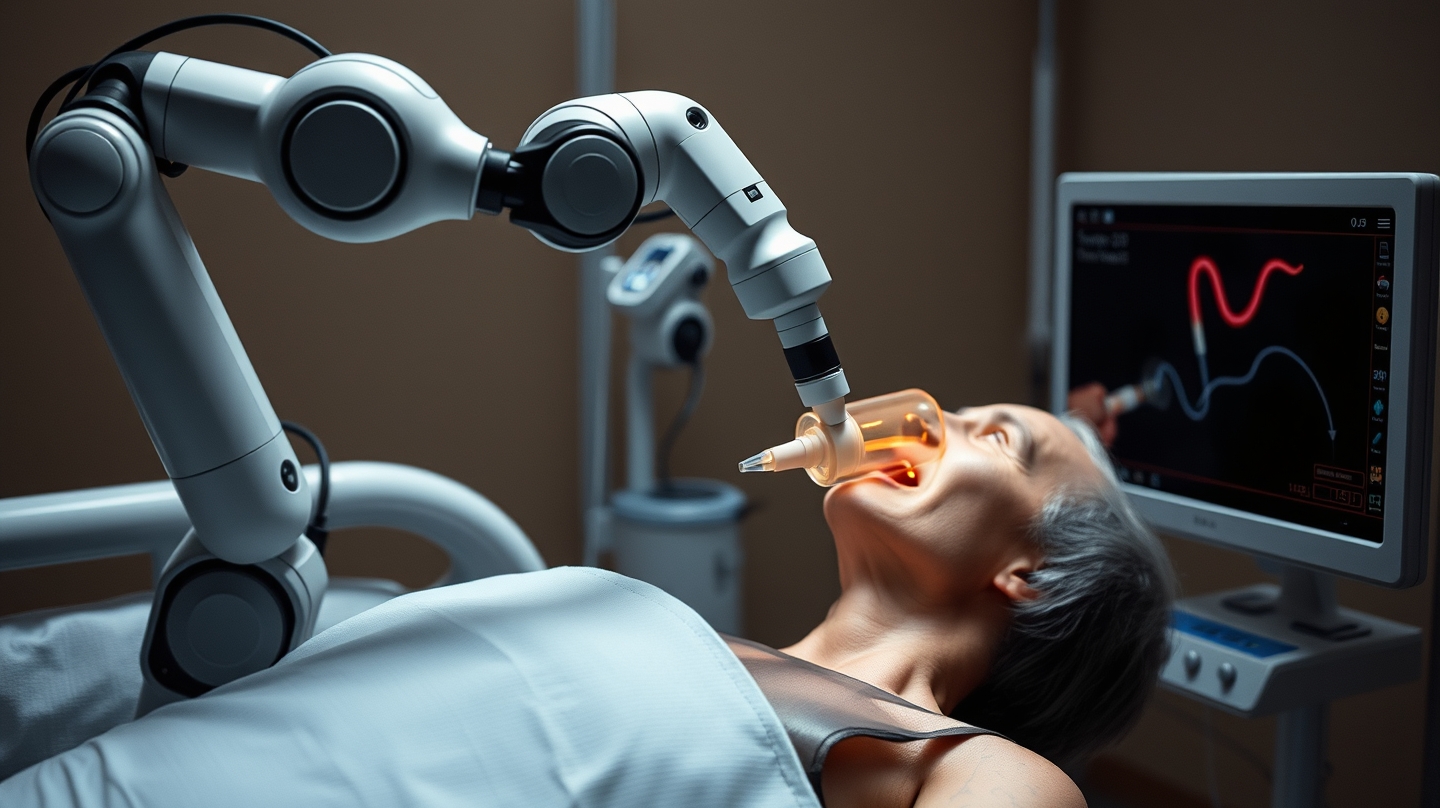
When a nurse or dietitian slides a feeding tube through a patient’s nose, they are often working blind – a misstep can send the tube into the lungs, triggering collapse or infection. ENvue Medical’s new ENvue Drive changes that calculus by letting a robot, guided by electromagnetic mapping and artificial intelligence, place the tube with GPS‑style precision.
ENvue Drive builds on the company’s FDA‑cleared ENvue Navigation Platform, a system already used in U.S. hospitals to visualize tube trajectories in real time. The upgrade adds a robotic arm that moves the tube in five degrees of freedom, a sensor at the tube tip that refreshes its position 40 times per second, and the AI engine dubbed “Ask Oscar” that continuously compares the live path against a pre‑mapped anatomical model.
“We wanted a system that tells the clinician exactly where the tube is pointing, no matter how the patient moves,” explained Dr. Doron Besser, ENvue’s CEO, during a live demonstration. The robot does not replace the clinician; it provides steering directions, alerts when the trajectory deviates, and pauses for human confirmation before advancing.
The clinical impact is immediate. In the United States more than one million feeding tubes are placed annually, and industry data estimate that 3‑5% end up in the lungs. Each misplaced tube can trigger a cascade of complications – lung collapse, aspiration pneumonia, and prolonged ICU stays – that add both human suffering and costly hospital bills. By reducing the error window, ENvue Drive promises to improve patient outcomes, free up clinician time, and lower procedural expenses.
Beyond safety, the technology signals a broader shift in how hospitals adopt automation. The integration of electromagnetic navigation, high‑frequency sensor feedback, and AI‑driven decision support creates a unified workflow that blurs the line between diagnostic imaging and interventional execution. This structural insight – a closed‑loop, data‑rich procedural loop – could become a template for other bedside interventions, from central line placement to bronchoscopy.
ENvue’s approach also dovetails with trends in the wider tech ecosystem. Companies such as Google have open‑sourced machine‑learning libraries that accelerate development of real‑time image analysis, and ENvue’s “Ask Oscar” leverages similar convolutional‑neural‑network architectures. The cross‑industry borrowing underscores how AI frameworks originally built for consumer search are now powering life‑critical medical tools.
Hospitals that adopt ENvue Drive may see measurable financial benefits. A study by the Agency for Healthcare Research and Quality links each feeding‑tube misplacement to an average additional cost of $7,000 in treatment and extended stay. Scaling the robot across a medium‑size hospital could therefore save upwards of $200,000 per year, while also freeing staff to focus on higher‑value care tasks.
Regulatory pathways are already in place. ENvue Drive inherits the 510(k) clearance of its navigation platform, and the added robotic component underwent a separate safety review that confirmed compliance with the FDA’s Human Factors guidelines. This streamlined approval process illustrates how incremental innovation – layering automation onto an existing cleared device – can accelerate market entry.
While the technology is promising, adoption will depend on hospital budgets, staff training, and the willingness of clinicians to trust a machine’s guidance. Early pilots suggest that when the robot’s suggestions are presented transparently, clinicians retain final authority and report higher confidence in tube placement.
In sum, ENvue Drive is more than a new gadget; it is a concrete example of automation reshaping a routine yet risky procedure. Its success could catalyze similar robotic‑assisted workflows across critical‑care, marking a step toward a more data‑driven, error‑resistant hospital environment.