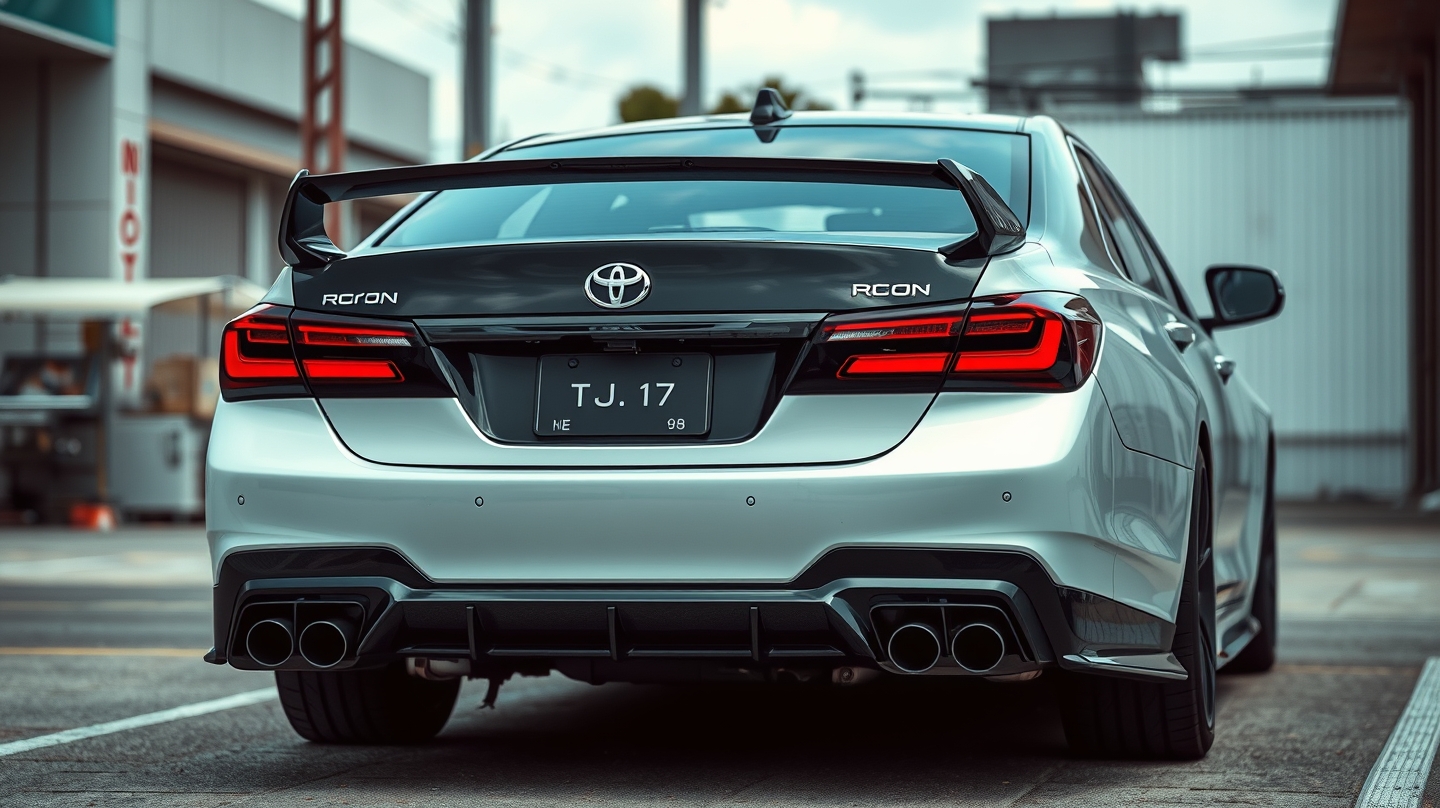
When Toyota unveiled the 2027 Crown, the changes were almost imperceptible at first glance—a slightly reshaped rear bumper and a fresh paint option named Inked. Yet beneath that restrained exterior lies a revised hybrid architecture that signals the automaker’s commitment to incremental technology adoption while keeping the model’s price bracket largely intact.
The Crown, which replaced the long‑standing Avalon in 2023, occupies a niche between traditional sedans and crossover‑style SUVs. Its sloping roofline and raised ride height have drawn buyers seeking a premium feel without the bulk of a full‑size SUV. For 2027, Toyota has left the silhouette untouched, opting instead for a modest rear‑bumper tweak that sharpens the car’s visual balance and a satin‑finished hybrid‑all‑wheel‑drive badge that adds a subtle premium cue.
Where the update matters most is under the hood. The XLE, Limited, and Nightshade trims now feature the “Toyota Hybrid System 5,” a three‑motor configuration that adds an e‑motor to the existing 2.5‑liter four‑cylinder engine and its pair of electric motors. Toyota has not disclosed output figures, but the system is claimed to achieve 40 mpg combined—slightly less than the 2026 model’s 41 mpg. The lack of a horsepower bump suggests the focus is on refining torque delivery and integrating the third motor for smoother acceleration, a move that mirrors the industry’s shift toward software‑defined powertrains rather than outright engine upgrades.
Meanwhile, the top‑of‑the‑line Platinum trim retains the more aggressive Hybrid Max setup, pairing a turbocharged 2.4‑liter engine with two electric motors and a six‑speed automatic transmission for a combined 340 hp and 400 lb‑ft of torque. This dual‑track strategy—incremental improvements for most trims and a high‑performance hybrid for the flagship—allows Toyota to cater to both efficiency‑focused buyers and those willing to pay a premium for performance.
Pricing adjustments are modest but telling. The base XLE climbs $200 to $42,755, while the Limited sees a $3,770 increase to $51,015, overtaking the Nightshade’s $50,260 price tag. The Platinum trim rises $200 to $56,485. These moves keep the Crown competitive against rivals such as the Lexus ES and the Mercedes‑Benz C‑Class, whose pricing has also crept upward amid inflationary pressures and the cost of electrification components.
From a broader perspective, the Crown’s update illustrates a market trend where manufacturers favor mid‑cycle refreshes that prioritize powertrain efficiency and digital integration over radical styling overhauls. By limiting visual changes, Toyota reduces tooling costs and can allocate more resources to software updates, battery management, and driver‑assist features—areas that increasingly define consumer choice in the premium sedan segment.
Real‑world implications are immediate. Buyers who value a quieter cabin and better fuel economy will notice the new hybrid’s refined torque curve, especially in stop‑and‑go traffic where the extra e‑motor can assist without engaging the gasoline engine. Fleet operators, too, may find the modest price increase acceptable given the potential for lower operating costs over the vehicle’s lifespan.
Looking ahead, the Crown’s evolutionary path hints at how Toyota might handle future electrification milestones. Rather than launching an all‑new model every few years, the company appears prepared to layer software‑driven upgrades onto an existing platform, a strategy that aligns with the industry’s move toward “vehicle‑as‑a‑service” models where hardware remains stable while functionality evolves.
Dealerships are expected to receive the 2027 Crown within the next couple of months, giving prospective owners a chance to compare the subtle design cues and the refreshed hybrid system against a backdrop of rapidly advancing EV offerings. For consumers, the Crown remains a bridge between conventional luxury sedans and the electrified future, offering a taste of hybrid sophistication without the price shock of a full electric powertrain.