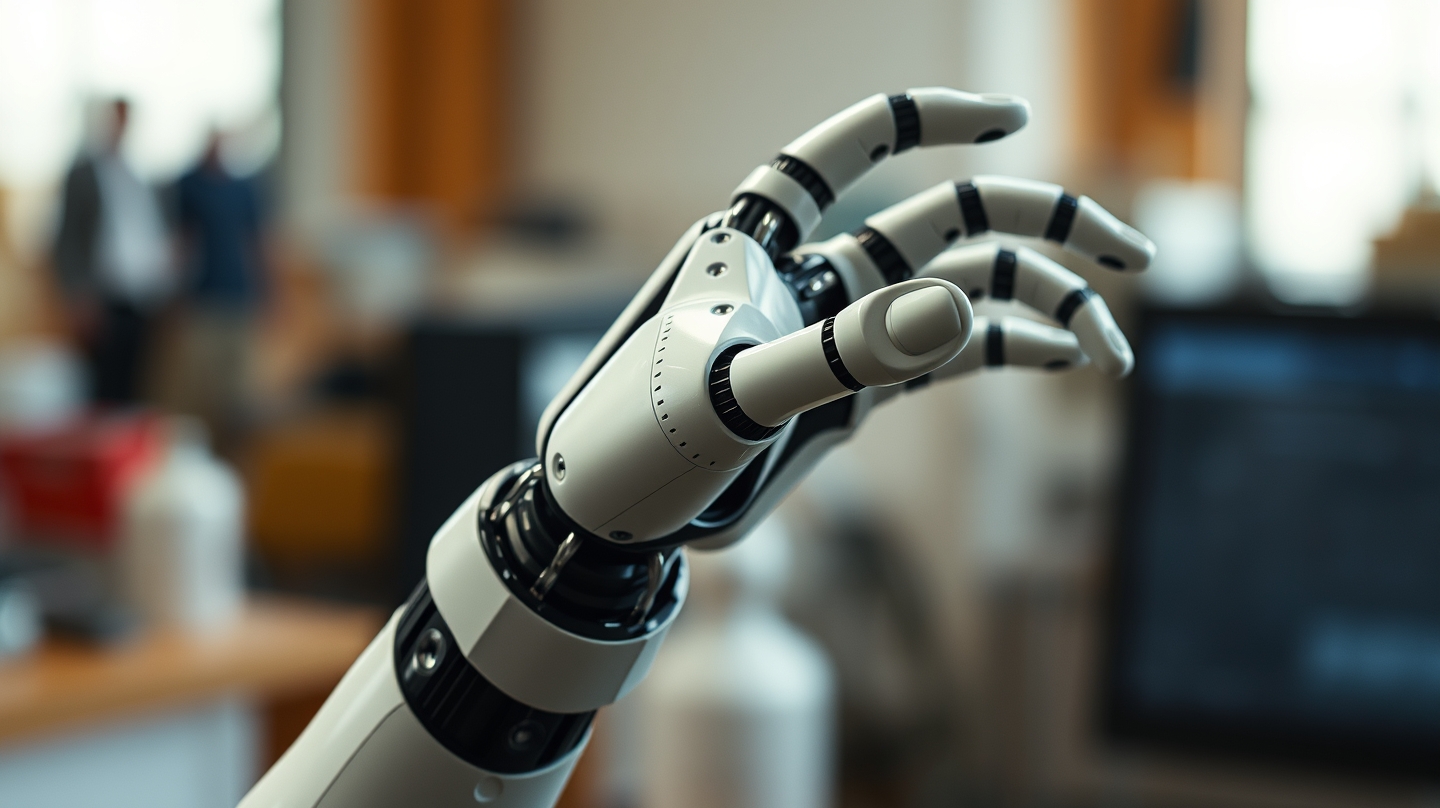
When NVIDIA and Hugging Face announced that the Isaac GR00T 1.7 foundation model and the Isaac Teleop framework are now part of LeRobot, the open‑source robotics library, they signaled a shift from siloed robot research to a community‑driven development cycle. The partnership adds a vision‑language‑action (VLA) model designed for humanoid platforms, a data‑collection framework that captures human demonstrations, and a promise of the upcoming Cosmos 3 world model—all accessible through the same LeRobot interface.
LeRobot already hosts a 15‑million‑download dataset of real and simulated trajectories, 350,000 robot runs, and 57 million grasp records. By plugging NVIDIA’s Isaac tools directly into that ecosystem, developers gain a standardized path from raw sensor streams to trained policies and finally to deployment on physical hardware. The integration eliminates the need to stitch together disparate simulation suites, proprietary SDKs, and private datasets, a process that has traditionally inflated both cost and time‑to‑market.
Thomas Wolf, co‑founder and chief science officer at Hugging Face, emphasized that “open source is how a field turns advanced research into something people can study, adapt and build on.” In practice, a robotics startup can now download the LeRobot dataset, fine‑tune the GR00T 1.7 model on a specific manipulation task, record additional demonstrations with Isaac Teleop, and push the updated policy back to the community—all without purchasing separate licenses for simulation or data‑management tools.
This streamlined workflow matters because physical AI has long been constrained by expensive compute, limited data, and fragmented tooling. By lowering those barriers, the collaboration accelerates experimentation in sectors ranging from warehouse automation to assistive robotics. Companies that previously relied on in‑house simulation pipelines can now prototype with publicly available models, reducing capital expenditure and shortening development cycles.
The upcoming Cosmos 3 model adds another layer of capability. As a frontier world foundation model, it can synthesize realistic sensor data, augment sparse real‑world recordings, and generate diverse scenarios for policy training. For researchers facing the “reality gap” between simulation and hardware, Cosmos 3 offers a way to bridge that divide without the need for costly real‑world data collection campaigns.
Beyond immediate technical benefits, the partnership illustrates a broader market trend: the convergence of open‑source AI practices with physical robotics. The success of large language models has shown that shared model weights and datasets can fuel rapid innovation. Extending that paradigm to embodied AI suggests a future where robot software stacks resemble modern software development—versioned, collaborative, and openly reviewed.
Industry observers note that the 3 million robotics developers in NVIDIA’s ecosystem and the 16 million AI builders on Hugging Face now share a common set of tools. This overlap creates a fertile ground for cross‑disciplinary projects, such as using language models to generate high‑level task plans that are then executed by GR00T‑powered manipulators. The structural insight is clear: a unified data‑model‑deployment pipeline reduces friction at every stage, turning what used to be a series of isolated experiments into a continuous integration loop for robots.
Real‑world implications are already emerging. A university lab in Berlin reported that students built a pick‑and‑place robot in a semester by leveraging the GR00T 1.7 model and Teleop recordings from LeRobot, a feat that previously required a full‑time research engineer. In manufacturing, midsize firms are piloting the same stack to automate quality‑inspection tasks without investing in custom vision software.
While the collaboration does not eliminate all challenges—hardware reliability, safety certification, and domain‑specific regulation remain—the open‑source foundation lowers the entry threshold enough that more organizations can experiment, iterate, and contribute back. As more developers adopt the shared stack, the community‑generated data will improve model robustness, creating a virtuous cycle of improvement.