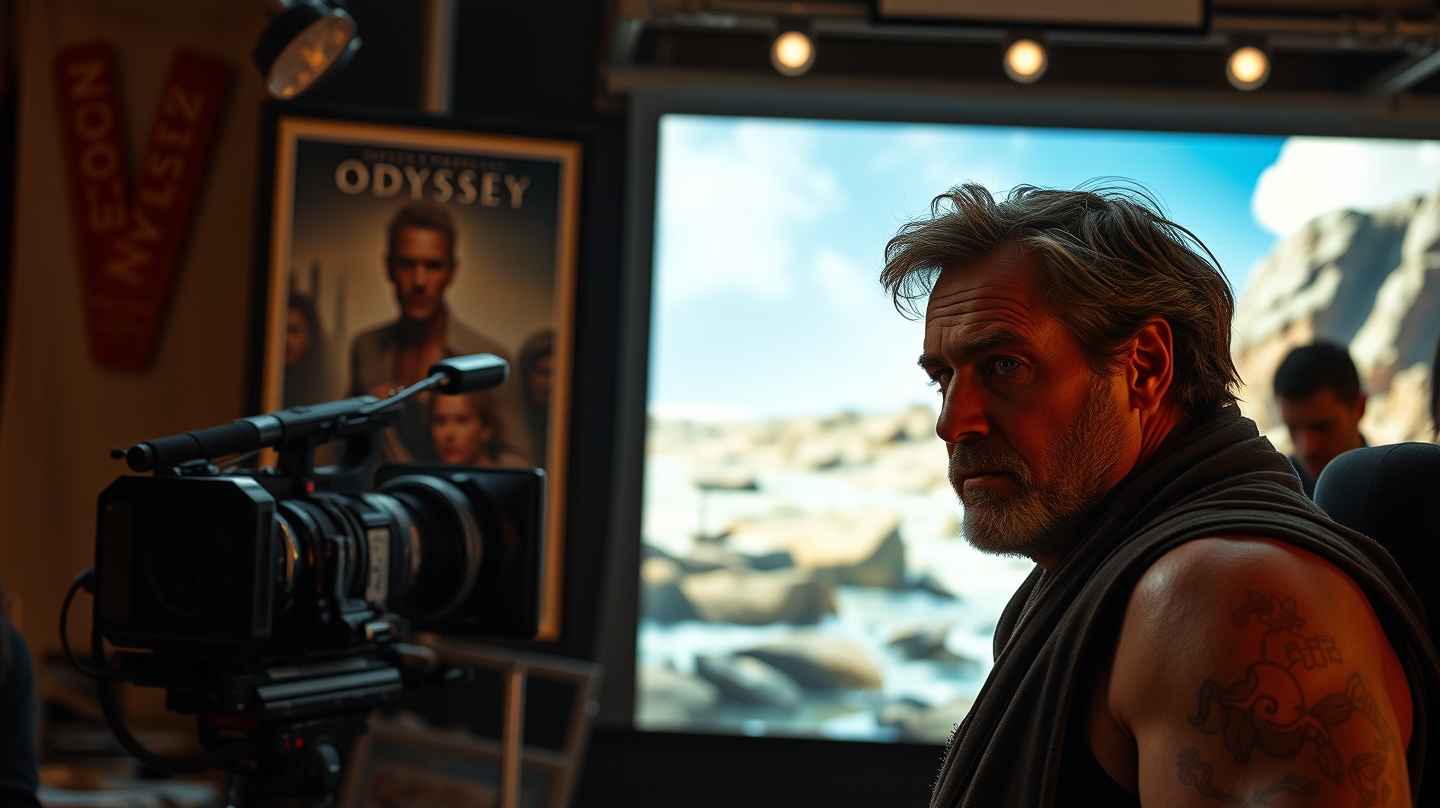
When most analysts predicted a modest start for Christopher Nolan’s latest, the numbers told a different story: $124.5 million from 3,919 U.S. theaters in its opening weekend, a figure that outstrips every R‑rated launch this year and rivals the biggest blockbusters of the decade. The contrast between a near‑three‑hour, sword‑and‑sandal saga and the bite‑size, on‑demand content that dominates today’s screens raises a simple question—can traditional cinema still command mass attention?
"The Odyssey," a modern retelling of Homer’s ancient poem, arrived with a star‑studded cast—Matt Damon as Odysseus, Tom Holland, Anne Hathaway, Robert Pattinson, Lupita Nyong’o, Zendaya, Charlize Theron, Elliot Page, Jon Bernthal and John Leguizamo. Directed and written by Nolan, the film earned an "A" on CinemaScore and a 95 % critic rating on Rotten Tomatoes. Yet its commercial triumph is more than a testament to star power; it signals a shift in audience behavior that could reshape distribution strategies across entertainment sectors.
From a raw numbers perspective, the domestic haul places "The Odyssey" as Nolan’s strongest opening since 2012’s "The Dark Knight Rises" ($160 million) and the third‑largest debut of 2026, trailing only behind "Toy Story 5" ($159 million) and "The Super Mario Galaxy Movie" ($131 million). Internationally, the film added $139.6 million across 73 markets, pushing its worldwide total to $264.1 million—Nolan’s biggest global opening ever, eclipsing even "Oppenheimer" and the 2008‑09 "Dark Knight" duology.
Why does this matter for an industry that has been courting streaming platforms for years? First, the demographic data reveal that 56 % of ticket buyers were male and half of the audience fell between 18 and 34, the same cohort that fuels streaming subscriptions. Their willingness to pay premium prices for a theatrical experience suggests that high‑concept, event‑style cinema can still attract younger viewers when the content feels exclusive enough to merit a trip to the multiplex.
Second, the success underscores a broader media transition. While Hollywood leans into day‑and‑date releases, the NFL has been pioneering a parallel shift: moving from traditional broadcast contracts to digital streaming rights with platforms like Amazon Prime and Peacock. Both cases illustrate that premium, live‑or‑event content—whether a football game or a blockbuster film—retains value when delivered in a communal setting, even as the underlying distribution channels evolve.
Industry analysts point to the film’s strong word‑of‑mouth and the surge in premium‑format attendance (IMAX, Dolby Cinema) as structural insights. The premium‑format premium not only boosts per‑ticket revenue but also reinforces the theater’s role as a technology showcase, a niche that streaming services cannot fully replicate. This dynamic creates a feedback loop: higher‑quality formats drive attendance, which in turn justifies further investment in immersive cinema technology.
Real‑world implications are already emerging. Studios are re‑evaluating release windows, opting for shorter theatrical runs before moving to streaming, but they may also prioritize projects that can command a premium theater experience. Distributors are negotiating more favorable revenue splits for premium formats, and exhibitors are upgrading projection and sound systems to capture a larger share of the premium‑ticket market.
For audiences, the takeaway is clear: the theater is not dead, but it is evolving. Viewers who crave a collective, high‑impact experience are willing to seek it out, even for an R‑rated, three‑hour epic that limits younger attendance. As the line between traditional cinema and digital platforms blurs, the success of "The Odyssey" offers a blueprint for how content creators can leverage event‑style storytelling to thrive across both realms.