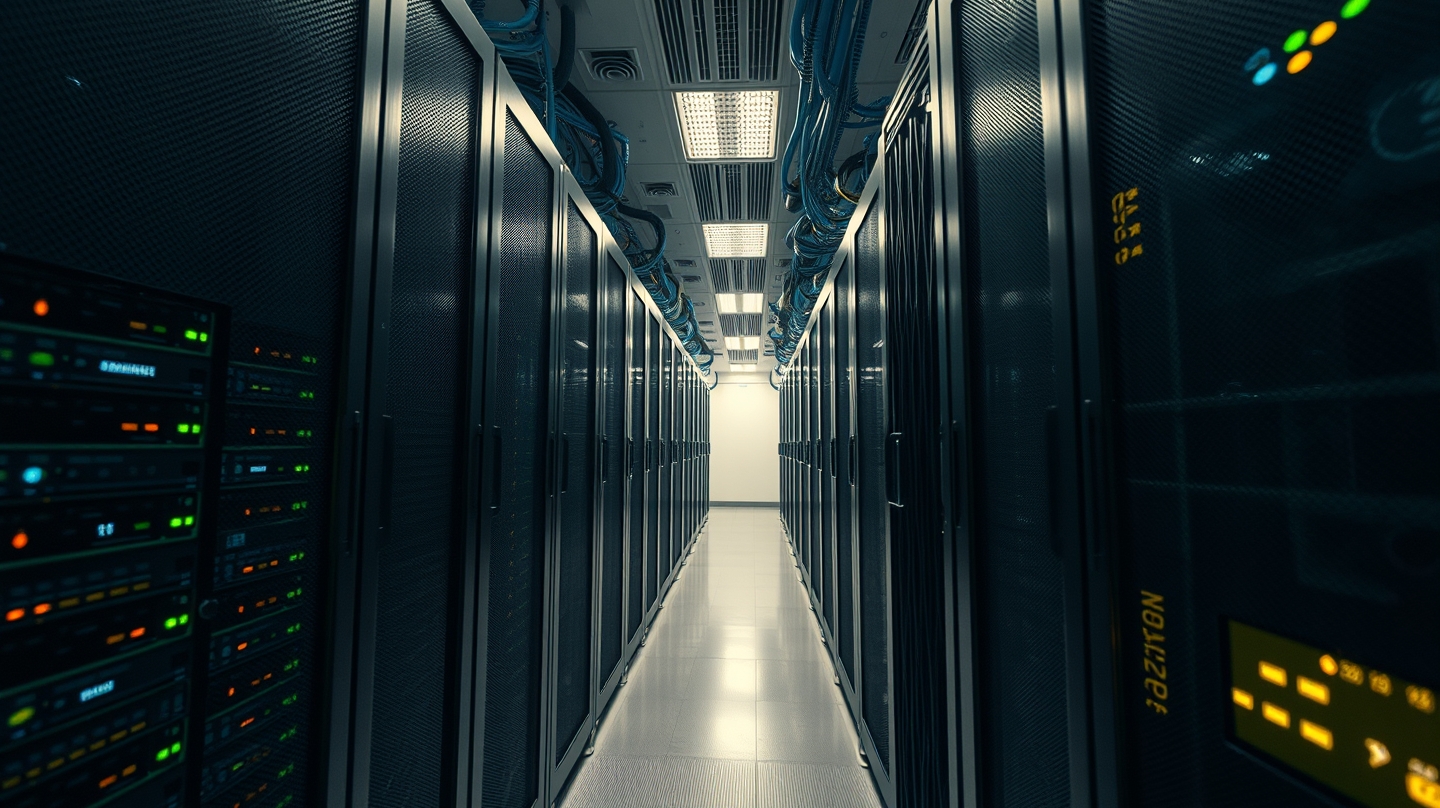
The US is facing an electricity affordability crisis, with demand rising quickly for the first time in decades. Experts say that data centers, which are driving a significant portion of this demand, must become more flexible in their energy usage to help mitigate the crisis.
A recent study by Duke University's Nicholas Institute found that just a 1% to 2% reduction in data center peak demand can reduce electricity rates by 0.5% to 2.8% and protect reliability. This is particularly important as the demand for data centers continues to grow, driven by the increasing use of artificial intelligence and cloud computing.
According to Nat Bullard, chief strategy officer of research group Halcyon, the growth rates of cloud businesses such as Amazon Web Services, Microsoft Azure, and Google Cloud are extremely high, with revenues increasing by 28%, 40%, and 63% respectively from Q1 2025 to Q1 2026. This growth can only be serviced with compute, and that compute can only serve when energized, highlighting the need for data centers to become more flexible in their energy usage.
Public opposition to data centers, focused on local electricity costs, can be addressed by flexibility, experts say. Data center flexibility can reduce electricity demand, which reduces the costs to ratepayers of investments to protect reliability, according to the North American Electric Reliability Corp.
The Electric Power Research Institute (EPRI) has developed a flexibility framework, known as FlexMosaic, which provides a framework for data centers to become more flexible in their energy usage. The framework includes five flexibility classes, ranging from supporting power systems during infrequent extreme stresses to providing frequency stabilizing.
Key determinants of the flexibility class of a data center are the notification time it needs, the duration and frequency of its response, and the depth and quickness of its flexibility. By becoming more flexible, data centers can not only reduce their peak demand but also maximize their speed to power, according to EPRI.
The challenge remaining is to resolve control issues between risk-averse utilities and impatient data center operators. However, experts agree that data center flexibility can get a data center interconnected faster, make it a benefit to system reliability, and increase system utilization, which lowers rates.
In conclusion, as the US continues to face an electricity affordability crisis, data centers must become more flexible in their energy usage to help mitigate the crisis. By reducing their peak demand, data centers can not only lower electricity rates but also maximize their speed to power, making them a more attractive option for businesses and individuals alike.