When Elon Musk’s SpaceX captured headlines as the most valuable private launch firm, another, quieter debut was rewriting the math for early‑stage investors: Quantinuum’s June 4 IPO opened at $60, rose to $68 before closing the day at $60.38, and by July 10 the stock was trading around $74. A $1,000 stake placed at the offering price would have generated roughly $233 in profit, outpacing the buzz around Musk’s trillion‑dollar venture.
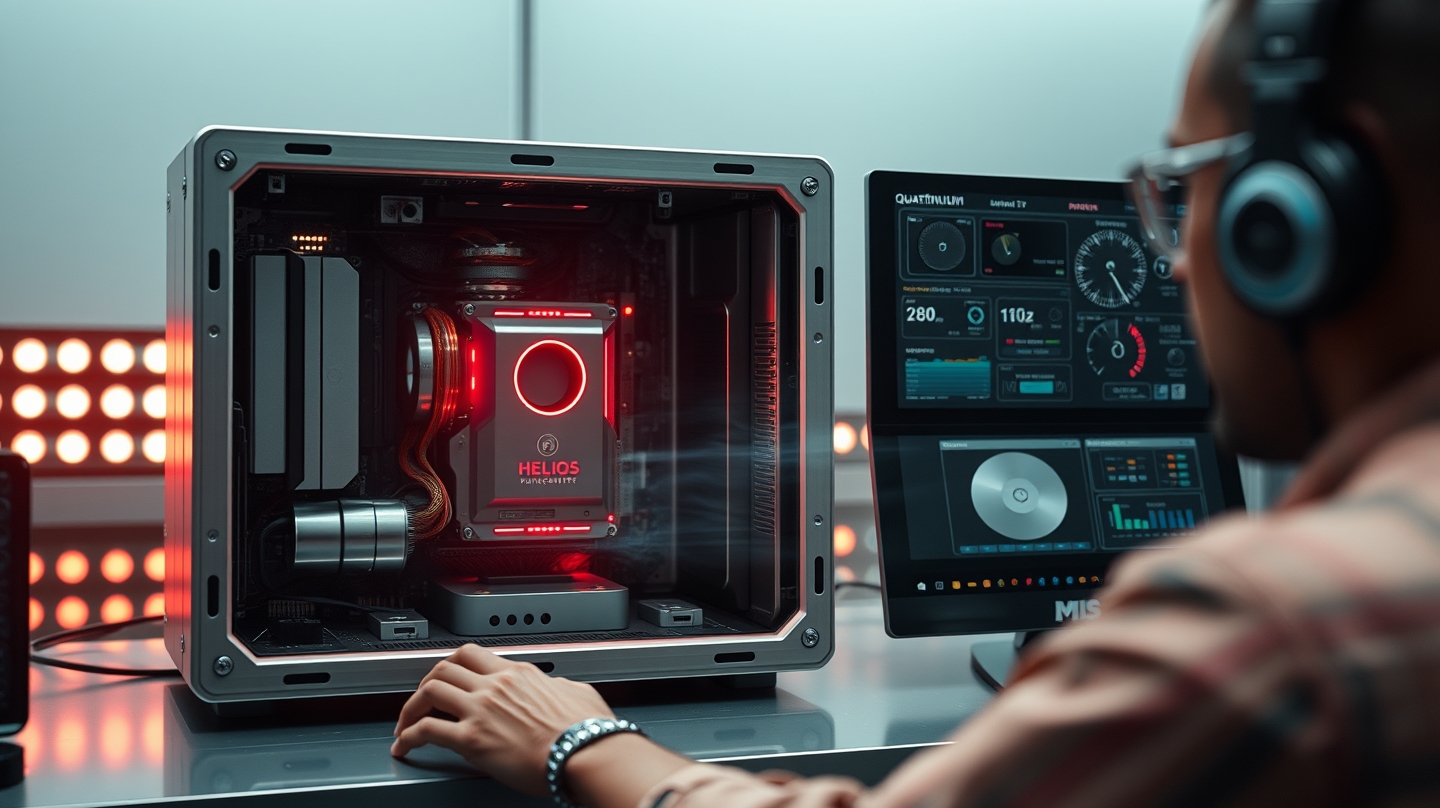
Beyond the headline‑grabbing price swing, Quantinuum’s performance signals a broader shift. The company, a spin‑out of Honeywell and Cambridge Quantum, is the first pure‑play quantum computing firm to list in the United States. Its flagship machine, Helios, is billed as the most accurate commercial quantum computer available today. Analysts at Morgan Stanley and Rosenblatt have already pegged the stock as a “Strong Buy,” with price targets ranging from $78 to $155 within the next year—a potential upside of more than 100 percent from current levels.
Why does this matter for investors and the technology landscape? First, the rapid price appreciation suggests the market still views quantum hardware as undervalued, despite the sector’s reputation for long development cycles. Second, Quantinuum’s progress is tightly linked to the rise of technology‑driven automation. Quantum processors promise to solve optimization problems that strain classical supercomputers, from supply‑chain routing to real‑time media rendering. As firms adopt these solutions, workflow transformation accelerates, reducing latency and cutting operational costs.
Industry observers note that the quantum surge dovetails with a wave of automation across media infrastructure. Streaming platforms, for example, are experimenting with quantum‑enhanced encoding algorithms that could compress high‑resolution video more efficiently, lowering bandwidth demands. In manufacturing, quantum‑enabled scheduling tools are already being piloted to balance production lines with unprecedented precision. Quantinuum’s Helios, with its superior qubit fidelity, positions the company to supply the core compute power for these emerging applications.
Nevertheless, the optimism is tempered by a realistic appraisal of the technology’s maturity. The sector remains comparable to a superposition—simultaneously impressive in research breakthroughs yet modest in commercial impact. Quantinuum’s stock, while 30.66% above its IPO price, has slipped 14.74% from its all‑time high of $86.79, indicating a cautious market that rewards early gains but watches for sustained delivery.
From an investor perspective, the key question is whether Quantinuum can transition from a promising prototype to a reliable engine for automation. The answer will likely hinge on three factors: the scalability of its quantum hardware, the development of software ecosystems that translate quantum advantage into business value, and the ability to secure long‑term contracts with enterprises seeking to automate complex decision‑making.
For the broader tech ecosystem, Quantinuum’s trajectory offers a concrete case study of how quantum computing is moving from research labs into the operational stack of everyday businesses. As more companies adopt quantum‑enhanced tools, we can expect a ripple effect: faster product design cycles, more resilient logistics networks, and media platforms that deliver richer content with lower latency. Those changes, in turn, reinforce the demand for skilled quantum engineers and a new breed of automation‑focused venture capital.
In short, Quantinuum’s IPO performance is more than a short‑term trading story. It reflects the early stages of a technology adoption curve that could redefine automation across industries, from media to manufacturing. Investors who understand the nuance—recognizing both the upside potential and the inherent developmental risk—will be better positioned to navigate the quantum frontier.