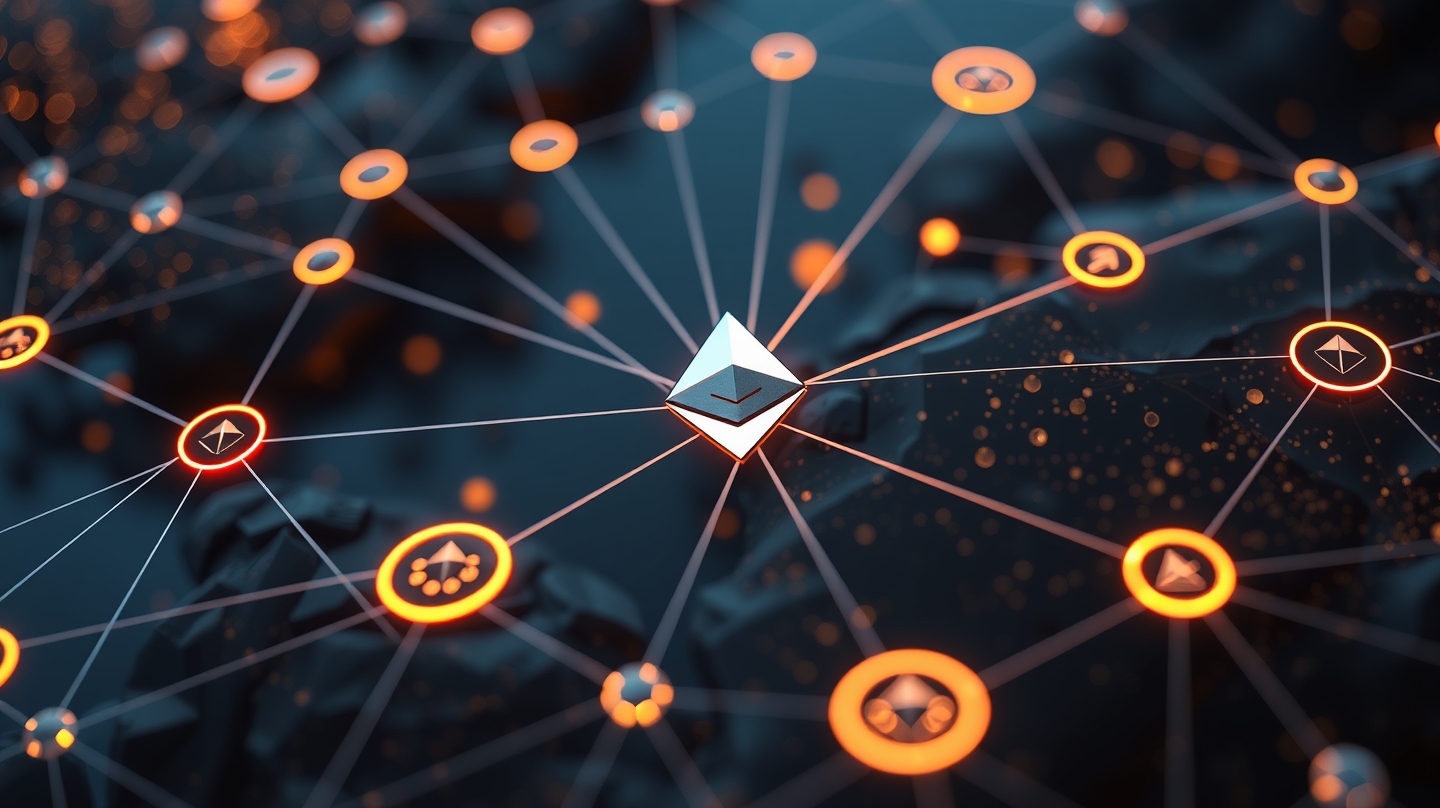
Vitalik Buterin unveiled a draft called the "strawmap," outlining a third major evolution for Ethereum that would replace almost every core component while claiming a low‑risk path forward. The proposal—dubbed Lean Ethereum—contrasts sharply with the rapid rollout of the 2022 Merge, yet its ambition has already sparked a debate over whether three to four years is fast enough for a market hungry for lower costs and stronger security.
At the heart of the plan are recursive STARKs, a cryptographic proof system that would shift validation from full transaction execution to succinct proofs. By embedding these proofs into the protocol, nodes could verify the chain without replaying every transaction, dramatically reducing computational load. The move also aligns Ethereum with post‑quantum standards recently finalized by NIST, swapping vulnerable signatures for hash‑based schemes designed to survive quantum attacks.
Perhaps the most visible change targets data storage. Buterin proposes a new, restrictive state type that could expand the on‑chain data capacity toward 100 TB by 2030. Converting ERC‑20 tokens or NFTs to this format could cut gas fees by more than ten times, a claim that, if realized, would reshape the economics of decentralized finance (DeFi) and non‑fungible token markets. Complex applications such as decentralized exchanges would retain their existing architecture, preserving compatibility while benefiting from lower transaction costs.
Privacy, long a secondary concern, is elevated to a first‑class goal. By integrating privacy primitives directly into the base layer, developers could build confidential applications without relying on external roll‑ups or sidechains. The nearer‑term Glamsterdam upgrade, slated for the coming months, is expected to raise the gas limit, providing a modest boost before the larger Lean changes take effect.
The roadmap has already drawn criticism from within the Ethereum research community. Dankrad Feist, a senior researcher, applauded the vision but warned that a three‑ to four‑year horizon may be too slow, especially given recent advances in large language model‑driven research. Feist argues that AI‑accelerated development could compress the timeline to a single year, a prospect that the Foundation acknowledges but has not committed to.
Beyond technical debates, the timing intersects with a leaner Ethereum Foundation that recently cut 20 % of its staff and shifted to an endowment‑style budget. Market reaction has been muted; Ether (ETH) has slipped about 41 % in 2026, hovering near $1,760, reflecting investor caution amid the uncertainty of delivery. Institutional players, who monitor both fee structures and security guarantees, are watching closely. Lower fees could make Ethereum more attractive for large‑scale asset managers seeking to deploy on‑chain strategies, while quantum‑resistant cryptography may address regulatory concerns about long‑term data integrity.
From a structural perspective, Lean Ethereum represents a rare instance of a blockchain redesign that touches consensus, data availability, and cryptography simultaneously. The integration of recursive STARKs redefines the validation pipeline, while the new state type reshapes storage economics. Together, these layers could reduce the cost of entry for new users, improve the viability of high‑throughput DeFi protocols, and position Ethereum as a more resilient platform for institutional adoption.
In practical terms, developers who migrate token contracts to the new state format could see transaction costs drop from $0.10 to under $0.01 per transfer, a shift that would make micro‑payments and high‑frequency trading on‑chain economically feasible. For investors, the promise of reduced fees and stronger security may translate into steadier demand for ETH, potentially stabilizing price volatility that has plagued the asset since the Merge.
While the strawmap remains a draft, its core ideas signal a strategic pivot: prioritize scalability, cost efficiency, and long‑term security over incremental upgrades. Whether the Ethereum community can deliver on this vision within the proposed timeline will likely determine the platform's competitive edge against emerging layer‑1 alternatives that already tout low fees and quantum‑ready cryptography.