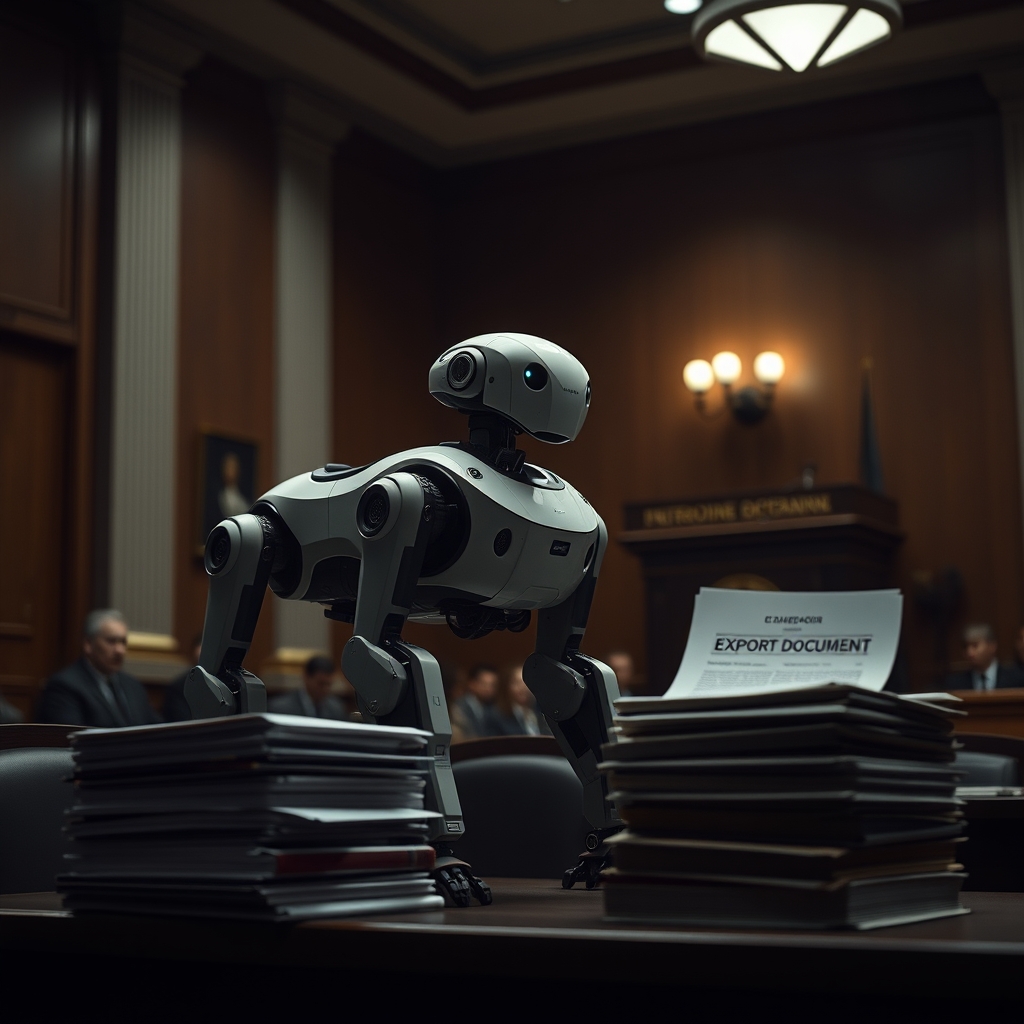
The bipartisan American Security Robotics Act, introduced in March by Senators Tom Cotton and Chuck Schumer and Representative Elise Stefanik, seeks to prohibit U.S. government procurement of Chinese-made ground robots such as humanoids, dog‑type platforms and crawler units. The proposal follows the FCC's recent router restrictions and is part of a larger effort to isolate sensitive technology from Beijing.
What the bill would change
By defining "ground robot" to include any unmanned system that moves on legs, wheels or tracks, the legislation forces federal agencies to source only domestically produced hardware or components sourced from nations deemed secure. The structural tension is stark: national security demands tighter controls, yet the same controls could strain supply‑chain efficiency, forcing agencies to source parts from Japan or South Korea at higher cost.
Economically, the act creates a short‑term advantage for firms like Ghost Robotics that already meet the new criteria. However, without a coordinated strategy to replace Chinese sub‑components, those firms may encounter bottlenecks when their own suppliers rely on Chinese semiconductors or sensors. The result is a paradox where eliminating competition at the top of the value chain increases dependence on foreign inputs lower down.
Historically, the United States has moved from selective bans on specific chips to sweeping decoupling measures across semiconductors, port cranes, telecom base stations and, soon, uncrewed aircraft systems. This legislation marks the latest extension of that trajectory, signalling that the frontier of techno‑economic competition now includes embodied AI in the form of robots.
"I see the robots and the routers as the latest in a long line of growing tech security concerns," sociologist Kyle Chan testified, underscoring the continuity of policy focus.
In a Washington lab, the faint whir of a test robot's servos punctuated a quiet afternoon, while a procurement officer paused, fingers hovering over the approval button, uncertain whether the new restrictions would delay a critical deployment. That moment of hesitation illustrates the human cost of policy shifts that appear abstract on paper.
The legislation matters because it reshapes the frontier of U.S. national security and the economics of emerging robotics.