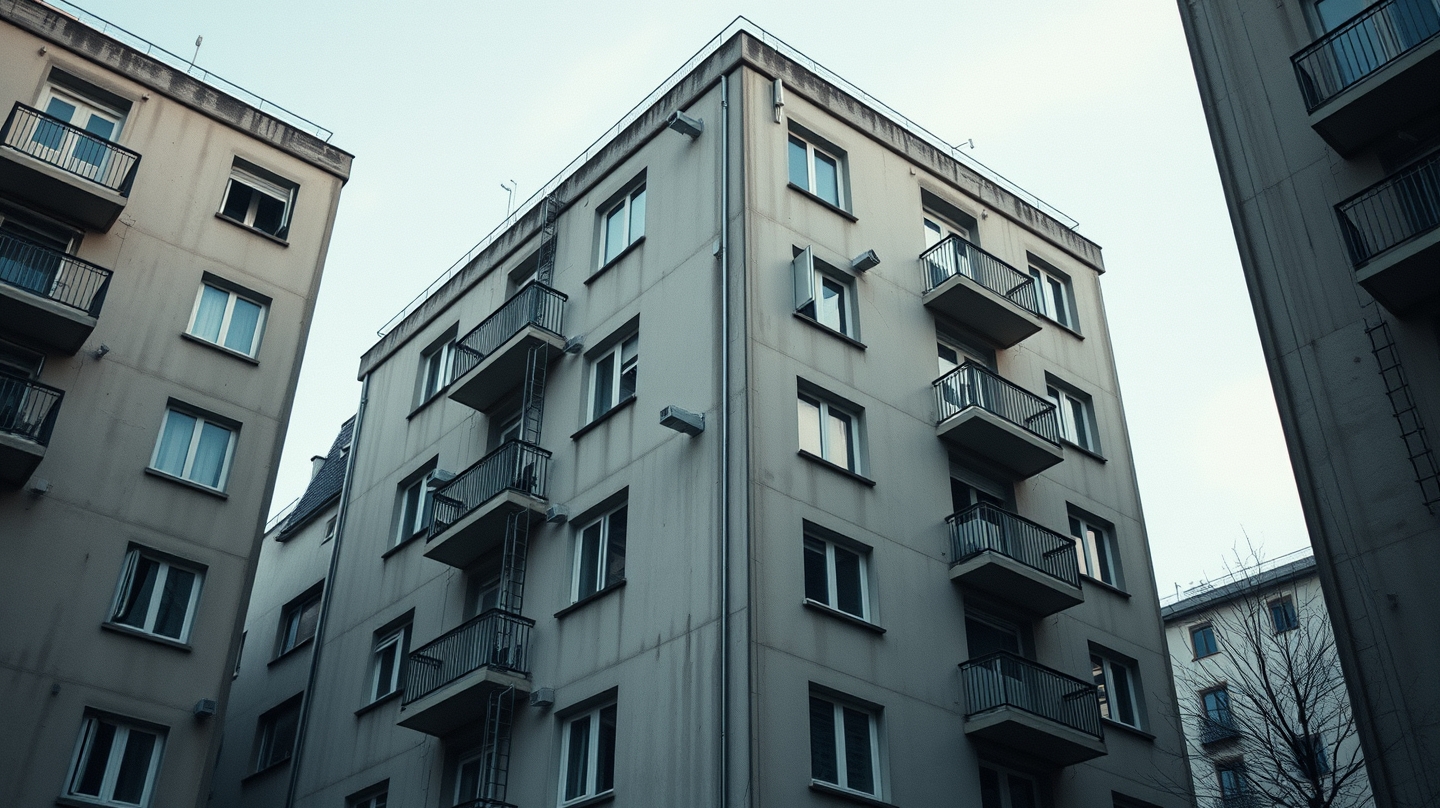
When a concrete slab that once housed a collective farm family is surveyed by a drone, the image looks identical to any other block built under the same five‑year plan – until the software highlights hidden structural voids, energy‑loss points, and opportunities for modular upgrades. That contrast between uniform past and data‑rich present frames Hungary’s ongoing architectural transformation.
During the socialist era, the state dictated every line on the map: cooperative farms were merged, housing estates rose in identical rows, and civic buildings served a single, centralized purpose. Sociologist Virág Molnár argues in *Building the State* that this top‑down reshaping was not a side effect but a core political tool, embedding ideology in brick and mortar. Decades later, the very structures that once symbolized collective ownership are now scattered across a market‑driven landscape, many standing vacant or underused.
Privatization in the 1990s returned farmland to smallholders and emptied civic spaces, leaving a patchwork of ownership that complicated redevelopment. Levente Polyák of the Hungarian Contemporary Architecture Centre notes a decisive shift: developers are moving away from costly new‑build megaprojects toward the incremental, technology‑enabled reuse of existing stock. Digital twins, BIM (Building Information Modeling), and AI‑driven energy audits allow investors to assess a building’s potential without demolition, reducing both capital outlay and environmental impact.
Budapest’s flagship Liget development illustrates the tension between scale and technology. While the cultural complex – featuring Sou Fujimoto’s House of Music – attracted foreign firms and massive public funds, the city’s younger architects are turning their attention to smaller, data‑rich interventions. Automated workflow platforms now streamline the permitting process for adaptive‑reuse projects, cutting approval times by up to 30 percent and making it feasible for local firms to compete.
This technology‑driven approach has concrete implications for everyday Hungarians. By retrofitting existing housing blocks with smart insulation, renewable energy systems, and modular interior layouts, cities can address chronic affordability gaps without the social disruption of large‑scale demolition. Moreover, the data collected from sensor networks informs municipal planners about occupancy trends, enabling more responsive public services.
Beyond housing, the shift signals a broader industry transformation. Media infrastructure, once tied to state‑run broadcasting towers, is now being integrated into mixed‑use developments through automated content‑delivery networks. This convergence of architecture and digital media creates new revenue streams for property owners and expands cultural access for residents.
Yet the transition is not uniform. Rural areas, where restitution returned vineyards and farms to private hands, see slower adoption of digital tools due to limited broadband and investment. The disparity underscores a larger market shift: urban centers accelerate tech‑enabled reuse, while peripheral regions risk lagging behind, potentially widening regional inequality.
In sum, Hungary’s built environment is moving from a monolithic, ideology‑driven model to a nuanced, technology‑mediated ecosystem. The structural insight is clear – adaptive reuse powered by automation offers a pragmatic path to preserve heritage, meet housing demand, and embed modern services without erasing the past.