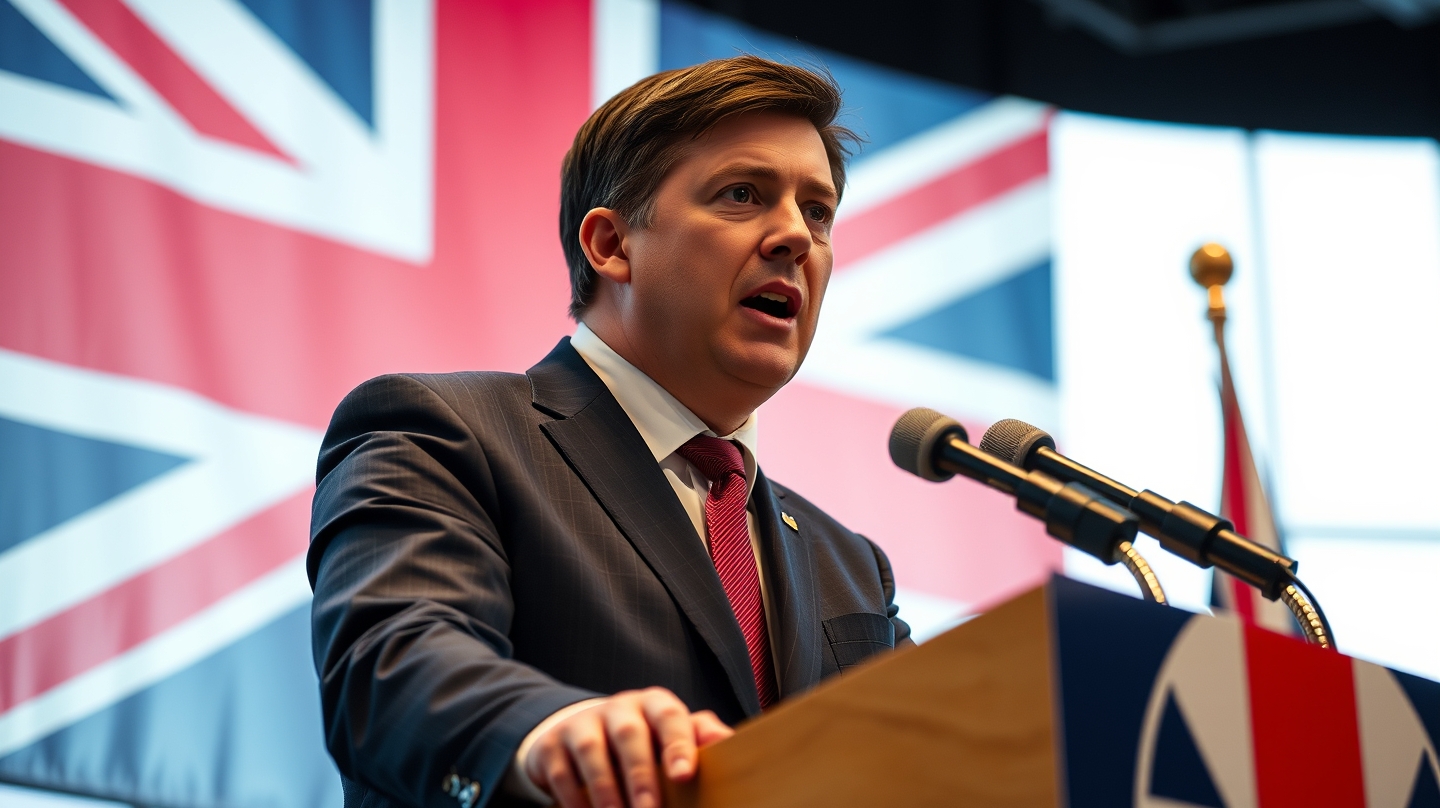
On a Friday that could rewrite the rhythm of Westminster, Andy Burnham will replace Sir Keir Starmer as Labour leader, setting in motion a three‑day handover that will see him sworn in as the United Kingdom’s seventh prime minister without a general election.
The formal transition begins Monday when Starmer meets King Charles to tender his resignation. Within hours the monarch will invite Burnham to form a government, a ceremony traditionally held at Buckingham Palace. After accepting, Burnham will stride to Downing Street, likely delivering his first speech outside No 10, before convening a new cabinet.
Burnham’s ascent is rooted in a narrow parliamentary calculus rather than a popular vote. Labour’s landslide win in 2024 quickly eroded as policy reversals and a bruising local‑election defeat by Reform UK sowed doubt among MPs. Burnham’s by‑election victory in a Manchester seat, defeating the Reform candidate, convinced senior figures—including former health secretary Wes Streeting—to rally behind him, leaving the leadership contest uncontested.
Beyond the political mechanics, Burnham’s agenda signals a pronounced tilt toward technology‑driven public‑service reform. He has pledged to keep income tax, VAT and National Insurance unchanged, but his flagship proposal is to devolve greater authority to local councils over housing and transport. To operationalise that shift, Burnham plans to establish a secondary “No 10” hub over 150 miles north of London, likely in Manchester, a city already emerging as a digital‑innovation corridor.
Embedding automation into that hub could accelerate the rollout of AI‑enabled planning tools, smart‑transport coordination, and data‑sharing platforms across England’s regions. By centralising a tech‑focused civil‑service team in the north, the government hopes to reduce the historic London‑centric bias in policy design, fostering a more equitable digital infrastructure. Analysts note that such a move could attract private‑sector partners eager to pilot cloud‑native workflows in a public‑service setting, potentially reshaping the UK’s media‑infrastructure landscape.
Burnham’s broader policy hints—ranging from a prospective wealth tax to reforms in welfare, social care, immigration and defence—remain sketchy. Yet his emphasis on council empowerment dovetails with a growing consensus that local authorities must become the primary nodes for automation, from predictive maintenance of public housing to AI‑assisted case management in social services. If realised, these changes could lower administrative overhead, shorten service delivery times, and generate a cascade of tech‑adoption across the public sector.
The creation of a northern No 10 team also carries real‑world implications for the UK’s tech labour market. Manchester’s existing tech ecosystem—home to several fintech and AI start‑ups—could see a surge in public‑sector hiring, research grants, and collaborative pilots. That influx may stimulate regional talent pipelines, encouraging universities and vocational colleges to expand curricula in data science, cybersecurity, and digital governance.
While Burnham has ruled out an immediate general election, his tenure will be judged on how swiftly he can translate these tech‑centric promises into measurable outcomes. The speed of the constitutional handover—three days from party leadership to prime‑ministerial oath—underscores the UK’s capacity for rapid political change, a factor that could either enable swift policy implementation or expose gaps in coordination between Westminster and devolved administrations.
In the background, Burnham’s personal life remains a stabilising narrative. He is married to Marie‑France van Heel, a former marketing strategist he met at Cambridge in 1989. Their long‑standing partnership, though private, offers a humanising counterpoint to the high‑stakes political drama unfolding in London and Manchester.