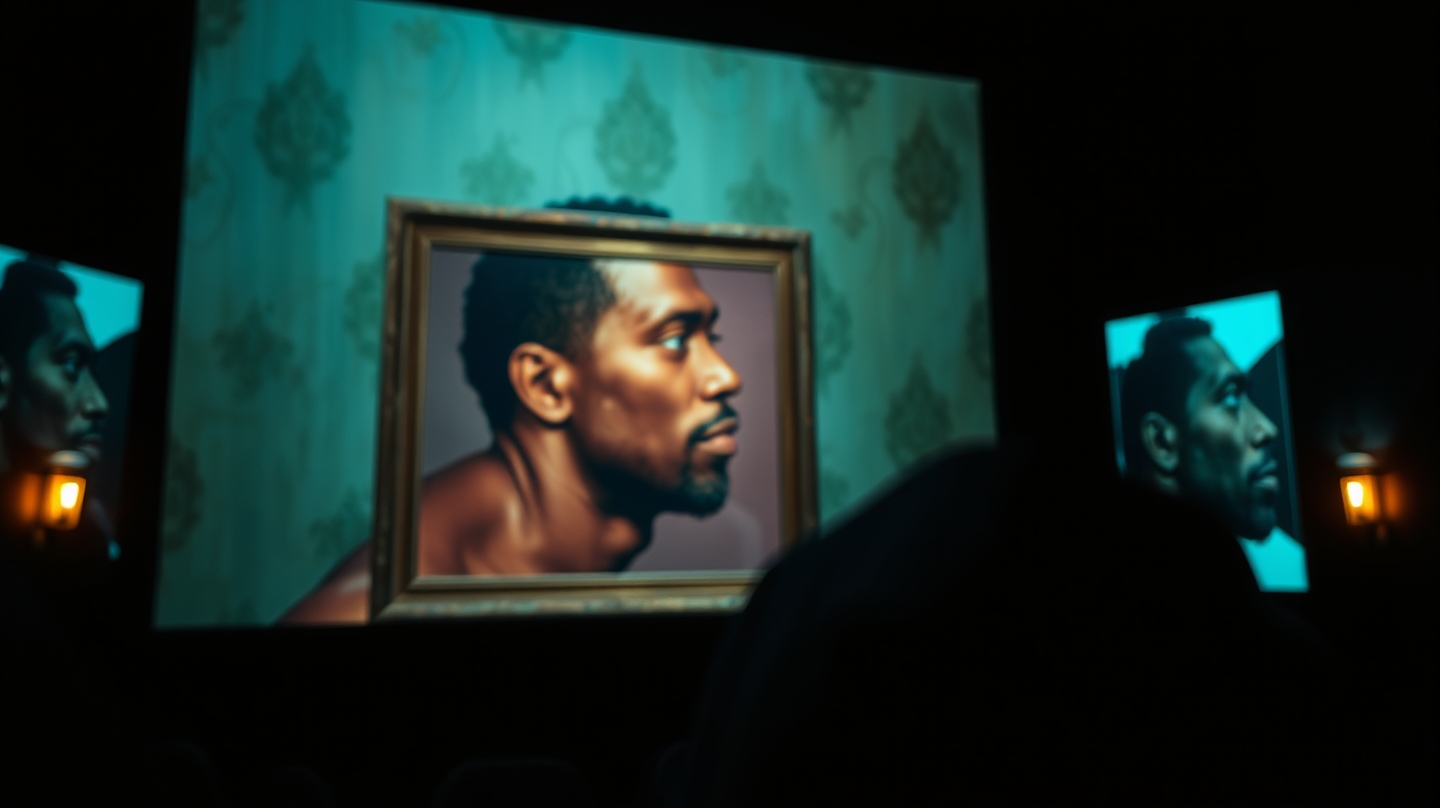
When former NFL offensive lineman Ernie Barnes first picked up a paintbrush, few could have predicted that his work would one day be displayed inside a purpose‑built, technology‑driven theater. Today, filmmakers Chike Ozah and Coodie Simmons are turning that prediction into reality with Who Is Ernie Barnes?, a documentary that blends archival footage, interactive installations and automated media workflows to deliver a three‑act, immersive journey through the artist’s life.
The project launches later this month as a limited‑run experience in Los Angeles, timed for Super Bowl LXI, before touring Chicago, New York and, ultimately, Barnes’ adopted hometown during the LA28 Summer Olympics. Each act is presented in a specially designed “theater” that mirrors a pivotal phase of Barnes’ career—his early days as a professional football player, his breakthrough as a painter, and his lasting cultural impact. After the screening, audiences move into curated rooms where motion‑sensor lighting, AI‑generated soundscapes and real‑time data visualizations expand on the narrative.
“You can’t let your imagination get in the way of God’s manifestation,” Barnes’ longtime assistant Luz Rodriguez told Variety. The sentiment now lives not only in the paintings that once hung on Simmons’ walls, but also in the automated pipelines that stitch together video, audio and interactive assets on the fly. By employing cloud‑based rendering farms and AI‑assisted editing, the filmmakers cut post‑production time by more than 30 percent, allowing them to iterate on immersive set designs up to the final week of the run.
This technology adoption does more than streamline workflow; it signals a broader shift in how cultural institutions can leverage automation. Traditional museum exhibitions often rely on static displays and manual curation. In contrast, the Barnes experience uses a modular media infrastructure that can be reprogrammed for different venues, languages or accessibility needs with a single click. The result is a scalable model that could be replicated for other artists, athletes or historical figures, democratizing high‑end immersive storytelling.
Beyond the logistical gains, the documentary’s format raises questions about audience behavior. Viewers are no longer passive observers; they become participants who trigger sensors, influence lighting, and even contribute to a collective visual collage displayed on a central screen. This interactivity aligns with a growing trend in media where personalization and real‑time feedback loops drive engagement, a pattern already evident in streaming platforms’ recommendation engines and live‑event gamification.
For the sports‑art crossover that Barnes epitomized, the film offers a concrete example of how technology can preserve and amplify legacy. Barnes’ iconic “Sugar Shack” painting, which fetched over $22 million at auction, will be rendered in 4K resolution and projected onto a curved wall that mimics the original canvas texture. The projection is synchronized with a custom‑built AI that analyzes visitor movement, subtly shifting focus to different figures in the painting based on where viewers linger.
Industry analysts see this as a microcosm of the entertainment sector’s move toward automation‑driven media infrastructure. By integrating automated transcoding, metadata tagging and cloud distribution, content creators can launch multi‑city rollouts without rebuilding physical sets from scratch. The Barnes documentary’s success could encourage studios to invest in similar pipelines, potentially reducing costs for independent filmmakers and expanding the reach of niche stories.
Ultimately, the project underscores why Ernie Barnes remains relevant: his ability to bridge two worlds—sports and visual art—mirrors today’s convergence of physical experience and digital innovation. As audiences walk from a recreated 1970s locker room into a futuristic gallery, they witness not only a personal biography but also a live case study of how technology can transform cultural storytelling.