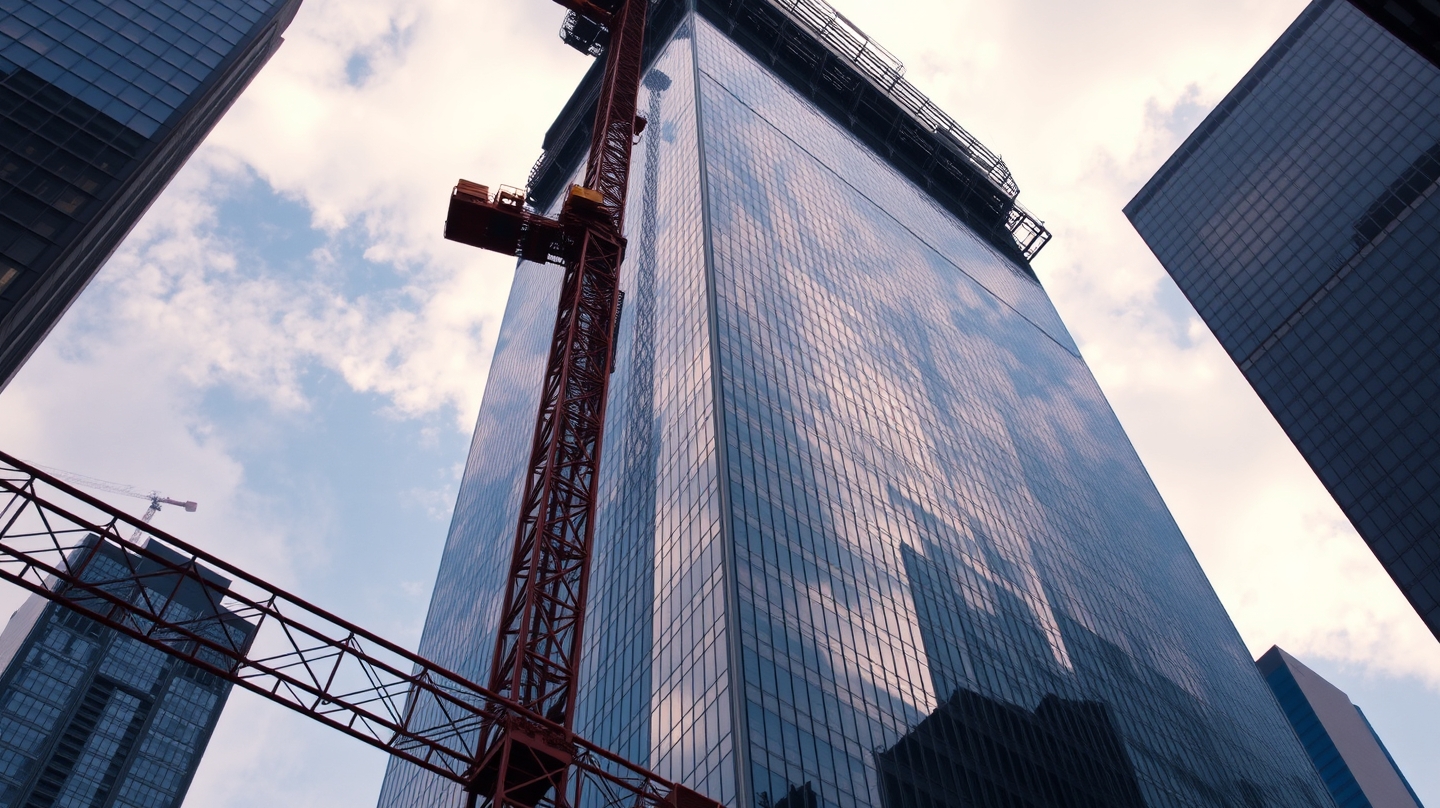
When a crane lifted the first steel beam for 2 World Trade Center, the sight juxtaposed a symbol of resilience with a quiet revolution in construction technology. The ceremony, held on July 9, marked the start of the final commercial tower at New York’s World Trade Center campus and introduced a suite of digital tools that could redefine how skyscrapers are built.
Turner Construction, the New York‑based contractor, will erect a 1,226‑foot, 2‑million‑square‑foot headquarters for American Express. The project, slated for completion in 2031, is unique not only for its scale but for its commitment to union labor and a technology‑first construction methodology. Governor Kathy Hochul’s office confirmed that every core interior task—from concrete pours to mechanical‑electrical‑plumbing (MEP) installation—will be performed by union crews equipped with automated equipment and real‑time data platforms.
Why technology matters on a 2‑million‑square‑foot site
At the heart of the build is a digital twin—a virtual replica of the tower that updates in sync with on‑site progress. Engineers use Building Information Modeling (BIM) to coordinate structural steel, façade panels, and interior systems, reducing clashes that historically caused costly delays. Prefabricated modules for restrooms, conference pods and even whole floor plates are fabricated off‑site, then lifted by high‑capacity cranes and bolted into place. Sensors embedded in these modules feed performance data back to the digital twin, allowing the project team to verify alignment, weight distribution and energy consumption before a single brick is set.
Automation-driven workflow transformation
The construction site will also trial autonomous delivery robots that transport tools, safety gear and small components along pre‑mapped routes. Drones will conduct weekly aerial surveys, generating point‑cloud maps that feed directly into the BIM environment. These workflows cut manual inventory checks by an estimated 30 percent and free skilled tradespeople to focus on complex assembly tasks that still require human judgment.
Environmental and social implications
Beyond efficiency, the tower’s design targets LEED certification through fully electric, energy‑efficient systems. More than an acre of outdoor terraces and gardens will host native plantings, creating micro‑climates that mitigate the urban heat island effect. The union‑only labor policy underscores a broader commitment to equitable job creation, projecting up to 10,000 occupants across flexible workspaces once the building opens.
Wider industry impact
Turner’s approach reflects a growing trend in high‑rise construction: the convergence of automation, sustainability and skilled labor. As New York City grapples with a shortage of qualified construction workers, the integration of robotics and data‑rich platforms offers a pathway to maintain productivity without compromising safety or quality. Analysts predict that similar digital‑first strategies will become standard for future megaprojects, especially as municipalities tighten carbon‑reduction mandates.
For American Express, the new headquarters is more than a prestige address. The building’s flexible floor plates and smart‑building infrastructure support hybrid work models, allowing employees to transition seamlessly between on‑site collaboration zones and remote workstations. The technology backbone—high‑density fiber, edge‑computing hubs and integrated IoT sensors—positions the tower as a media‑infrastructure hub that can host live‑streamed events, data‑intensive analytics and next‑generation communication platforms.
What’s next?
As the tower rises, the construction industry will watch closely. Success could validate a model where union labor, advanced automation and sustainability coexist, reshaping expectations for future urban development. Conversely, any setbacks may prompt a recalibration of how quickly such technologies can be scaled across the sector.
In the meantime, the crane’s silhouette against the Manhattan skyline serves as a visual reminder: the next chapter of the World Trade Center is being written not just in steel and glass, but in code, data and electric power.