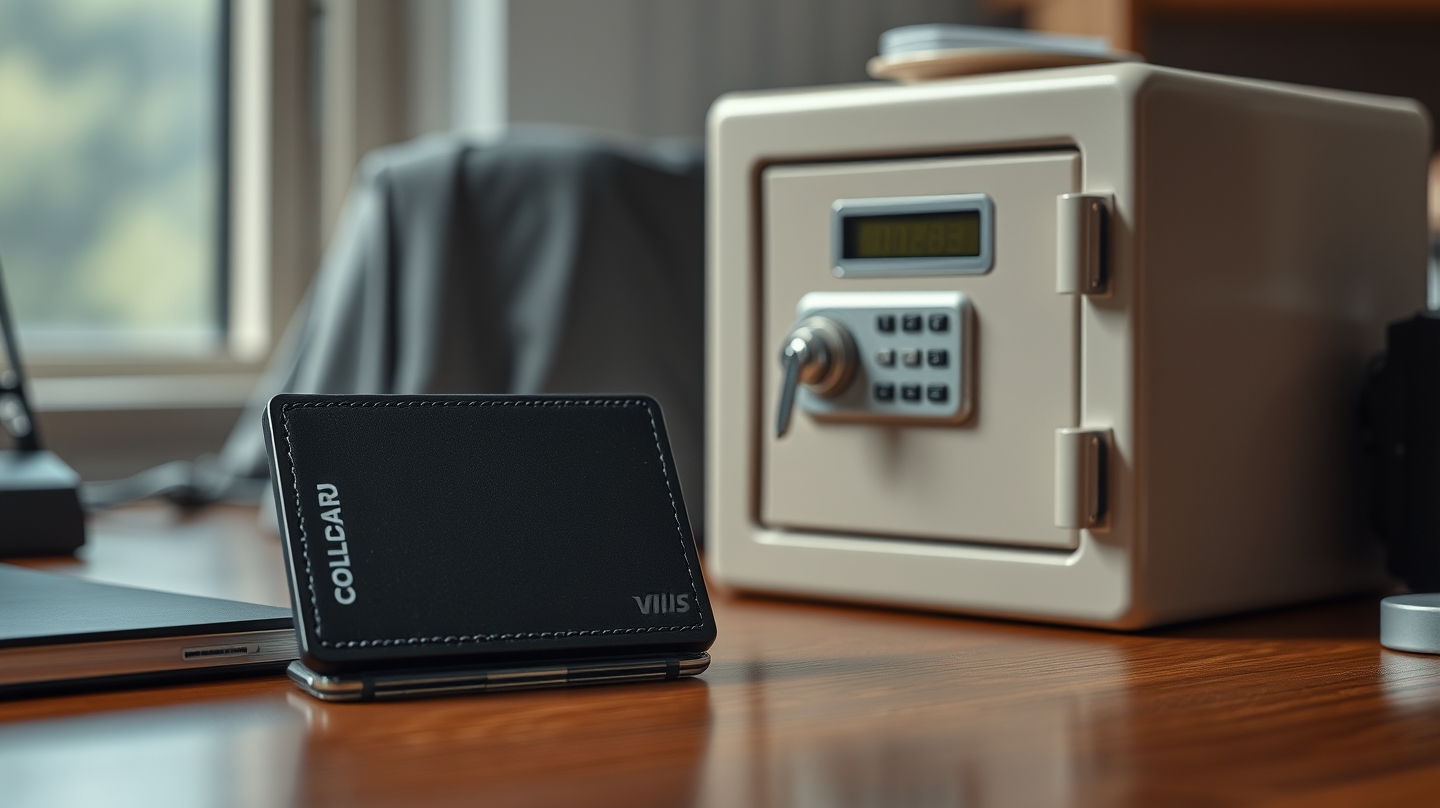
When Jonathan Goodman opened his safety‑deposit box on the evening of July 29, 2026, he expected to see the same 18.25 BTC he had stored for years. Within seven minutes, however, every address he controlled was empty, and a cold‑storage device he trusted implicitly had become the conduit for a $1.6 million theft.
Goodman’s experience is not an isolated mishap. Galaxy Research, a blockchain‑analytics firm, has traced three coordinated attack waves that together drained 1,367.05 BTC—about $88.6 million at current prices—from addresses generated by Coldcard hardware wallets. The attacks, first observed in 2021, resurfaced with a new level of automation that leverages artificial‑intelligence‑driven brute‑force techniques against a specific seed‑generation flaw.
The technical root lies in the way certain Coldcard firmware versions derive seed phrases. A subtle bias in the random‑number generator left a subset of keys vulnerable to prediction. While the device never touches the internet, the seed itself can be reconstructed if an attacker can enumerate the reduced key space fast enough. Recent AI models can evaluate billions of candidates per second, turning a theoretical weakness into a practical exploit.
Goodman followed best‑practice guidelines: his Coldcard sat in a sealed safe, the seed phrase was never written down digitally, and he used Wasabi Wallet to monitor balances. Yet the breach occurred while the wallet was offline, proving that isolation alone does not guarantee safety when the underlying cryptographic material is compromised.
Galaxy’s on‑chain analysis reveals a structural pattern: the first two waves shared identical transaction signatures—multiple small inputs consolidated into a single output, then split into a series of “dust” addresses. The third wave diverged, using larger, time‑staggered outputs that suggest a different toolset or a second actor adapting the same seed‑space vulnerability. All stolen funds remain in a handful of attacker‑controlled addresses, with no signs of laundering or exchange deposits, indicating the thieves may be waiting for a market condition that maximises profit.
Beyond the immediate loss, the incident carries broader market implications. Bitcoin’s price showed a modest dip of 1.2 % in the hours following the public disclosure, as traders reassessed the risk profile of self‑custody solutions. Institutional investors, who have long cited hardware‑wallet security as a pillar of their crypto‑allocation strategies, are now demanding third‑party audits of firmware randomness and more transparent vulnerability‑disclosure processes.
Regulators are taking note as well. Goodman has filed reports with the Ontario Securities Commission, and the Canadian Centre for Cyber Security has opened a joint investigation with the police. The episode underscores a growing regulatory focus on “crypto‑custody risk,” a term that may soon appear in compliance checklists for both retail platforms and large‑scale custodians.
For the wider community, the lesson is twofold. First, hardware‑wallet manufacturers must adopt provably random seed generation, possibly integrating hardware‑based entropy sources verified by independent labs. Second, users should diversify custody methods—combining hardware, multisignature wallets, and reputable custodial services—to mitigate the impact of a single point of failure.
As Alex Thorn of Galaxy Research cautions, “This is a blow to Bitcoin self‑custody and we need to do better as a community: with security, with education, and with being realistic about complexity, expectations, and recommendations we make to friends, family, and the public.” The incident may catalyse a shift toward more robust, layered security models and could accelerate institutional demand for audited, enterprise‑grade custody solutions.