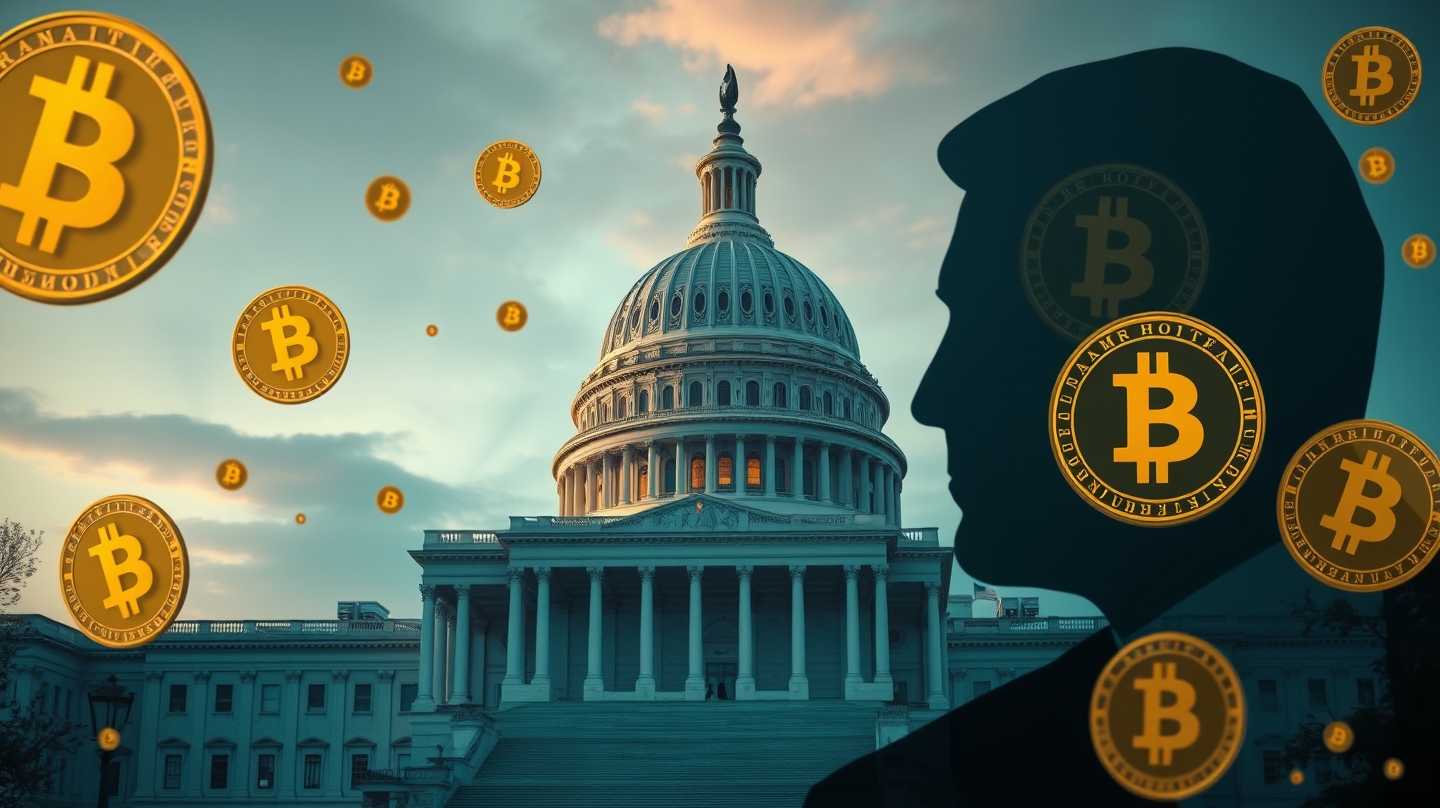
When a senior Democratic senator joins forces with two national law‑enforcement associations to fine‑tune a crypto‑regulation bill, the move sends a signal that the political stalemate over digital assets may finally be loosening. Senator Catherine Cortez Masto’s recent endorsement of amendments to the long‑delayed Clarity Act, coupled with a “good” feeling expressed by the National Association of Assistant U.S. Attorneys and the National District Attorneys Association, has sparked a cautious optimism on Capitol Hill and on the trading floors of major banks.
The Clarity Act, first passed by the House of Representatives in 2025, aims to cement a comprehensive framework for cryptocurrencies, stablecoins, and related services. Its original language raised alarms among prosecutors who feared that developers of blockchain platforms could be held liable for illicit activity conducted by users. The latest version trims that exposure, carving out a narrow safe harbor for software creators while preserving enforcement tools for genuine wrongdoing.
Beyond the technical carve‑out, the revised draft introduces two notable provisions: an ethics clause that bars elected officials and their immediate families from promoting or issuing crypto products, and a transparency requirement for stablecoin issuers to disclose yield‑generation mechanisms. Both measures were championed by the two law‑enforcement groups, which argue that clearer boundaries will deter regulatory arbitrage and protect investors.
Why does this matter for the broader market? Institutional players such as Fidelity and Goldman Sachs have publicly welcomed the changes, noting that a predictable regulatory environment is essential for allocating capital to crypto‑linked strategies. In the weeks following the amendment’s circulation, Fidelity’s crypto‑focused fund saw a 3.2 % inflow, while Goldman Sachs’ digital‑assets desk reported a modest uptick in client inquiries. Analysts at Bloomberg Intelligence cite the bill’s progress as a catalyst for “steady, risk‑adjusted growth” in the sector, contrasting sharply with the volatility that has characterized crypto markets since 2022.
Nevertheless, the path to enactment remains uneven. While Republican leaders have signaled readiness to move the bill before the August recess, several Democratic lawmakers remain uneasy about the ethics clause, arguing it does not go far enough to address potential conflicts of interest. Moreover, the banking lobby, still wary of stablecoin yield products, has pressed for tighter capital‑requirement safeguards, a point that could re‑ignite debate in the Senate Finance Committee.
From a structural perspective, the Clarity Act illustrates a broader shift: regulators are moving from reactive enforcement toward a rule‑based architecture that integrates technology‑driven automation and workflow transformation. By codifying safe harbors and ethical walls, the legislation acknowledges that blockchain platforms operate on programmable logic, demanding a regulatory approach that mirrors that automation.
Real‑world implications are already emerging. A mid‑size crypto exchange based in New York announced it would accelerate its licensing application, citing the bill’s clarified liability standards as a key factor. Meanwhile, a consortium of regional banks is piloting a stablecoin‑backed payment corridor, banking on the forthcoming yield‑disclosure rules to satisfy compliance officers.
In the final analysis, the Clarity Act’s incremental progress underscores a maturing relationship between policymakers, law‑enforcement agencies, and the financial industry. If the bill clears the Senate floor, the United States could set a global benchmark for crypto governance, nudging other jurisdictions to adopt similarly detailed frameworks.