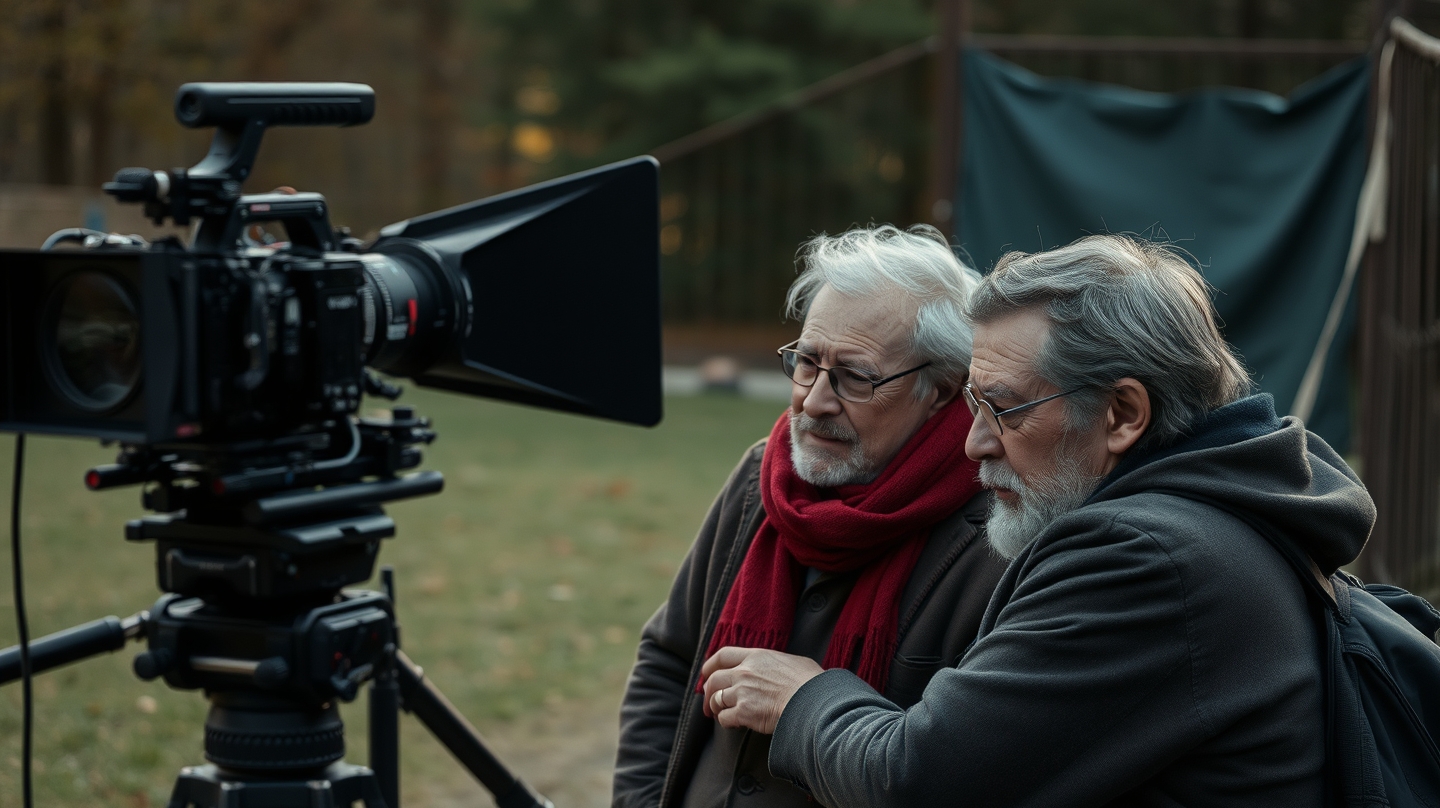
Mihály Víg, the Hungarian composer, actor, and screenwriter, has been Béla Tarr's closest creative partner for over four decades. Their collaboration, which began in 1984, has resulted in some of the most innovative and critically acclaimed films of our time.
Víg's bond with Tarr began when the director spotted him in a friend's concert footage. Their first meeting was brief, with Tarr inviting Víg to score his film 'Almanac of Fall.' Despite having no prior experience composing for film, Víg accepted the challenge, and their partnership was sealed over a glass of champagne.
As their collaboration evolved, an unconventional workflow solidified. Víg completes every musical composition before principal photography begins, working from the screenplay rather than the finished cut. His starting point is the overall emotional impression the script leaves on him. This process works because Víg, Tarr, and screenwriter László Krasznahorkai share a fundamental creative conviction: that people habitually avoid confronting the true nature of existence.
Their alignment on this philosophical premise means that Víg's scores rarely require lengthy revision rounds. Tarr trusts Víg's instincts entirely, although the composer typically delivers several iterations from which the director picks the version that best serves the film. Sound, for Víg, encompasses far more than scored music. He points to the relentless rain in 'Sátántangó' and the howling wind in 'The Turin Horse' as integral sonic elements.
Víg's relationship with Tarr's films extends to performance. He delivered one of his most notable screen turns as the con man in 'Sátántangó,' a role he could only accept after memorizing more than thirty pages of script and committing to an uninterrupted dialogue sequence of around a dozen minutes. The experience gave him a direct understanding of how the director approaches casting – not by matching actors to written characters, but by finding individuals who embody those characters at their core.
Tarr mixes professional and amateur performers, yet demands the same unrehearsed naturalism from each. This approach, combined with his signature long-take aesthetic, creates a sense of realism that draws the audience into the world of the film. The long-take aesthetic, which defines Tarr's work, has its roots in the films of Hungarian director Miklós Jancsó, a personal mentor to Tarr.
The impact of technology on the film industry cannot be overstated. The rise of automation and workflow transformation has changed the way films are made, from pre-production to post-production. However, Tarr's approach remains unchanged, with a focus on the creative process and the emotional connection between the audience and the film.
In an era where technology-driven automation is transforming the media infrastructure, the partnership between Béla Tarr and Mihály Víg serves as a reminder of the importance of human creativity and collaboration. Their enduring bond is a testament to the power of artistic vision and the impact it can have on the world of cinema.