Bitcoin’s price has slipped below $63,000, a 45% drop from its October peak, and the crypto market’s gloom is palpable. Yet Binance founder Changpeng Zhao (CZ) insists the bear market is anything but cash‑starved. "There’s plenty of money hunting for a place to go," he told investors, underscoring a paradox that has institutional players looking beyond digital assets.
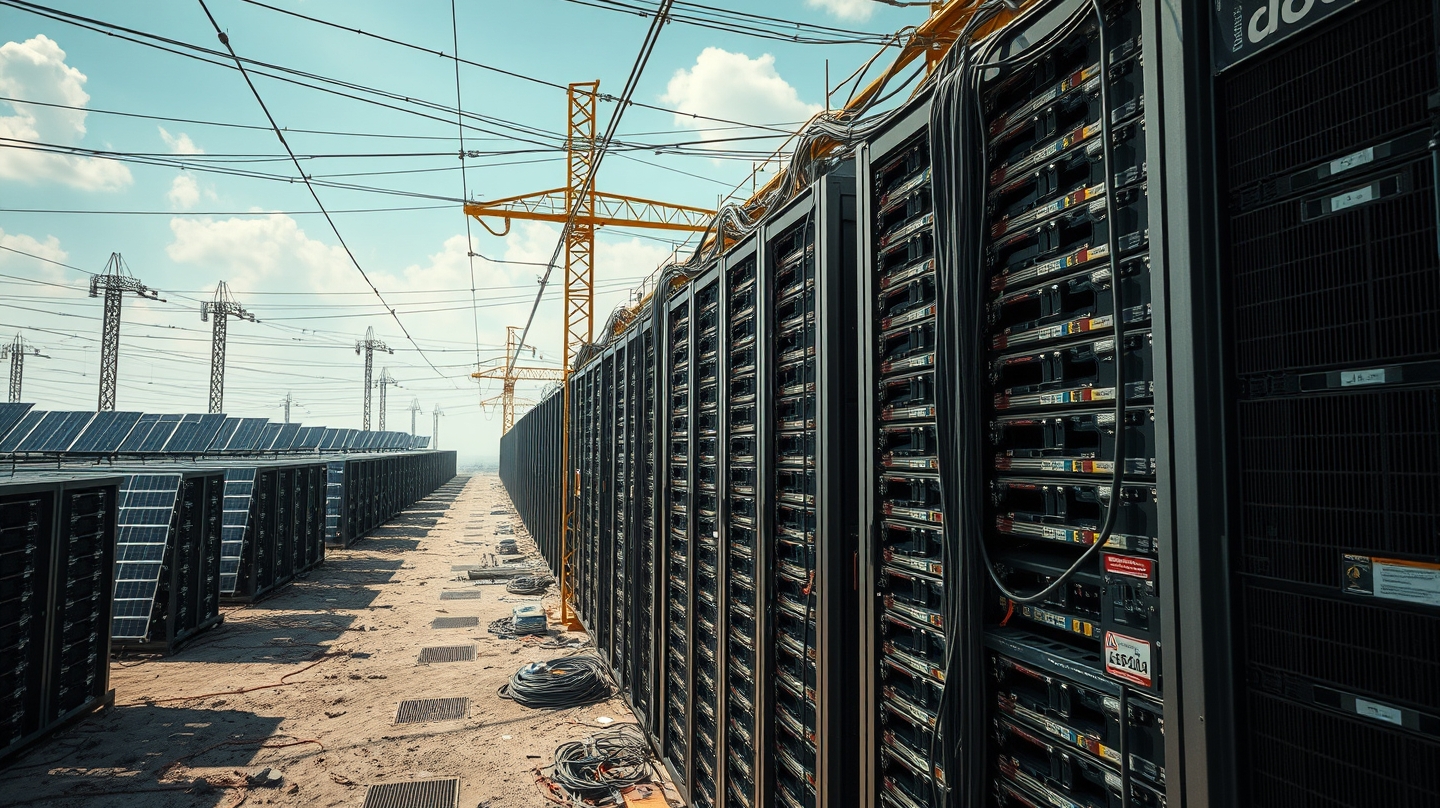
Across the same corridor of capital, Social Capital founder Chamath Palihapitiya is making a very different bet. In a series of posts, he announced a strategy he calls “Land‑Power‑Shell” – buying raw land, securing grid connections, and erecting empty shells ready for data‑center equipment. His rationale is blunt: "Town‑level opposition is making power‑ready sites rarer, and that scarcity drives cash‑on‑cash returns."
Palihapitiya’s move comes at a time when AI‑chip startups are facing mounting headwinds. He helped launch Groq in 2016, a company that once licensed its technology to NVIDIA. The deal, reportedly worth $20 billion, did not meet his expectations because chip manufacturing demands ultra‑precise fabs and massive memory supplies that early‑stage firms struggle to secure.
Instead of chasing the AI‑chip frenzy, Palihapitiya and partner Anita Vlallian have contracted almost six gigawatts of power capacity, to be delivered in stages through 2029. A recent lease by TeraWulf – a former Bitcoin miner turned data‑center landlord – illustrates the scale: a 401‑megawatt site in Kentucky leased to Anthropic for a 20‑year term, projected to generate $19 billion in revenue once fully operational in 2028. Palihapitiya’s holdings dwarf that figure, signaling a long‑term play on energy infrastructure rather than on chip design.
Why does this matter for markets and institutions? First, the diversion of capital away from crypto and AI chips signals a shift in risk appetite. Institutional investors, who have traditionally allocated a slice of their portfolios to high‑growth tech, are now favoring assets with tangible, regulated returns – namely, power‑rich land. Second, the political backlash against data‑center construction is reshaping supply. Early 2026 saw at least 75 U.S. projects blocked or delayed, representing roughly $130 billion of stalled investment. Opposition groups have doubled, and more than 300 state‑level bills targeting data‑center siting have been filed in just six weeks.
This regulatory pressure creates a structural insight: scarcity of grid‑connected land is becoming a premium commodity, akin to a “digital oil.” Investors who secure such sites now lock in future pricing power, especially as renewable‑energy mandates increase demand for high‑capacity nodes. The real‑world implication is already visible in regional electricity markets, where forward contracts for capacity in the Midwest and Southeast have tightened, pushing spot prices higher.
For the broader financial ecosystem, the trend could recalibrate capital flows. Crypto exchanges, hedge funds, and sovereign wealth funds that once chased Bitcoin’s volatility may redirect funds into infrastructure funds focused on power assets. Meanwhile, AI‑chip manufacturers could see a slowdown in private‑equity financing, prompting a consolidation around firms with proven fab capacity, such as TSMC and Samsung.
In short, the bear market is not a vacuum; it is a conduit directing liquidity toward assets that combine physical scarcity with regulated revenue streams. Whether that money eventually circles back to crypto, fuels a new wave of data‑center construction, or settles into long‑term power‑asset portfolios will depend on how quickly political opposition eases and how rapidly AI‑driven workloads demand more compute power.