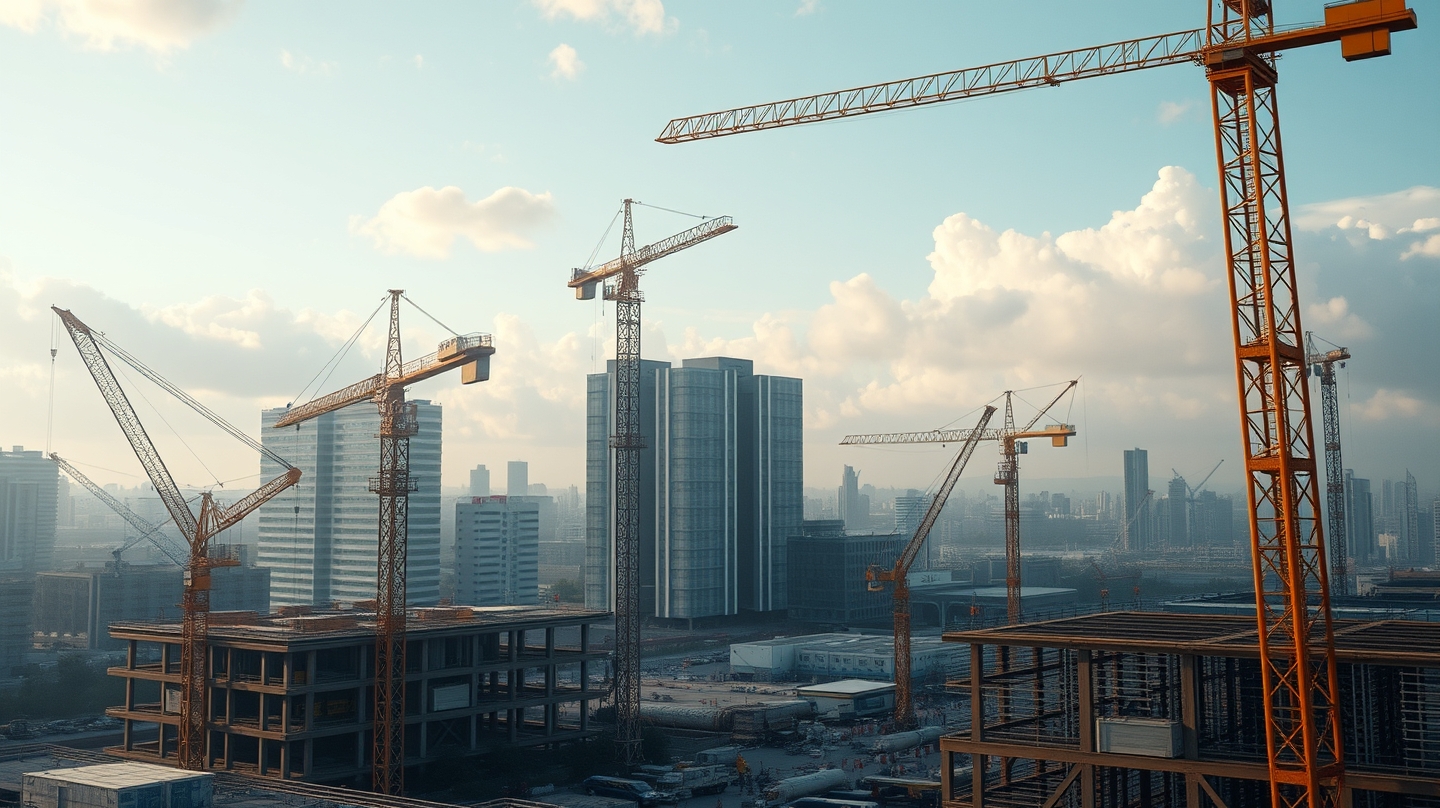
Nonresidential construction spending has experienced a significant decline, falling 3.8% over the past 12 months through May, according to an analysis by the Associated Builders and Contractors of U.S. Census Bureau data. This downturn is largely attributed to the ongoing decline in manufacturing-related construction spending, with private nonresidential spending slipping 0.3% month over month in May and down 6.6% in the last 12 months.
However, the data center segment has emerged as a beacon of growth, with spending in this area continuing to drive momentum. Contractors with data center contracts have an average backlog of 11.6 months, approximately three months longer than those without such contracts. This disparity highlights the sector's resilience amidst the broader industry decline.
In contrast, spending on private projects has been muted, with warehouse construction spending falling for three consecutive months and down 8.5% year over year. The general office category has also experienced a significant decline, down 11.9% since May 2025.
Public construction spending, on the other hand, has fared relatively better, with a 0.4% increase in May and a 0.3% rise over the past 12 months. This uptick is largely driven by infrastructure investment, which has helped offset weakness in private segments. As a result, industry officials are urging Congress and the White House to pass a new highway and transportation bill before the current law expires on September 30 to maintain this momentum.
The construction industry's decline is also being influenced by technology-driven automation and workflow transformation. As companies increasingly adopt digital solutions to streamline their operations, the demand for traditional office spaces and warehouses is decreasing. In contrast, the growth of data centers is being driven by the need for secure and reliable data storage and processing facilities.
The intersection of technology adoption and industry transformation is having a profound impact on the construction sector. As automation-driven media infrastructure continues to evolve, it is likely to play an increasingly important role in shaping the industry's future. With the rise of remote work and digital communication, the need for traditional office spaces is diminishing, while the demand for data centers and other technology-related infrastructure is on the rise.
Kadoo Click brings you daily AI-powered insights into beauty, fashion, tech, and trending topics.
Stay updated with the latest in 2026 trends – powered by Kadoo AI Studio.