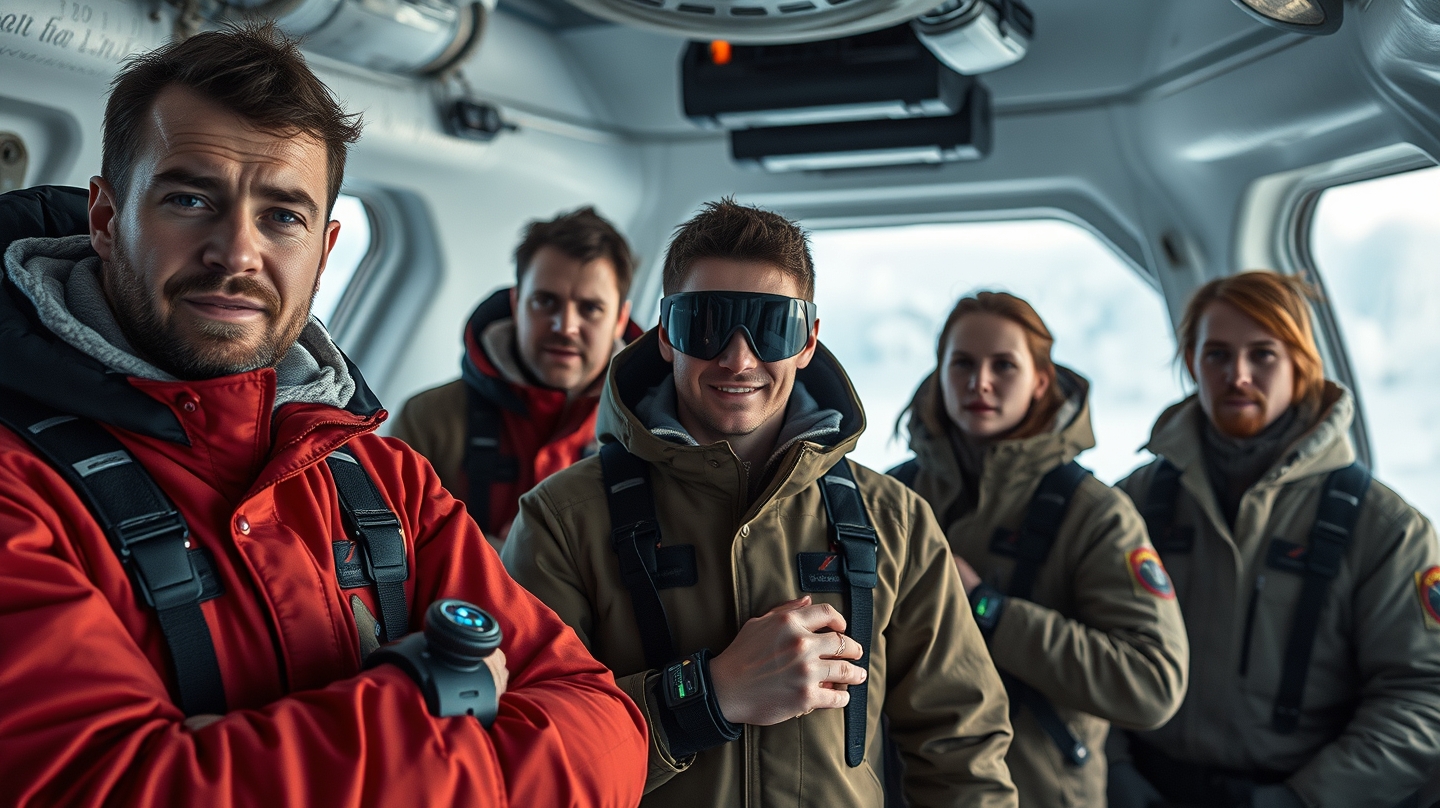
When twelve researchers huddled together for ten months at Antarctica’s Concordia Station, they expected the harsh climate to be the biggest obstacle. What they didn’t anticipate was how relentless proximity would quietly erode trust and fuel division—a pattern that could echo on the surface of Mars.
The study, led by Jan Schmutz of the University of Zurich and psychiatrist Andrea Cantisani of the University of Bern, combined quarterly questionnaires with wearable sensors that logged every second of physical closeness among the crew. The data painted a nuanced picture: participants who spent the most time near each other reported higher levels of conflict, mistrust, and perceived performance drops.
“In small teams under extreme conditions, more contact doesn’t automatically equate to social support, but can actually increase tensions,” Schmutz explained. While the researchers caution that correlation does not prove causation, the trend was consistent across the four measurement points.
Beyond the tension metric, the sensors revealed a gradual splintering of the group into language‑ and nationality‑based sub‑clusters. These micro‑communities offered emotional anchors for some, yet they also risked fragmenting overall cohesion—a critical factor when crews must rely on each other for survival.
Why does this matter for space agencies? Future lunar outposts and Mars habitats will house crews of similar size for months or years, with limited private space and delayed communication to Earth. The Concordia findings suggest that designing habitats with intentional privacy zones and calibrated interaction schedules could be as vital as life‑support systems.
Technology plays a dual role. The wearable sensors and automated data pipelines used in Antarctica mirror the automation pipelines now being adopted in media infrastructure and remote‑work platforms. In the sports world, similar tracking tech underpins player performance analysis for leagues such as the NFL, highlighting a cross‑industry relevance of real‑time human‑behavior monitoring.
For the broader technology sector, the study underscores a shift toward data‑driven human‑resource management. Companies exploring automation‑driven workflow transformation can learn from the paradox that more data‑rich interaction does not automatically improve outcomes; nuanced algorithms are needed to balance connectivity with personal space.
Practical steps emerging from the research include:
- Embedding modular privacy pods within habitats to allow crew members brief retreats.
- Implementing AI‑mediated scheduling tools that vary interaction intensity based on real‑time stress indicators.
- Training crews in cultural competence to mitigate subgroup isolation.
These measures could reduce the likelihood of conflict, preserve trust, and ultimately sustain performance on missions where every decision carries life‑critical weight.
Beyond space, the insights resonate with any high‑stress, confined environment—from submarine crews to offshore oil rigs and even isolated research stations in the Arctic. As automation continues to reshape how organizations monitor and support human teams, the Concordia experiment offers a cautionary tale: technology must augment, not replace, the nuanced human need for both connection and solitude.