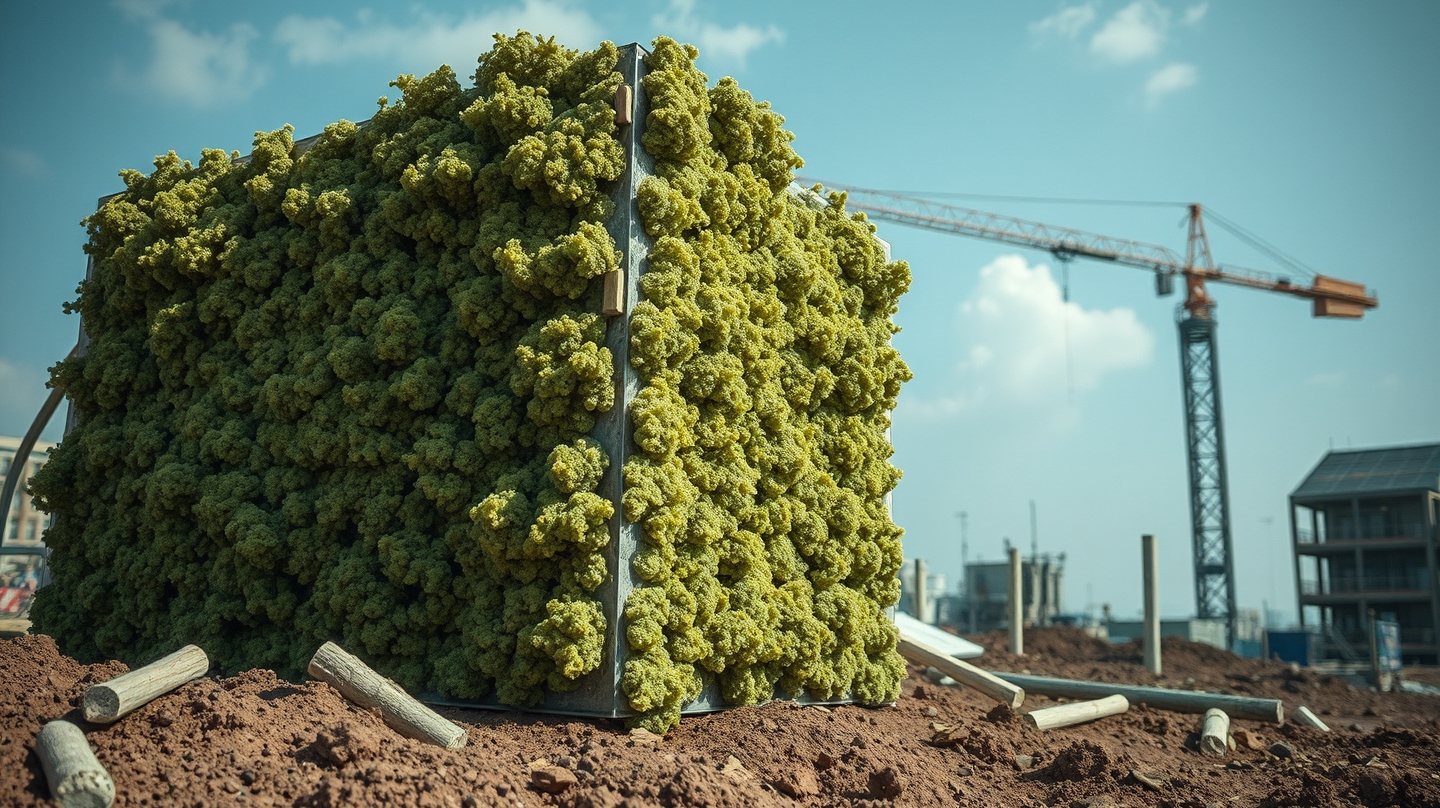
What if the walls of tomorrow could grow themselves, cutting waste and reshaping construction timelines? That question sits at the heart of the new book Mycology for Architecture, which maps how mycelium—the vegetative network of fungi—is moving from laboratory curiosity to a cornerstone of automated, regenerative building practice.
Mycelium offers a material palette that is both lightweight and strong, capable of being molded into bricks, façade skins, and even structural arches. Unlike steel or concrete, it is grown, not cast, meaning the material can be produced on‑site with minimal transport emissions. The book’s first section positions mycelium as a direct alternative to conventional construction inputs, citing pilot projects that replace up to 80 % of traditional insulation with fungal composites. By framing the material as a living substrate, the authors highlight its capacity to self‑heal, sequester carbon, and biodegrade at the end of a building’s life cycle.
Beyond sustainability, mycelium is catalyzing a shift in how architects and contractors automate their workflows. Digital design tools now feed directly into bioreactors that control temperature, humidity, and nutrient flow, turning a 3D model into a living mold within hours. This closed‑loop process eliminates the need for separate ordering, shipping, and on‑site cutting stages, compressing the construction timeline from weeks to days. In practice, a Dutch office tower used a robotic arm to deposit mycelium‑infused substrate onto a pre‑programmed lattice, achieving a seamless skin that grew into place while the building’s BIM model updated in real time.
The second part of the book dives into the protocols that make such automation reliable. Researchers from the MIT Media Lab and Eindhoven University of Technology describe standardized inoculation kits, sensor‑driven growth chambers, and workshop curricula that teach students to treat fungi as a design material rather than a biological hazard. By embedding growth data into the same cloud platform that houses architectural drawings, teams can monitor humidity spikes, predict structural strength, and adjust designs before the material hardens.
Advanced fabrication strategies form the book’s final chapter, where the authors showcase hybrid processes that combine 3D‑printed scaffolds with mycelium composites. These hybrids enable load‑bearing elements that are both printable and growable, opening pathways to scalable production. Automation plays a dual role: robotic gantries lay down the scaffold, while AI‑guided climate control systems fine‑tune fungal growth, ensuring uniform density across large panels. The result is a material system that can be mass‑produced without sacrificing the regenerative qualities that define mycelium.
Real‑world implications are already emerging. A pilot housing project in Amsterdam installed mycelium panels that automatically seal micro‑cracks, reducing maintenance costs by an estimated 30 %. In parallel, researchers are embedding biodegradable sensors into the fungal matrix, turning walls into data‑rich surfaces that monitor humidity, indoor air quality, and structural health—an early step toward an “automation‑driven media infrastructure” for smart buildings.
Industry analysts see these developments as part of a broader market shift toward bio‑fabricated construction. As climate‑focused regulations tighten, developers are looking for materials that lower embodied carbon while offering new design flexibility. Mycelium’s ability to be grown, programmed, and integrated with digital workflows positions it as a technology that could redefine supply chains, labor models, and even the economics of affordable housing. If the current trajectory holds, the next decade may see mycelium‑based components become a standard line item on construction budgets, much like steel rebar once did.