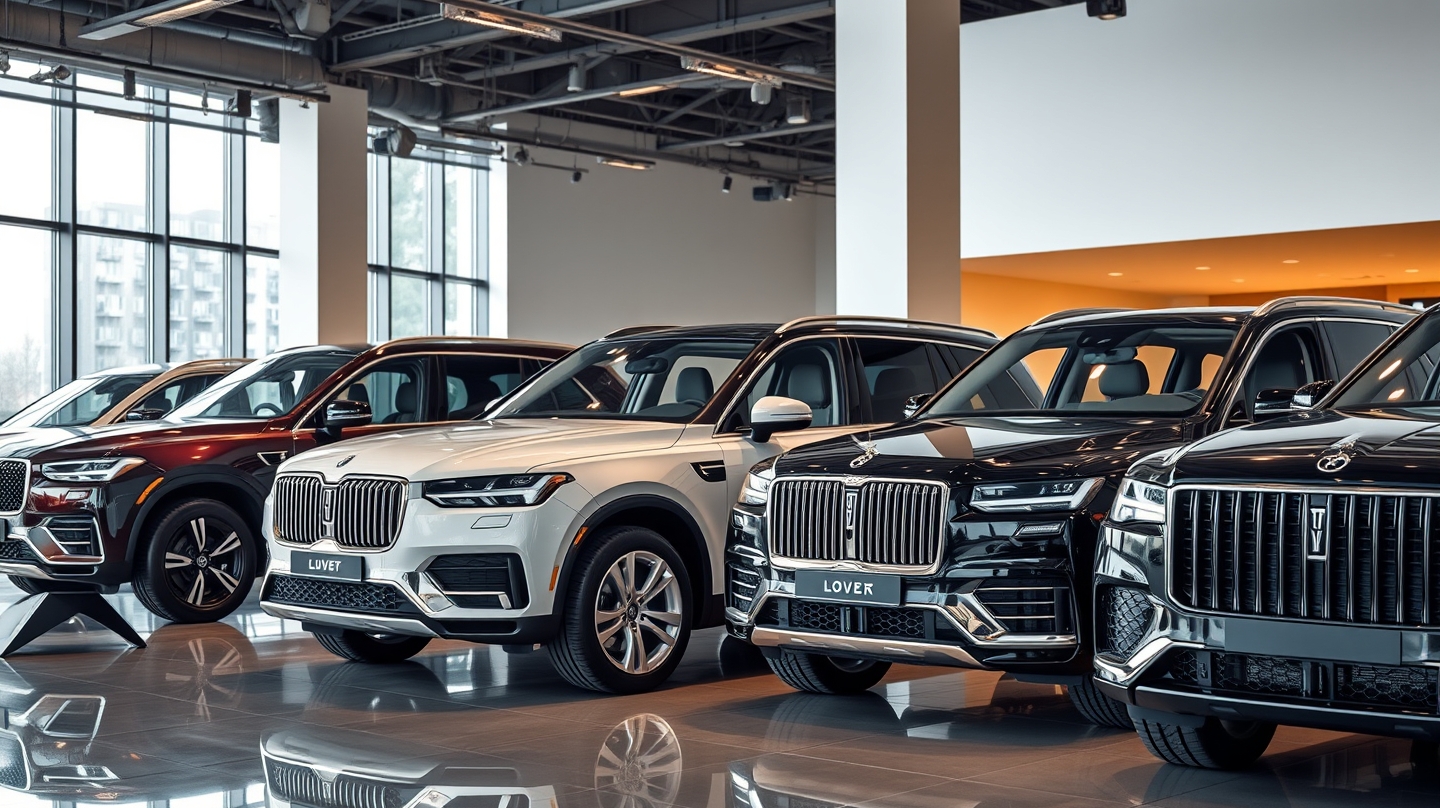
While the Ford F‑150 and Honda CR‑V dominate the overall market, the luxury‑badge segment tells a different tale in 2026 – one where tech‑savvy buyers and automated retail tools are nudging the leaderboard in unexpected directions.
According to the latest quarterly data compiled by Car and Driver, the top‑selling luxury SUVs this year are the Mercedes‑Benz GLE, BMW X5, Lexus RX, Audi Q7, and Tesla Model X. All five combine traditional premium appeal with a pronounced focus on integrated software, over‑the‑air updates, and factory‑floor automation that reduces production lead times.
The methodology behind the list is transparent: vehicle registrations, dealer‑reported deliveries, and certified‑pre‑owned transactions are aggregated every three months. This cadence allows analysts to spot short‑term spikes – such as the Tesla Model X’s 12 % surge after the rollout of its new Full‑Self‑Driving beta – and to correlate them with broader industry shifts.
Why does this matter? The luxury SUV market is increasingly a proxy for how manufacturers adopt automation across design, manufacturing, and after‑sales service. Mercedes‑Benz’s “Digital Production Line” in Stuttgart, for example, uses AI‑driven robotics to assemble chassis components, cutting labor hours by 15 % and translating into a modest price‑point advantage that appears in sales figures.
Consumers feel the impact directly. Buyers now expect a seamless digital experience: from virtual showrooms that use augmented reality to configure interior trims, to predictive maintenance alerts delivered via smartphone. The Lexus RX’s recent software‑centric marketing campaign, which highlighted its new “Lexus Connected” suite, coincided with a 9 % increase in quarterly sales, suggesting that technology messaging is as decisive as brand heritage.
Dealerships are also adapting. Many have integrated automated inventory management platforms that sync real‑time sales data with manufacturer forecasts. This reduces overstock of slower‑moving models and frees floor space for high‑turnover vehicles like the BMW X5, which saw a 7 % rise after its dealer network adopted a cloud‑based lead‑generation tool.
From an industry perspective, the data underscores a broader trend: luxury automotive brands are converging on a technology‑first strategy, blurring the line between traditional performance metrics and software capability. This convergence is prompting a reallocation of R&D budgets toward AI, data analytics, and OTA (over‑the‑air) infrastructure, a shift that will likely influence pricing, warranty structures, and even resale values.
Looking ahead, the quarterly updates will be a bellwether for how emerging automation—such as autonomous test‑track validation and AI‑guided supply‑chain logistics—will reshape market dynamics. If the current trajectory holds, we can expect luxury SUVs to become not just status symbols but also showcases for the next wave of automotive automation.