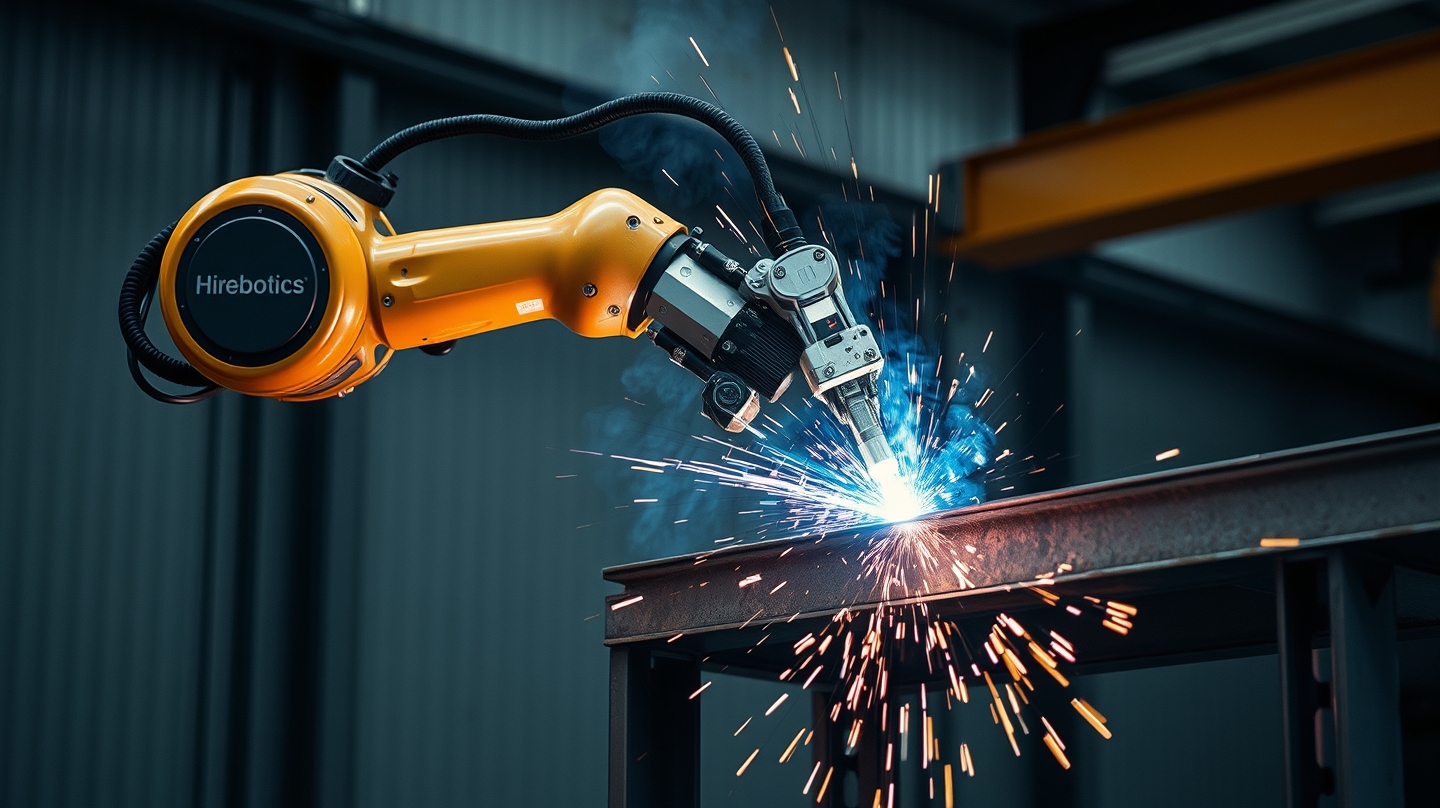
When Tate Inc., a century‑old supplier of structural ceilings and airflow systems, faced a surge in data‑center construction, it chose to replace seasoned hand welders with a fleet of 58 cloud‑connected cobots—a move that reshaped its production line in weeks rather than months.
The decision arrived after Tate evaluated nine automation vendors. Hirebotics stood out because its Nashville team welded Tate‑provided parts within 30 minutes of arrival, and its no‑code Beacon Pro platform let engineers program robots on‑site using a tablet. Director of sales Daniel Adams noted that the rapid prototype and collaborative approach convinced Tate’s leadership to act.
Deployment began in September 2023 with two robots shipped to Tate’s Arkansas plant. Training proved swift: tutorial videos combined with hands‑on sessions enabled most operators to run a cobot after just 10‑20 minutes. "The majority of users are surprised at how quickly they can become operational," Adams said. Cobots also gave operators direct control over amperage, heat and travel speed, a level of repeatability that manual welding struggled to achieve, according to cobot programmer Jonathon Cook.
Beyond replacing manual welders, Tate re‑engineered its workflow. In Arkansas, cobots now perform the upstream tacking and pre‑assembly steps, feeding downstream industrial robots that handle larger structural builds. This “precision‑first” stage keeps the line moving steadily and eliminates the variability that often forces rework.
Quantitative results are striking. Tate reports a twelve‑fold increase in per‑welder throughput on critical structural assemblies while expanding its certified welder workforce. The cobots have also eradicated costly rework caused by human‑to‑human inconsistencies, embedding exact torch angles and travel speeds into Beacon Pro’s software library.
The shift matters for more than Tate’s bottom line. As data‑center projects tighten schedules and demand flawless construction, the ability to scale welding capacity without compromising quality becomes a competitive advantage. Other infrastructure firms watching Tate’s rollout may adopt similar cloud‑connected cobot networks, accelerating a broader industry move toward automated, data‑driven manufacturing.
Looking ahead, the integration of cobots with existing industrial robots points to a layered automation model: precision tasks handled by agile, force‑limited arms, followed by high‑speed, heavy‑duty robots. This architecture could reduce lead times across sectors that rely on structural steel, from telecom towers to renewable‑energy foundations.
For Tate, the partnership with Hirebotics illustrates how a legacy manufacturer can modernize without discarding its skilled workforce. By upskilling welders to become robot operators, the company preserves institutional knowledge while unlocking new efficiency gains.