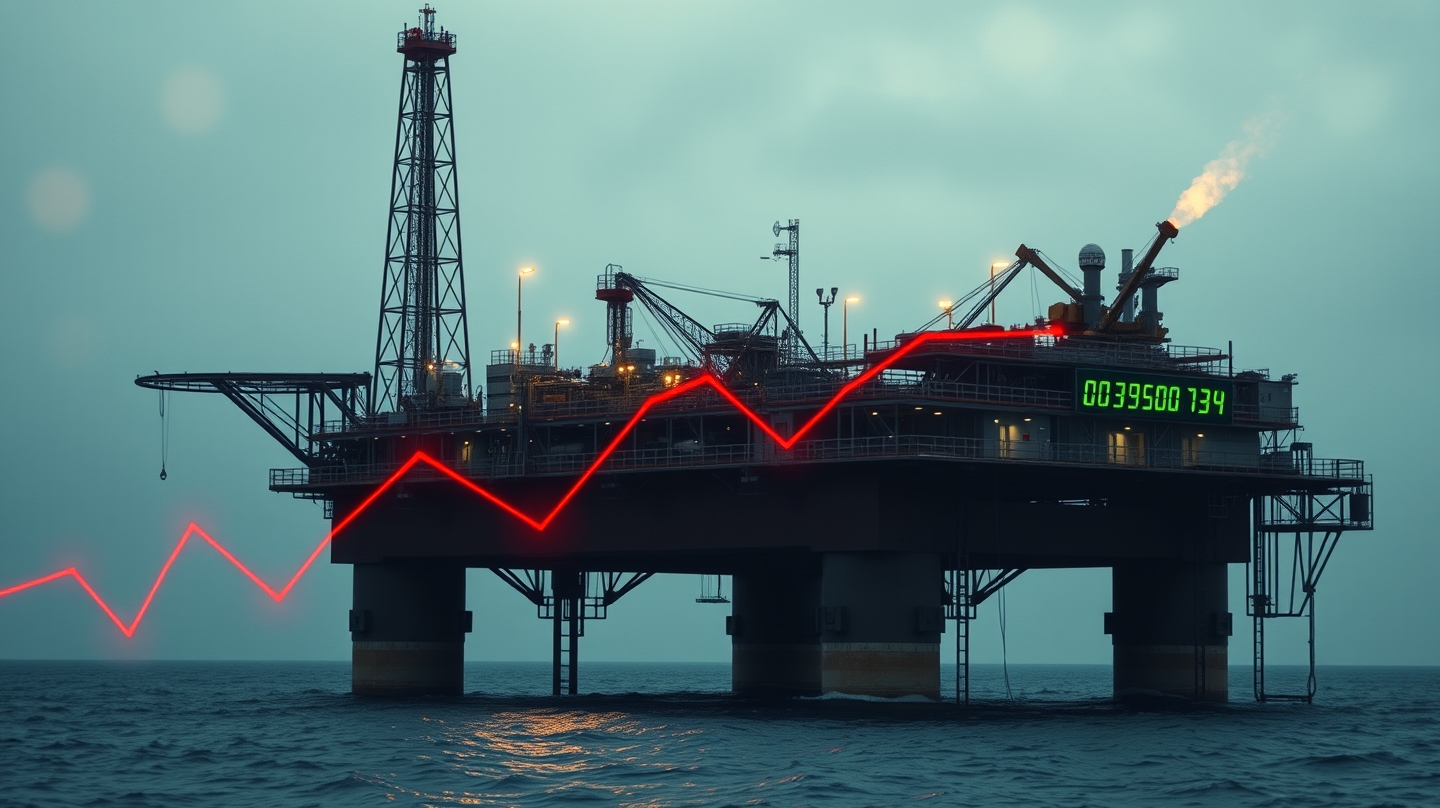
When former President Donald Trump warned Tehran of "major military action" after a series of Houthi attacks, the warning did more than raise diplomatic eyebrows—it sent Brent crude over the $100 mark and set off a cascade of risk‑off trades across the financial system. The timing was striking: within hours, bond yields rose, technology shares slipped, and Bitcoin’s price dipped, underscoring how quickly geopolitical rhetoric can translate into market volatility.
Beyond the oil spike, Trump expanded his tariff agenda, imposing 10%‑12.5% duties on goods from 60 economies, including China, the EU, India, Japan and South Korea. The breadth of the move touches everything from smartphones to automotive components, forcing multinational supply chains to confront higher costs and prompting institutional investors to reassess exposure to import‑heavy sectors. For example, Meta’s stock fell 2.3% as analysts warned that increased component prices could squeeze margins for data‑center hardware.
The Canadian round‑up added another layer of complexity. A 50% tariff on roughly $20 billion of Canadian goods—dairy, wine, furniture and cement—triggered a modest decline in the Canadian dollar and sparked concerns among North American construction firms about rising material costs. Institutional investors with exposure to U.S.‑Canadian trade, such as real‑estate investment trusts, began flagging the potential for tighter profit forecasts in the coming quarters.
In the defence sector, Trump signed an order tightening restrictions on foreign‑sourced critical minerals and components. While the move could boost domestic rare‑earth miners, it also raises compliance costs for aerospace and defence contractors that rely on Chinese supply lines. The order illustrates a broader pattern: geopolitical posturing followed by regulatory tightening, a sequence that amplifies risk premiums across asset classes.
Perhaps the most novel development is the new aluminum tariff relief tied to U.S. investment. Companies that commit capital to domestic smelters can import aluminum at reduced rates, creating a direct link between trade policy and corporate capex decisions. This incentive aligns with a larger trend toward technology‑driven automation in compliance workflows—firms are increasingly using AI‑enabled trade‑compliance platforms to navigate the expanding tariff landscape efficiently.
Institutional investors are responding in real time. Fixed‑income managers are shortening duration to hedge against higher yields, while equity fund managers are rotating out of high‑exposure tech and industrial names into sectors less vulnerable to import tariffs, such as domestic consumer staples. The ripple effect reached the cryptocurrency market as well; Bitcoin slipped below $30,000 amid the broader risk‑off sentiment, highlighting how even digital assets are not insulated from macro‑political shocks.
These developments intersect with a broader shift toward automation and workflow transformation in finance. As trade rules become more granular, firms are deploying robotic process automation (RPA) and machine‑learning models to flag tariff‑eligible transactions, reduce manual review time, and ensure compliance with the new investment‑linked aluminum provisions. This technology adoption not only cuts operational costs but also provides a clearer, data‑driven view of exposure, allowing institutions to react faster to policy changes.
Finally, the sports and entertainment sector—exemplified by the NFL—faces indirect pressure. The league’s merchandise supply chain, heavily reliant on Canadian and Asian manufacturers, could see cost increases that translate into higher ticket and apparel prices for fans. While the impact is still unfolding, the convergence of trade policy and automated compliance tools will shape how leagues manage licensing and supply contracts moving forward.
In sum, Trump’s latest geopolitical and trade actions have generated a multi‑layered market reaction: higher oil prices, tighter credit conditions, sector‑specific profit pressures, and an accelerated push toward automation in compliance. Institutional investors who can map these interconnections and leverage technology to streamline risk management are better positioned to navigate the volatility ahead.