When Austria announced that its 2027 Venice Architecture Biennale pavilion would be temporarily ceded to Bosnia and Herzegovina, the move sparked a rare dialogue between national representation and architectural practice. The proposal, titled Koncesija / Konzession / Concession(e), flips the traditional model of a fixed national showcase on its head, using the pavilion itself as a space of negotiation rather than a static display.
Curated by siblings Adna and Ajna Babahmetović together with cultural programmer Sebastian Höglinger, the project emerged from Austria’s open competition process. It directly addresses the absence of a Bosnian national pavilion in the historic Giardini, where the Biennale’s permanent national pavilions sit. By granting the Austrian structure to Bosnia and Herzegovina on a temporary basis, the team foregrounds questions of diplomacy, territorial identity, and the fluidity of architectural authorship.
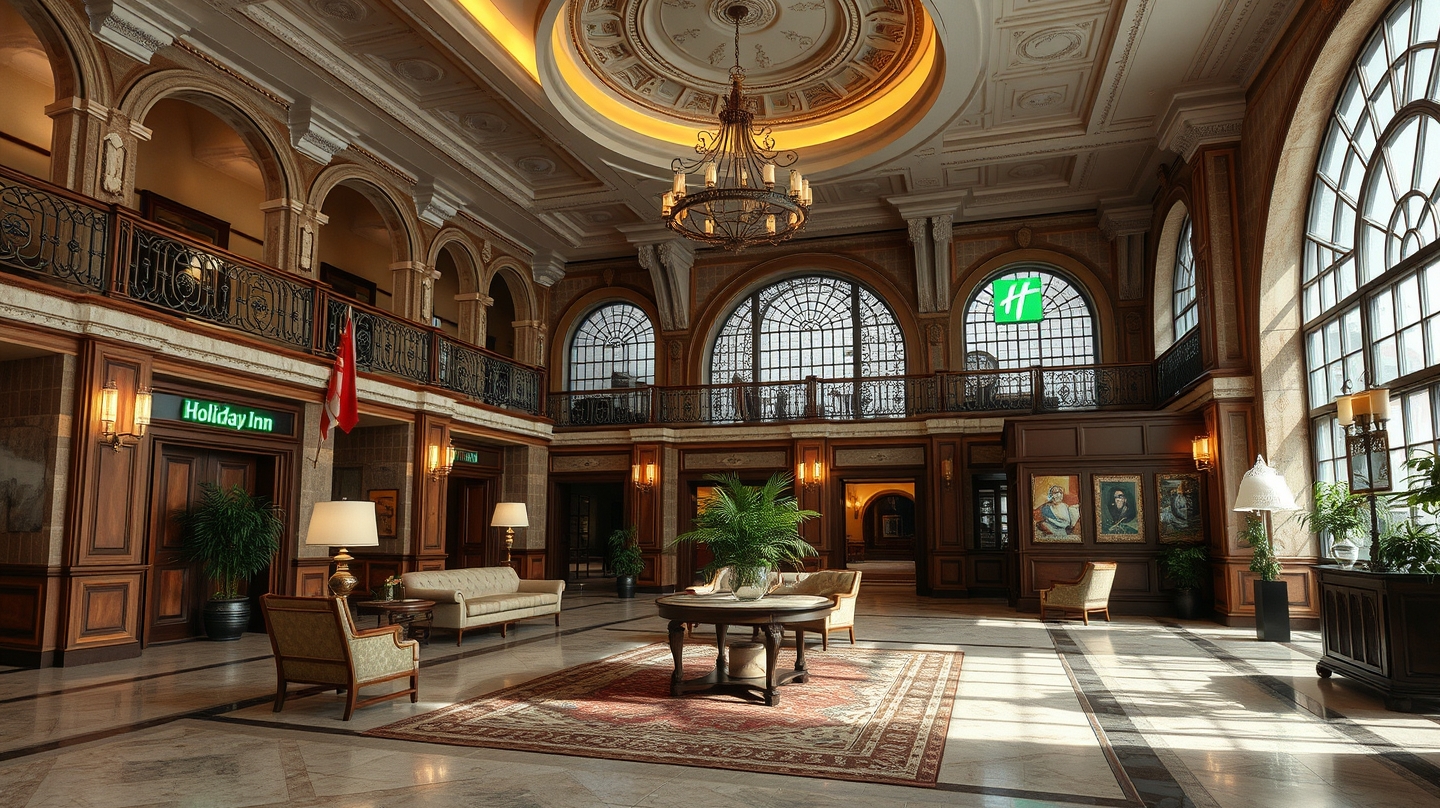
The core of the installation is a reconstruction of the lobby of Sarajevo’s Hotel Holiday Inn, originally designed by Ivan Štraus for the 1984 Winter Olympics. Placed inside the 1934 Josef Hoffmann‑designed Austrian pavilion, the lobby becomes a hybrid gathering space for screenings, workshops, and research panels. This juxtaposition links two moments of cultural exchange—the post‑war Olympic optimism of the 1980s and the interwar modernist ideals of Hoffmann—while anchoring contemporary debates about migration, post‑conflict reconstruction, and diaspora networks.
Beyond its symbolic resonance, the concession model offers a structural insight into how biennial architecture can evolve. Rather than a single, immutable exhibition, the pavilion is presented as an “evolving curatorial framework.” This flexibility allows programming to respond to emerging scholarly work, policy shifts, or community feedback throughout the Biennale’s six‑month run, setting a precedent for future international exhibitions that seek to remain relevant beyond a fixed opening date.
Real‑world implications are already emerging. The collaborative program, co‑produced with institutions from Austria, Bosnia and Herzegovina, and Italy, includes film screenings that document post‑war reconstruction, workshops on adaptive reuse of heritage structures, and public debates on cross‑border urban planning. Architects, policymakers, and NGOs attending the pavilion can translate these discussions into concrete projects—such as joint housing prototypes for migrant communities or shared research databases that map post‑conflict urban development.
The initiative also ties into broader trends in the cultural sector: a growing appetite for shared curatorial ownership and a push toward inclusive narratives that move beyond nation‑state centric storytelling. As the Biennale’s overarching theme, “Do Architecture — For the Possibility of Coexistence Facing a Real Reality,” emphasizes coexistence, Austria’s concession becomes a practical embodiment of that ideal.
For the architecture community, the project underscores how diplomatic gestures can be encoded in built form, prompting a reassessment of how pavilions function as both political symbols and design laboratories. It also highlights the role of technology—digital modeling, BIM, and virtual reality tours—that will document the evolving installation, making the experience accessible to audiences unable to travel to Venice.
By the time the exhibition closes on 21 November 2027, the Austrian pavilion will have served not only as a showcase of Austrian design but also as a living laboratory for transnational collaboration. The experiment may inspire other nations to consider temporary concessions, reshaping the architecture biennale landscape into a more fluid, cooperative arena.