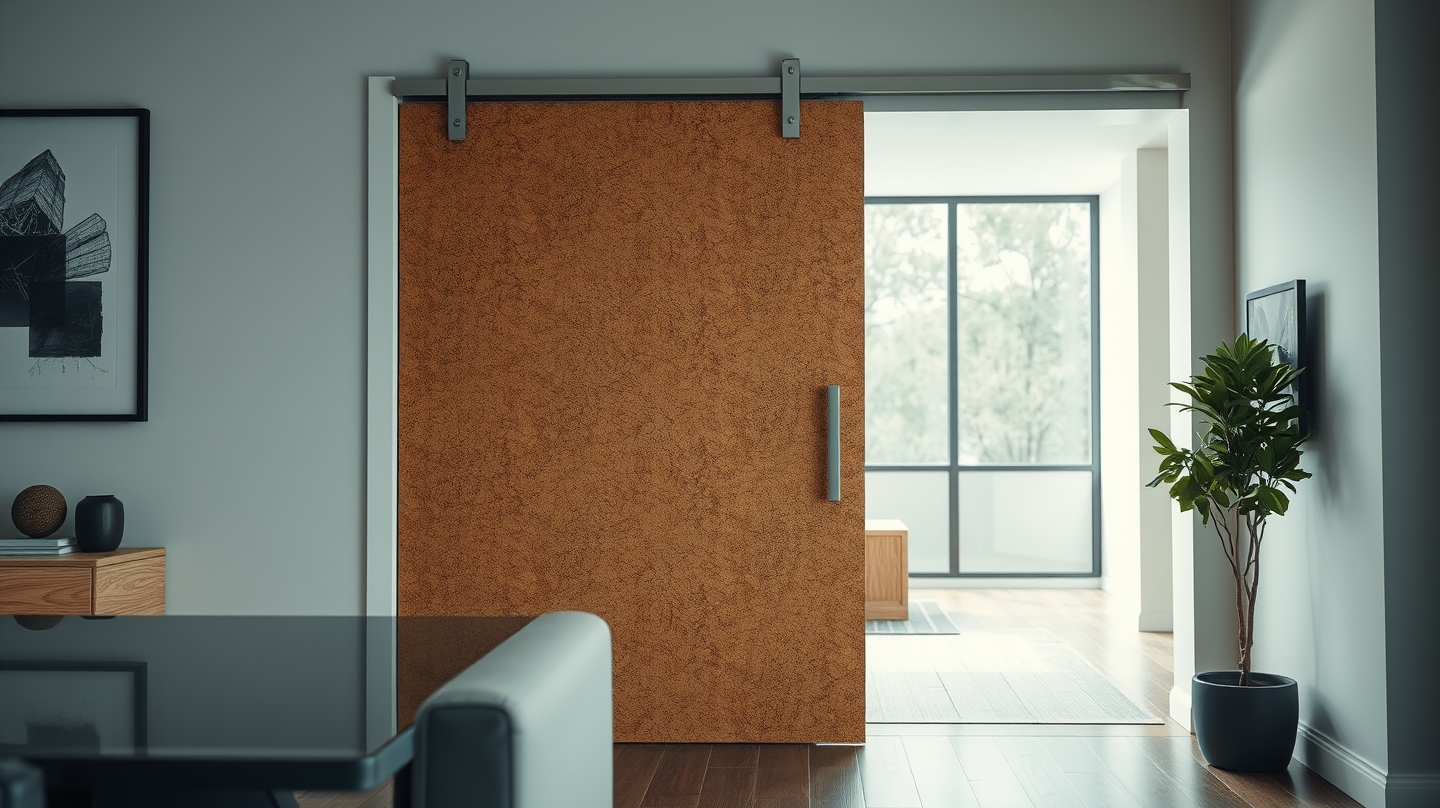
When city dwellers crave a breath of forest between concrete walls, designers turn to a surprisingly humble material: cork. The bark of the cork oak (Quercus suber) can be harvested without felling the tree, then engineered into panels that serve both aesthetic and structural purposes. In a recent project highlighted by ArchDaily, a Madrid residence extends its cork‑clad façade into the interior, using a sliding door that lets the kitchen merge with the living area or retreat behind a seamless natural texture.
This integration does more than please the eye. Cork’s inherent elasticity, thermal insulation, and acoustic dampening create a built‑in performance envelope, reducing reliance on separate HVAC or sound‑proofing systems. At the same time, advances in CNC cutting and robotic assembly have turned cork panel production into a highly automated workflow. Manufacturers now program precise nesting patterns that maximize material yield while preserving the tree’s regenerative cycle, a shift that mirrors broader automation trends in construction tech.
Why does this matter for the industry? First, the biophilic design movement—where built environments echo natural forms—has moved from niche to mainstream, driven by research linking greenery to occupant well‑being. Cork offers a ready‑made conduit for that connection, delivering texture, color, and scent without the maintenance of live plants. Second, the material’s lightweight yet load‑bearing properties enable architects to re‑think spatial configurations. In the Madrid home, the cork sliding door acts as a movable wall, allowing the floor plan to adapt to daily routines, a flexibility traditionally achieved only with costly movable partitions.
Automation deepens the impact. Digital twins of interior spaces now incorporate cork’s material library, letting designers simulate thermal performance, acoustic absorption, and even carbon sequestration before a single board is cut. This data‑driven approach shortens design cycles, cuts waste, and provides quantifiable sustainability metrics that clients increasingly demand. As a result, firms that adopt cork‑focused workflows gain a competitive edge, positioning themselves at the intersection of eco‑design and tech‑enabled efficiency.
Beyond the studio, the ripple effects touch supply chains and policy. The European Union’s recent push for circular economy standards includes incentives for cork‑based products, recognizing the material’s ability to store carbon and be fully recyclable. Manufacturers responding to these incentives are investing in robotic harvesting aids that gently strip bark, further reducing labor intensity and ensuring uniform panel thickness—a prerequisite for automated assembly lines.
Real‑world implications are already visible. Offices outfitted with cork flooring report a 15‑20% reduction in ambient noise levels, improving employee focus without additional acoustic tiles. Homeowners notice lower heating bills, as cork’s insulating layer stabilizes indoor temperatures. Moreover, the visual continuity between exterior cladding and interior finishes fosters a cohesive narrative that resonates with buyers seeking authenticity and sustainability.
Looking ahead, cork’s role may expand beyond walls and floors. Researchers are experimenting with cork‑infused composites for 3D‑printed furniture, while smart‑sensor integrations could monitor humidity and adjust ventilation in real time. Such convergence of material science, automation, and digital design underscores a broader market shift: the construction sector is moving from resource‑heavy, static building practices toward adaptable, low‑impact ecosystems.
For architects, developers, and tech providers, the lesson is clear. Embracing cork is not merely an aesthetic choice; it is an entry point into a workflow that leverages automation, data, and sustainability to deliver spaces that feel both modern and rooted in nature.