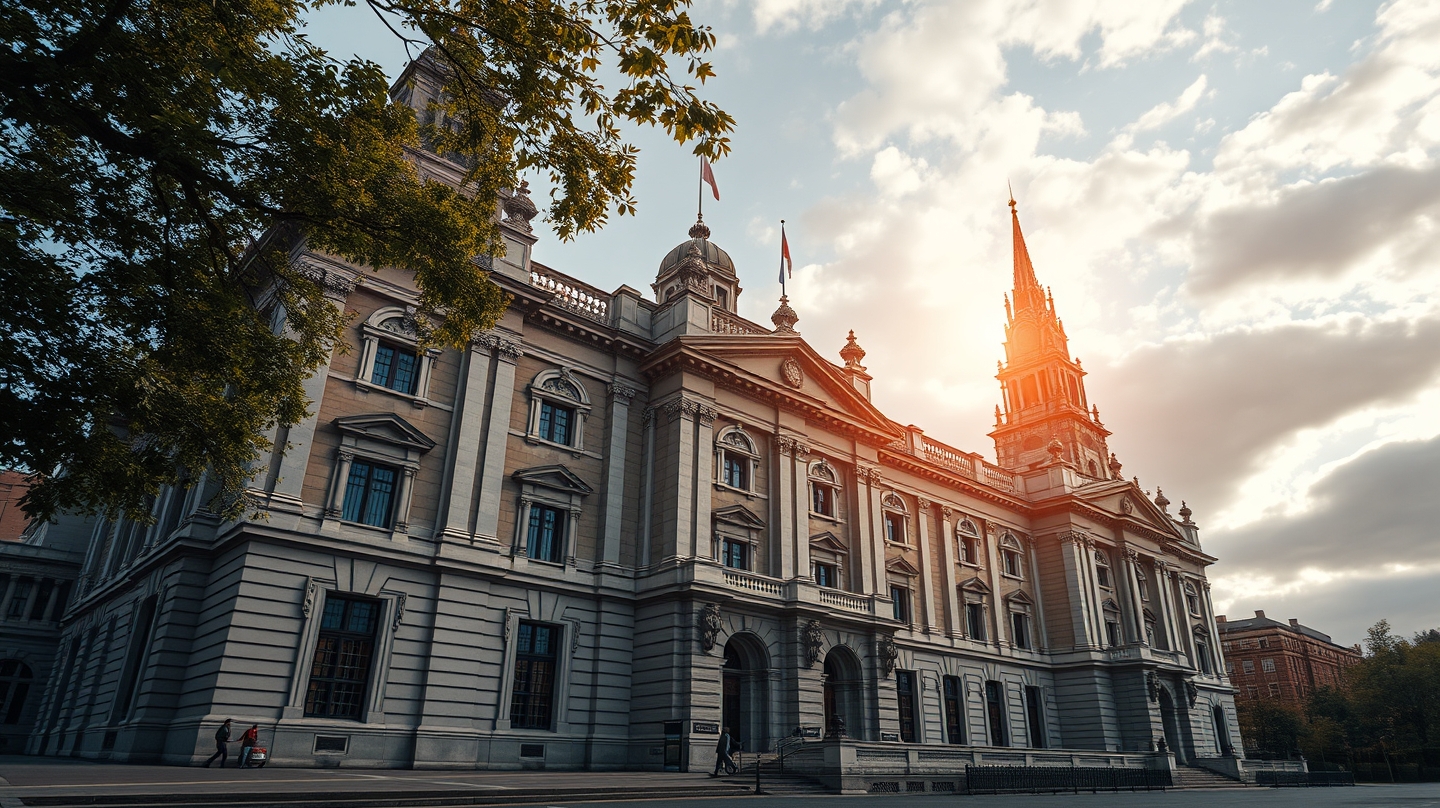
Walking through Birmingham, you can feel the tension between its industrial past and the sleek, data‑driven future that is already reshaping its skyline. The city’s Victorian grandeur, wartime scars, and brutalist experiments coexist with a quiet revolution: architects and planners are now using artificial intelligence, Building Information Modeling (BIM) and automated workflow platforms to preserve heritage while accelerating modern projects.
The story begins in the 19th century, when Birmingham’s factories funded the opulent neoclassical Town Hall and the Museum and Art Gallery that still dominate Chamberlain Square. Bombing in World War II erased swathes of the city, prompting a massive post‑war rebuild that introduced rational modernism and the bold brutalism of the 1950s‑70s. Decades later, the very same modernist structures—such as the original Library of Birmingham and the Bullring Centre—were demolished to make way for 21st‑century interventions.
What sets today’s redevelopment apart is not just the design language but the technology that underpins it. The new Library of Birmingham, designed by Dutch firm Mecanoo, was modeled after the city’s jewelry‑making heritage, but its construction relied heavily on BIM to coordinate complex geometries, material specifications and sustainability targets. BIM’s data‑rich models allow heritage consultants to simulate how new interventions will interact with existing stone façades, reducing costly on‑site adjustments.
Automation extends beyond design. The Birmingham City Council’s planning department now uses workflow automation platforms to route applications, flag heritage concerns and schedule public consultations. By automating routine checks, officials can focus on nuanced decisions—such as whether to retain the iconic up‑turned‑ziggurat of the former 1974 library or replace it with a glass‑clad pavilion. This shift mirrors a broader industry trend where digital tools compress project timelines without sacrificing regulatory rigor.
These technologies also influence the media infrastructure that covers the city’s architecture. Newsrooms employ AI‑driven transcription and content‑generation tools to produce real‑time reports on planning approvals, while augmented reality (AR) apps let residents visualize proposed changes on the streetscape. The result is a more informed public that can engage with redevelopment proposals before a single brick is laid.
Structurally, Birmingham’s built environment follows a cyclical pattern: industrial boom → wartime loss → modernist reconstruction → post‑modern erasure → tech‑enabled renewal. Each phase introduces a new layer of material and meaning, and today’s digital layer is arguably the most transparent. Data from sensors embedded in historic façades feed into city‑wide dashboards, alerting conservators to structural stress before cracks appear. This predictive maintenance model, powered by machine learning, could extend the lifespan of Victorian stonework that would otherwise require invasive restoration.
Real‑world implications are already visible. The renovation of the Rotunda, a 1960s landmark, used drone‑captured photogrammetry to create a 3D model that guided the installation of energy‑efficient glazing. Contractors reported a 15 % reduction in on‑site rework, translating into lower costs and fewer disruptions for nearby businesses. Similarly, Brindleyplace’s canalside revitalization leveraged automated scheduling software to coordinate bar owners, construction crews and heritage officers, keeping the area open throughout the project.
For Birmingham’s creative economy, the convergence of heritage and automation creates new skill demands. Architects must now be fluent in parametric design, while city planners need to understand data governance. Educational institutions are responding with curricula that blend architectural history with computational design, ensuring the next generation can steward both brick and byte.
In short, Birmingham’s architectural narrative is no longer written solely in stone; it is increasingly coded in algorithms. The city’s ability to blend its industrial legacy with cutting‑edge automation will determine how it balances preservation with growth, and how its residents experience the built environment in the decades to come.