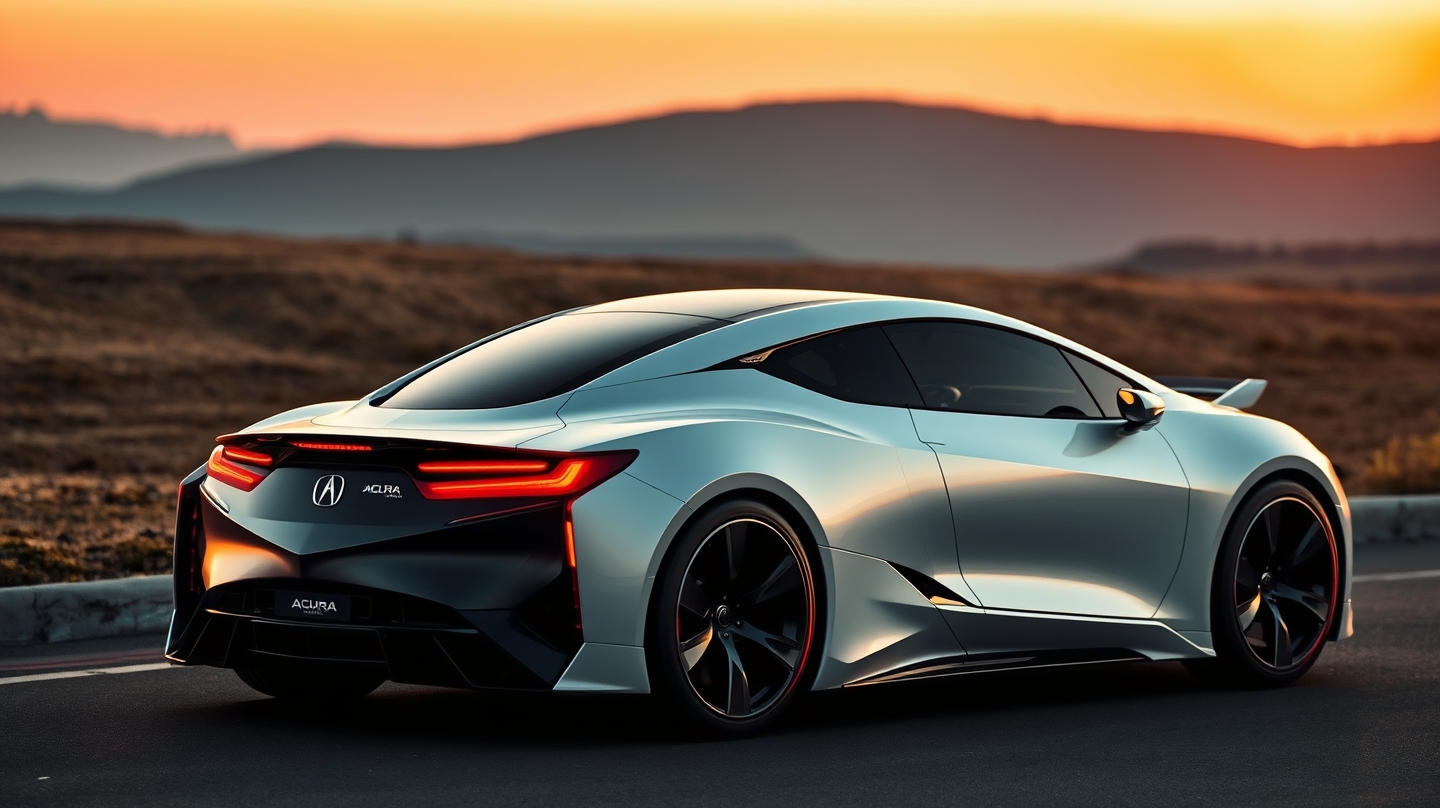
When Acura rolled out the Nexera Vision concept at Monterey Car Week, it did more than showcase a striking coupe—it offered a visual answer to a lineup gap left by the cancelled RSX electric SUV. The contrast between a sleek, carbon‑fiber‑accented silhouette and the brand’s recent production lull creates a tension that hints at a strategic pivot toward hybrid performance.
The Nexera Vision is a design study, not a production model, but its influence is already palpable. Chief Creative Director Yasutake Tsuchida, who took the helm in 2025, used the concept to codify a new design language that will debut on the 2028 RDX Hybrid. The language leans on a low‑slung body, matte titanium paint, and a series of aerodynamic cues—active rear spoiler, rear diffuser, and a pass‑through front hood—that together signal a shift toward efficiency‑focused performance.
Beyond aesthetics, the concept introduces “phantom lighting,” a system where LEDs disappear into the bodywork when turned off, leaving only a smooth surface. While the technology may remain years away from mass production, the visual language—two inward‑pointing LED lines forming an arrow that echoes Acura’s “A” logo—has already been mapped onto a hybrid SUV prototype shown earlier this year. That prototype is widely understood to be a preview of the next‑generation RDX, meaning the lighting cue could appear on production models as early as 2026.
Acura’s decision to reveal the Nexera Vision now also reflects broader industry trends. The automotive sector is accelerating the adoption of digital design automation, where 3D modeling, AI‑assisted surface generation, and rapid prototyping compress development cycles. By committing to a single, cohesive design language, Acura can streamline its workflow, reducing the need for multiple styling iterations across model years. This aligns with the technology‑driven automation narrative that is reshaping not only car manufacturing but also the media infrastructure that covers it.
For consumers, the immediate implication is a clearer expectation of what the upcoming RDX Hybrid will look like. The active rear spoiler and center‑lock 22‑inch wheels suggest a performance‑oriented stance, while the low seating position and driver‑focused cockpit hint at a more engaging driving experience. The concept’s interior, with a single curved display and integrated floor seats, signals a move toward minimalist cabins that prioritize digital interaction over traditional gauge clusters.
From a market perspective, the Nexera Vision helps Acura fill the void left by the RSX cancellation, restoring confidence among enthusiasts who feared a drift toward bland electrification. By anchoring the next RDX to a high‑performance visual identity, Acura positions itself to compete with rivals that have already blended hybrid powertrains with sporty design cues.
Strategically, the concept also serves as a testbed for future production technologies. The forged carbon‑fiber trim, matte anodized wheels, and the active aerodynamic elements are all components that can be introduced incrementally, allowing Acura to gauge supplier readiness and cost implications before committing to full‑scale manufacturing.
In sum, the Nexera Vision is more than a showpiece; it is a structural insight into how Acura plans to synchronize design, engineering, and digital workflow. The concept’s blend of futuristic lighting, aerodynamic efficiency, and driver‑centric interior points to a brand that is re‑aligning its identity around hybrid performance while leveraging automation to accelerate product development.