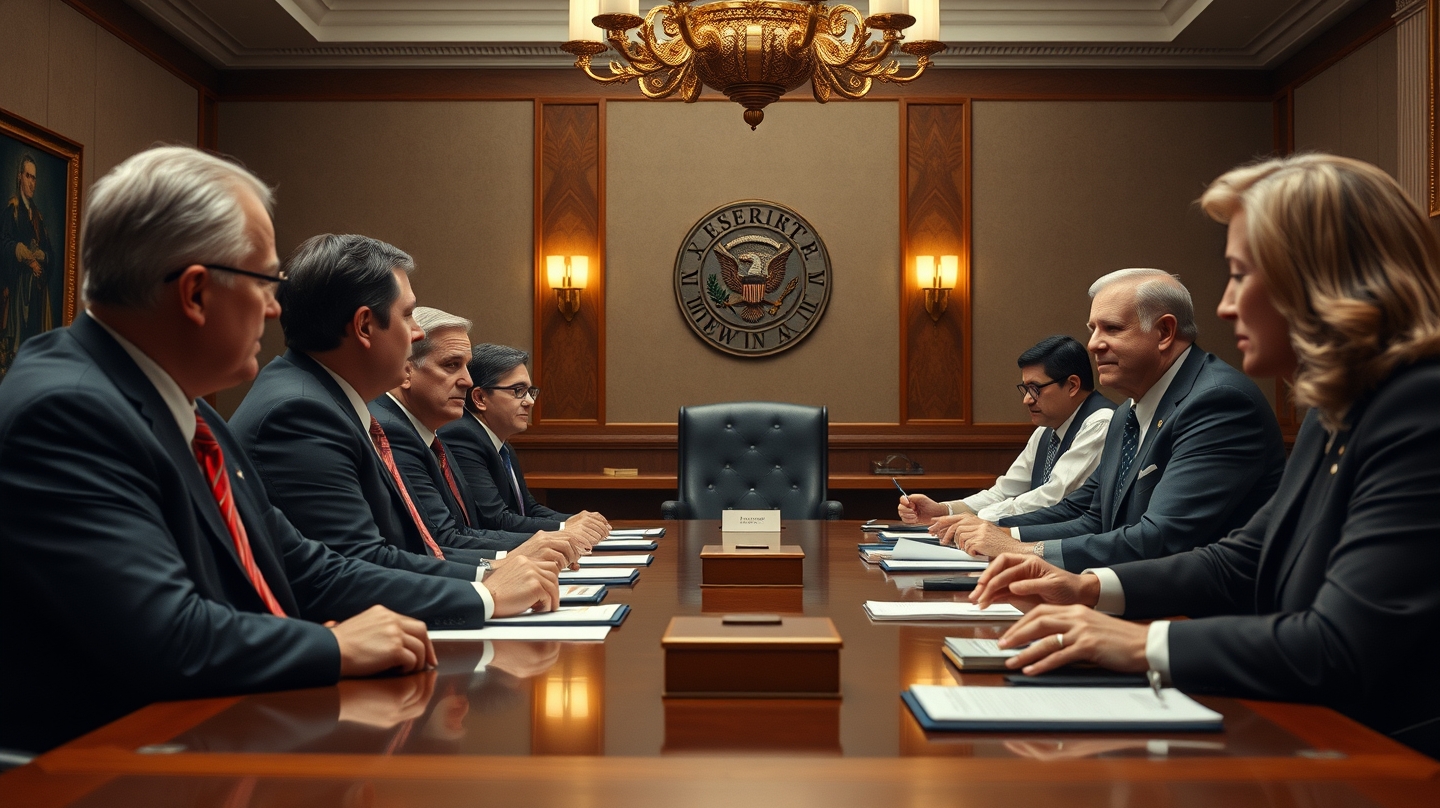
In a decision that surprised few but divided many, the Federal Reserve kept its target for the federal funds rate unchanged at 3.5%‑3.75% after a two‑day meeting, while three regional bank presidents pushed for a 0.25 percentage‑point increase. The 9‑3 vote, recorded on Wednesday, highlighted a growing split within the central bank over how aggressively to combat inflation while preserving the momentum of a still‑robust economy.
Federal Reserve Chair Kevin Warsh, speaking at his second press conference, described the debate as a "good family fight" and framed the dissent as a necessary check on policy direction. "Our North Star is price stability," Warsh said, adding that the Fed would adopt a more opaque communication style to let market signals speak directly to economic data.
The statement released by the Federal Open Market Committee (FOMC) noted that economic activity continues to grow at a solid pace, driven by productivity gains and capital investment, even as inflation remains above the 2% target. Supply shocks, particularly in energy markets amid the conflict in Iran, have kept price pressures elevated. Brent crude rose over 6% to breach $89 a barrel, underscoring the volatility that the Fed must navigate.
While the immediate headline is a steady rate, the underlying dynamics have broader implications for technology‑driven automation and workflow transformation across industries. Companies that rely on capital‑intensive automation—ranging from construction firms adopting robotics to media outlets upgrading to cloud‑based production pipelines—watch Fed policy closely because borrowing costs directly affect investment cycles.
For the media sector, the dissent signals potential caution in financing large‑scale infrastructure upgrades. Automation‑driven media platforms, which increasingly depend on high‑speed data centers and AI‑powered content tools, may encounter tighter credit conditions if future FOMC meetings tilt toward rate hikes. This could slow the rollout of next‑generation broadcasting equipment and delay the adoption of automated workflow solutions that promise efficiency gains.
Conversely, the Fed’s decision to stay put may provide a short‑term window for firms to lock in financing before any upward shift. The “unfiltered” market signal Warsh referenced—letting data drive policy—could translate into more volatile short‑term bond yields, offering savvy technology investors opportunities to secure lower‑cost capital for automation projects.
The split vote also offers a structural insight into the Fed’s internal calculus. The dissenting presidents—Neel Kashkari of Minneapolis, Beth M. Hammack of Cleveland, and Lorie K. Logan of Dallas—argued that a modest hike would better anchor inflation expectations, while the majority emphasized the need to avoid choking the economy’s productive capacity. This tension mirrors a broader market debate: balancing price stability against the financing needs of sectors that are increasingly digitized and automated.
Beyond the immediate financial markets, the decision reverberates through sectors like professional sports, where franchises such as the NFL negotiate massive stadium financing packages. Higher rates could increase the cost of bonds used to fund new venues, indirectly influencing the pace at which teams adopt advanced analytics and automated fan‑engagement platforms.
In sum, the Fed’s steady stance does not signal a pause in policy evolution. Instead, the dissent highlights a nuanced view of how monetary policy intersects with technology adoption, especially in automation‑heavy industries. Stakeholders—from construction firms integrating robotics to media companies building AI‑driven pipelines—must monitor upcoming FOMC minutes for clues about the central bank’s tolerance for rate adjustments and the resulting ripple effects on capital availability.