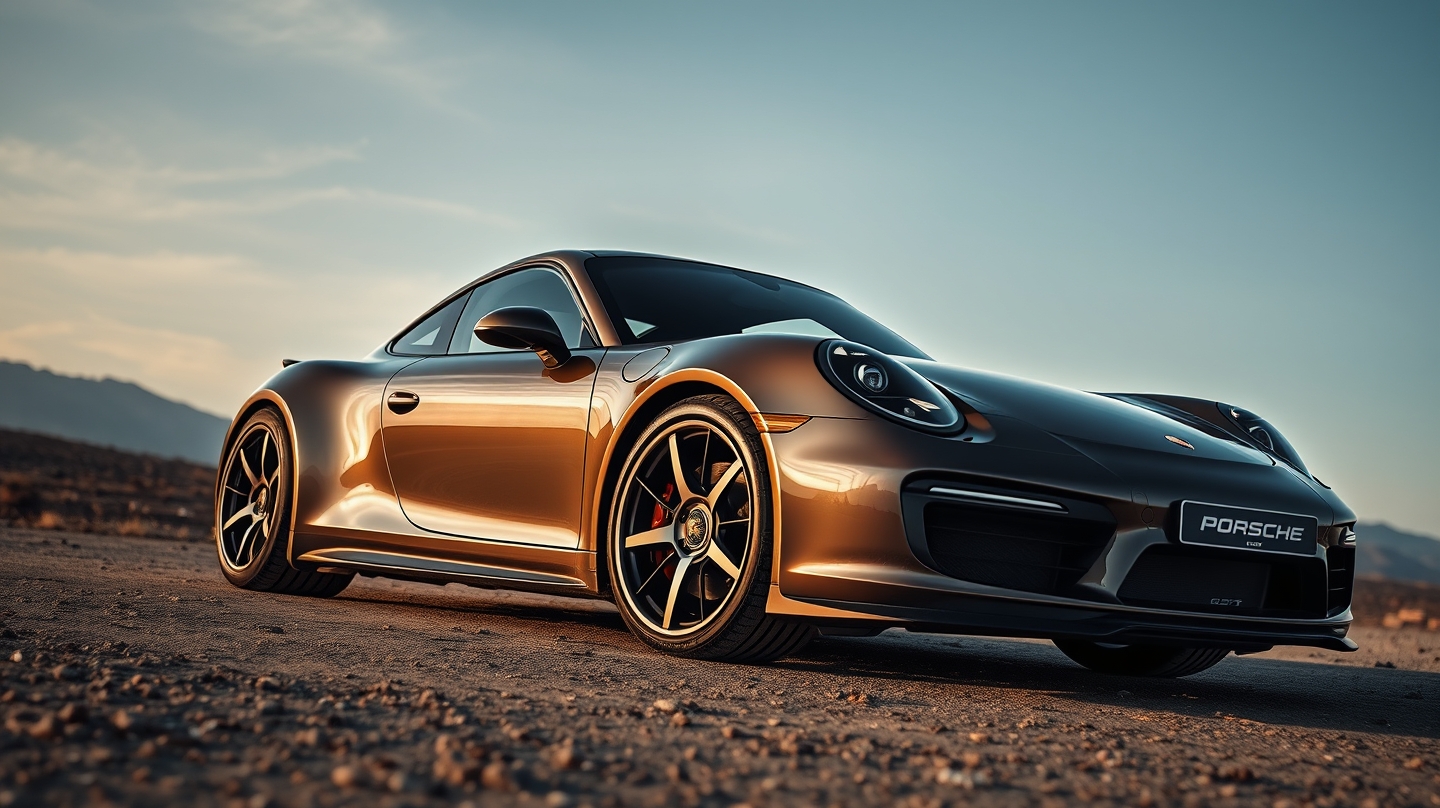
Porsche, the renowned luxury car manufacturer, is facing a significant challenge in the market. After achieving a record sales figure of 320,221 cars globally in 2023, the company has been struggling to maintain its sales momentum. The sales have taken a sharp nosedive in China, and globally, Porsche's sales fell to 279,449 units in 2025. This decline has prompted the company to reassess its production strategy.
Speaking to the German newspaper Frankfurter Allgemeine Zeitung, Porsche CEO Michael Leiters announced that the company is planning to reduce its production capacity to better align with the falling demand. This move is aimed at increasing profits, even if it means selling fewer cars. Leiters emphasized that Porsche needs to find a way to maintain high profits, despite the decline in sales.
The decision to reduce production capacity is also driven by the need to rein in spending, which has "spiraled out of control" in recent years, according to Leiters. By focusing on producing cars with higher margins, such as special edition models, Porsche aims to generate higher profits. This strategy is expected to involve the introduction of new flagship models, positioned above the 911 and Cayenne lineups, as well as the reintroduction of the 718 lineup in both Boxster and Cayman forms.
The company's shift in strategy is also influenced by the changing market dynamics, particularly the increasing demand for electric vehicles. Porsche's about-face on its electrification effort has resulted in a re-examination of its lineup, including the planned three-row SUV codenamed K1. Although the future of the K1 is uncertain, the company remains committed to expanding its electric vehicle offerings.
The implications of Porsche's new strategy are far-reaching. By reducing production capacity and focusing on high-margin vehicles, the company is taking a calculated risk to maintain its profitability. This move may also have a ripple effect on the entire automotive industry, as other manufacturers may be forced to reassess their own production strategies. As the industry continues to evolve, with technology-driven automation and workflow transformation playing a significant role, companies like Porsche must adapt to stay competitive.
In conclusion, Porsche's decision to reduce production capacity and focus on high-margin vehicles is a bold move, driven by the need to maintain profitability amidst declining sales. As the company navigates this challenging landscape, it is essential to consider the broader implications of this strategy, including its impact on the automotive industry and the role of technology in shaping the future of car manufacturing.