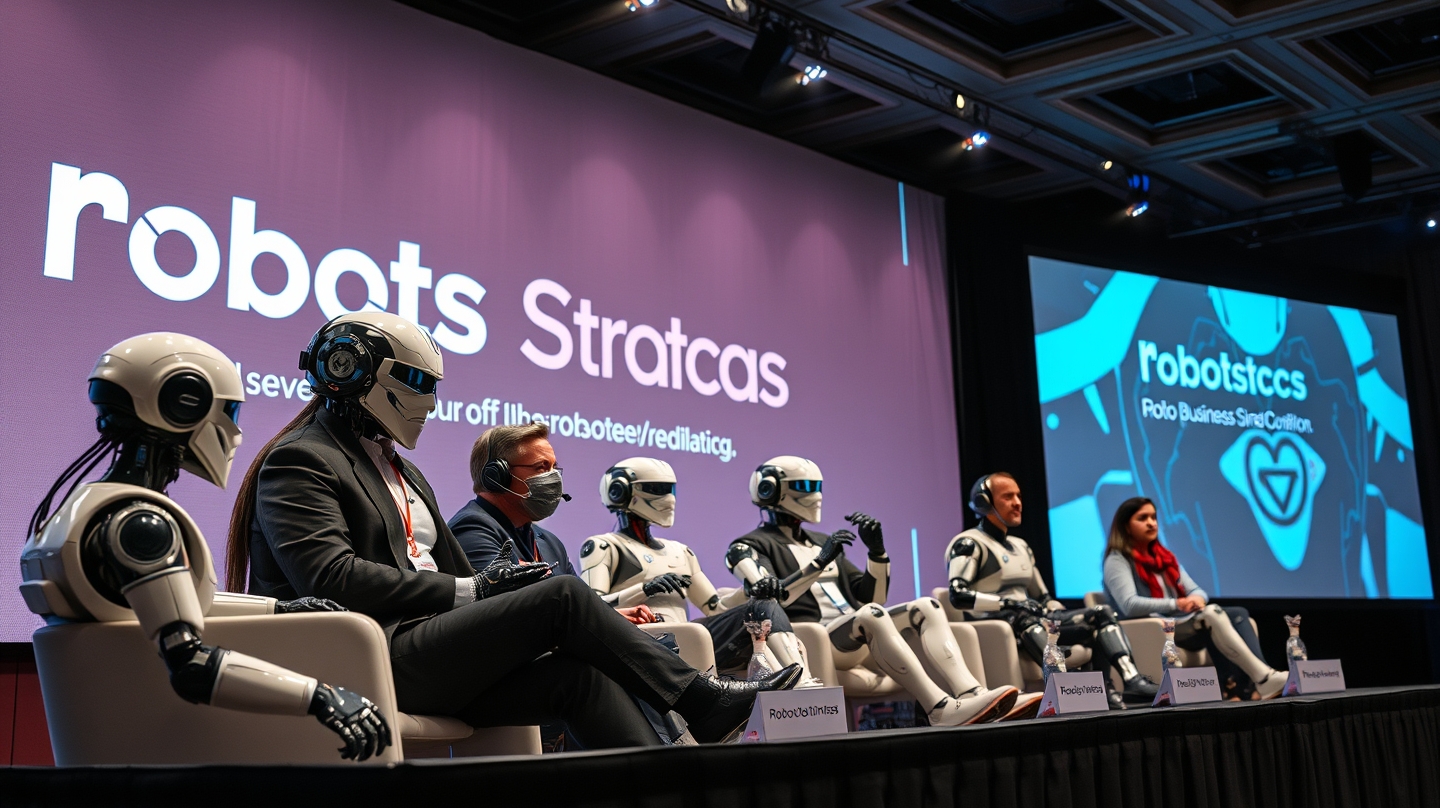
When the lights rose on the opening session of RoboBusiness 2026 in Santa Clara, the audience heard a familiar tension: the promise of robotics that once seemed futuristic is now a daily operational tool, yet the next wave of adoption still feels uncertain.
The two‑day conference, held Oct. 20‑21, marks the event’s 20th anniversary and gathers the most influential voices in commercial robotics. Moderated by Steve Crowe, executive editor of The Robot Report, the keynote featured Rodney Brooks (co‑founder of Robust.AI), Jonathan Hurst (co‑founder of Agility Robotics), and Ken Goldberg (William S. Floyd Jr. Distinguished Chair at UC Berkeley). Their combined experience spans academia, defense contracts, consumer products, and cutting‑edge research labs.
Brooks, a veteran of Stanford and MIT who helped launch the first mobile robots that moved among people, now leads Robust.AI’s deployment of intelligent, human‑centered carts in fulfillment centers. Hurst, a professor at Oregon State University and the mind behind Agility’s Digit, described “physical AI” that blends compliance, dexterity, and animal‑like locomotion to let robots manipulate objects and navigate cluttered spaces. Goldberg, who directs Berkeley’s AUTOLab and the CITRIS People and Robots Initiative, highlighted interdisciplinary work that merges engineering, art, and medical imaging to make robots safer collaborators.
The panel converged on three technology‑driven trends that will shape the next twenty years. First, robots are moving from isolated, fixed stations to mobile platforms that act as flexible workcells, a shift Brooks called the “cart‑as‑a‑service” model. Second, advances in tactile sensing and adaptive control are enabling robots to handle delicate items—a capability essential for agriculture, healthcare, and media production where precision matters. Third, the integration of AI‑generated content pipelines with physical robots is beginning to automate parts of the media workflow, from camera rigs that track subjects to robotic arms that load and unload broadcast equipment.
Why does this matter? Companies that adopt these mobile, perception‑rich systems can redesign factories and warehouses without the massive capital outlay required for static automation lines. The result is a more responsive supply chain that can scale up or down with seasonal demand, a critical advantage as global logistics face volatility.
Beyond logistics, the implications ripple through sectors that have been slower to automate. In agriculture, compliant robots can harvest crops without bruising produce, reducing waste and labor costs. In hospitals, autonomous carts can transport medication and specimens, freeing staff for patient care. Even newsrooms stand to benefit: robotic camera platforms equipped with AI vision can capture live events with minimal crew, lowering production budgets while maintaining quality.
A structural insight emerging from the discussion is the emergence of a “middle‑layer” of automation. Historically, firms chose between fixed industrial robots (high throughput, low flexibility) and fully autonomous mobile fleets (high complexity, high cost). The new cart‑based systems sit between these poles, offering the flexibility of mobile units with the reliability of fixed stations, and they can be retrofitted into existing facilities without major redesign.
Real‑world examples already illustrate the shift. Retail giant XYZ Logistics reported a 12% increase in order‑fulfillment speed after integrating Robust.AI carts that autonomously navigate aisles while collaborating with human pickers. Agility Robotics’ Digit is now operating in a major parcel‑sorting hub, handling packages that vary in size and weight—a task that previously required multiple specialized machines.
Looking ahead, the speakers agreed that the next two decades will be defined not just by more robots, but by how seamlessly those robots integrate into human‑centric workflows. The challenge will be to balance safety, ethics, and economic incentives as robots become co‑workers rather than tools.
RoboBusiness 2026 therefore serves as both a checkpoint and a launchpad: a reminder of how far the field has traveled and a roadmap for the industry transformation that lies ahead.