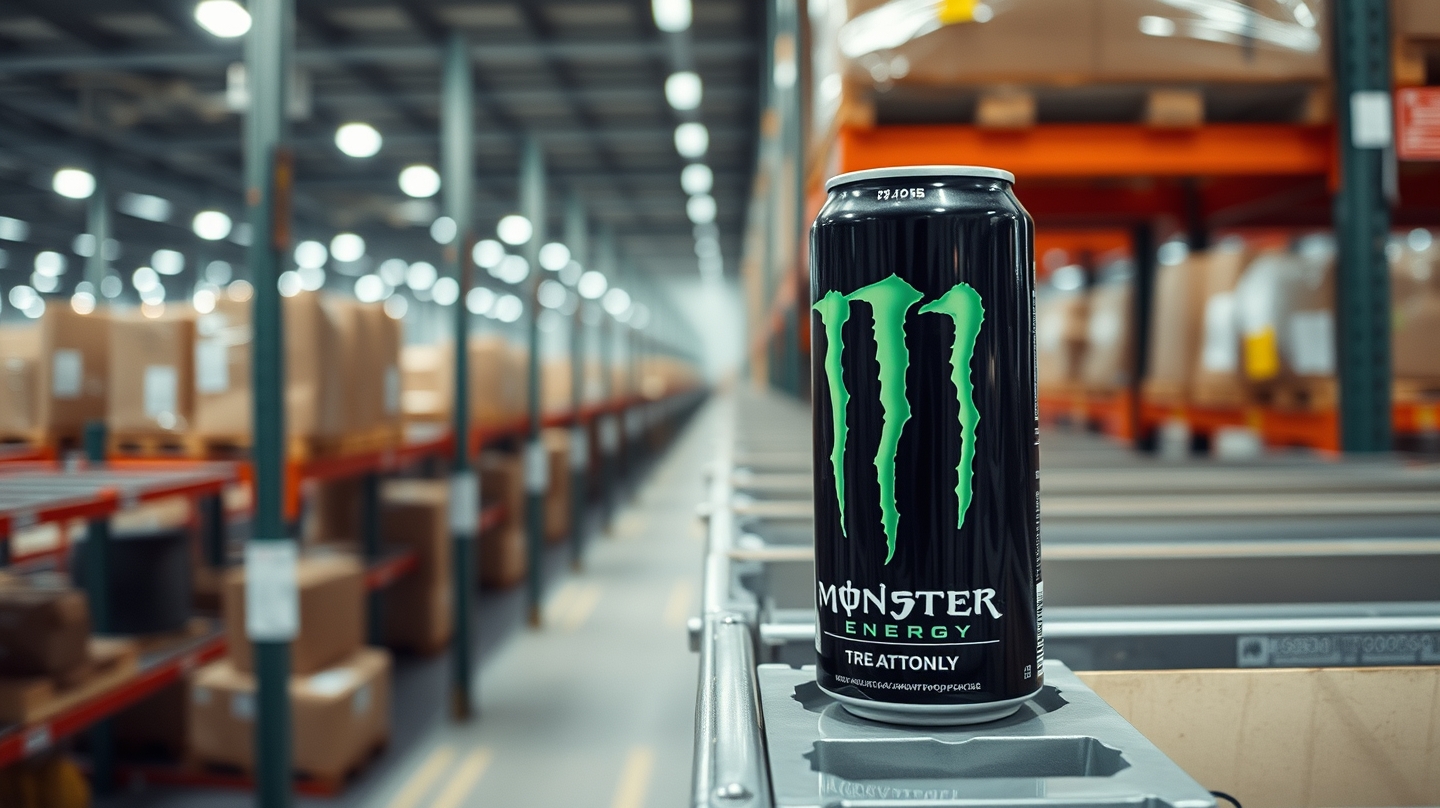
When headlines trumpet artificial‑intelligence breakthroughs and semiconductor rallies, most investors assume the biggest wealth generators live in silicon. Yet a closer look at the market’s under‑the‑radar performers reveals a startling contrast: Monster Beverage (NASDAQ: MNST), the maker of the iconic Monster Energy drink, has compounded a $10,000 stake made in early 2003 into more than $21 million by August 2026 – a gain of roughly 210,000%.
The meteoric rise did not follow a straight line. Charting platform TrendSpider shows Monster’s share price weathering three major market downturns – the 2008 financial crisis, the pandemic‑induced sell‑off of 2020, and the broader correction of 2022 – before resuming its ascent. This resilience stems from a blend of brand‑driven demand and technology‑enabled distribution. In 2015, Monster struck a partnership with Coca‑Cola, granting the energy drink access to Coca‑Cola’s global logistics network and sophisticated demand‑forecasting algorithms. The minority stake taken by Coca‑Cola also injected capital that funded automation upgrades across Monster’s bottling and warehousing operations.
Automation has become a silent engine of Monster’s growth. By deploying robotic palletizers, AI‑based inventory management, and real‑time sales analytics, the company trimmed lead times and reduced stock‑outs in key markets. International revenue, which accounted for 46% of total sales in Q2 2026, surged 34.6% year‑over‑year to $1.16 billion, underscoring how a tech‑infused supply chain can unlock new geographies faster than traditional beverage rivals.
Financially, the numbers reinforce the narrative. Monster reported $8.29 billion in revenue for 2025, and in the second quarter of 2026 net sales rose 20.2% to $2.54 billion, driven by strong demand for zero‑sugar variants. Gross margins hovered near 56%, while earnings continued to post double‑digit growth, a rarity for a consumer‑goods firm of its size.
Why does this matter for investors and the broader market? First, it challenges the prevailing bias that outsized returns belong exclusively to tech. Second, Monster’s success illustrates how legacy sectors can harness automation and data‑driven logistics to achieve growth rates once thought reserved for software. Third, the case signals a shift in capital allocation: diversified portfolios that include high‑margin consumer brands with modernized operations may outperform pure‑play tech funds during periods of market volatility.
From a structural perspective, Monster’s trajectory highlights a feedback loop between brand equity and operational technology. Strong branding fuels demand; advanced distribution technology meets that demand efficiently; the resulting sales momentum funds further tech investments, reinforcing the cycle. This loop mirrors trends in the creator economy, where platforms combine community appeal with algorithmic recommendation engines to scale revenue.
Real‑world implications are already visible. Beverage distributors are accelerating the rollout of automated loading bays to keep pace with Monster’s speed to market. Meanwhile, rival energy‑drink makers are courting tech partners to replicate Coca‑Cola’s logistics playbook, hoping to capture a slice of the 34% international growth rate Monster posted last year.
For the average investor, the lesson is clear: evaluating a company’s technology adoption – even in a non‑tech sector – can be as decisive as assessing its product lineup. As automation reshapes supply chains across industries, the line between “tech” and “non‑tech” stocks blurs, and performance histories like Monster’s become a roadmap for future winners.