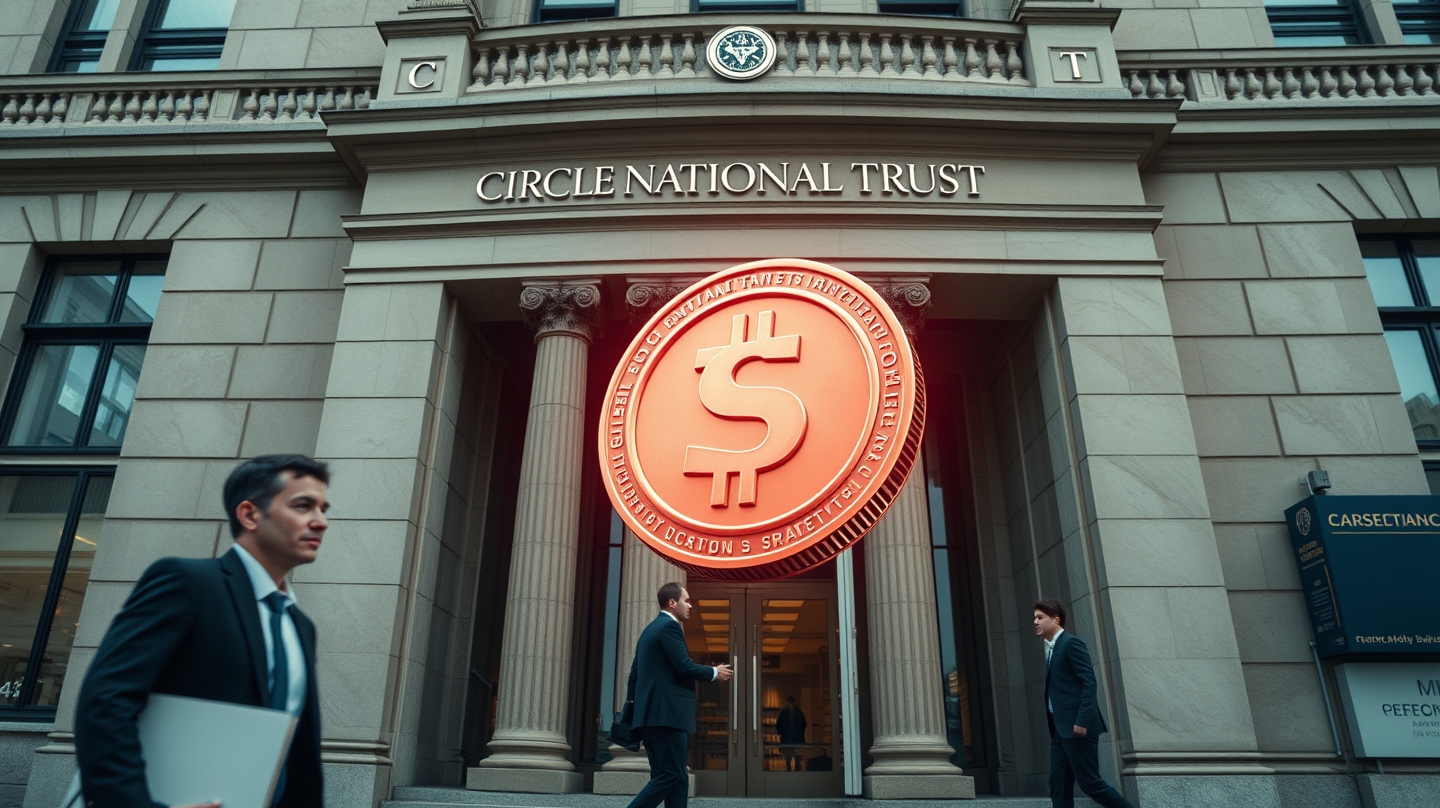
Circle Internet Group’s shares leapt nearly 15% in early Friday trading, snapping a weeks‑long slide that saw the stock tumble from a 52‑week high of $263 to under $65. The catalyst? A final green light from the Office of the Comptroller of the Currency (OCC) to launch Circle National Trust, a federally chartered national trust bank. The approval arrives at a moment when the company’s core product, the USD‑backed stablecoin USDC, faced a direct challenge from the newly announced Open USD stablecoin backed by Visa and Coinbase.
The OCC decision upgrades Circle’s earlier conditional approval from December 2025 to a full charter, allowing the firm to hold and manage digital assets under the same regulatory umbrella as traditional banks. In practice, Circle will now custody its own digital assets, including the USDC reserve, within a federally supervised framework. This move aligns the stablecoin’s reserve management with the GENIUS Act, the 2025 legislation that set nationwide standards for stablecoin transparency and governance.
Why does this matter to investors and the broader market? First, federal oversight reduces the perceived regulatory risk that has kept many institutional players on the sidelines. With a national trust bank, Circle can offer banks, asset managers, and corporate treasuries a compliant conduit for large‑scale USDC transactions. Second, the charter signals to the market that regulators are willing to integrate crypto‑native firms into the traditional financial system, potentially accelerating institutional adoption of digital dollars.
Wall Street analysts have already reflected this optimism. The consensus rating remains a “Buy,” with a 12‑month price target of $134—well above the current $72 pre‑market level. The jump added roughly $2 billion to Circle’s market value in minutes, a figure that underscores how tightly investors tie stock performance to regulatory milestones.
Institutional impact is already visible. ARK Invest, led by Cathie Wood, increased its stake in Circle by buying roughly 218,000 shares worth $13.7 million the day before the OCC announcement. The move follows a broader trend of crypto‑focused funds positioning themselves ahead of regulatory clarity, a strategy that has paid off for firms like Ripple and Fidelity, which received similar conditional approvals in late 2025.
Beyond the balance sheet, the charter could reshape the workflow of digital‑asset custody. By moving USDC reserve management into a regulated trust, Circle automates compliance reporting, audit trails, and capital adequacy calculations—processes traditionally handled by legacy banks. This technology‑driven automation not only lowers operational costs but also creates a template for other crypto firms seeking similar charters.
Real‑world implications are already emerging. Several NBA franchises have piloted USDC for ticketing and merchandise payments, citing the stablecoin’s speed and low transaction fees. With Circle’s new trust bank, those pilots could scale to league‑wide adoption, offering fans a seamless crypto payment experience while providing teams with instant settlement and reduced fraud risk.
Nevertheless, the rally is not without caution. Pre‑market gains often evaporate once the regular session opens, and the broader crypto market remains volatile. Investors should watch how traditional banks respond—many have announced plans to hold USDC on their balance sheets, a shift that could further validate the stablecoin’s role as a bridge between fiat and digital finance.
In sum, Circle’s stock surge reflects a confluence of regulatory endorsement, institutional buying, and a strategic response to competitive pressure. The OCC charter not only restores confidence after the Open USD scare but also sets a structural precedent for how crypto firms can embed themselves within the U.S. banking system. As more institutions test the waters, the ripple effect could extend from Wall Street to sports arenas, redefining how digital dollars are used in everyday transactions.