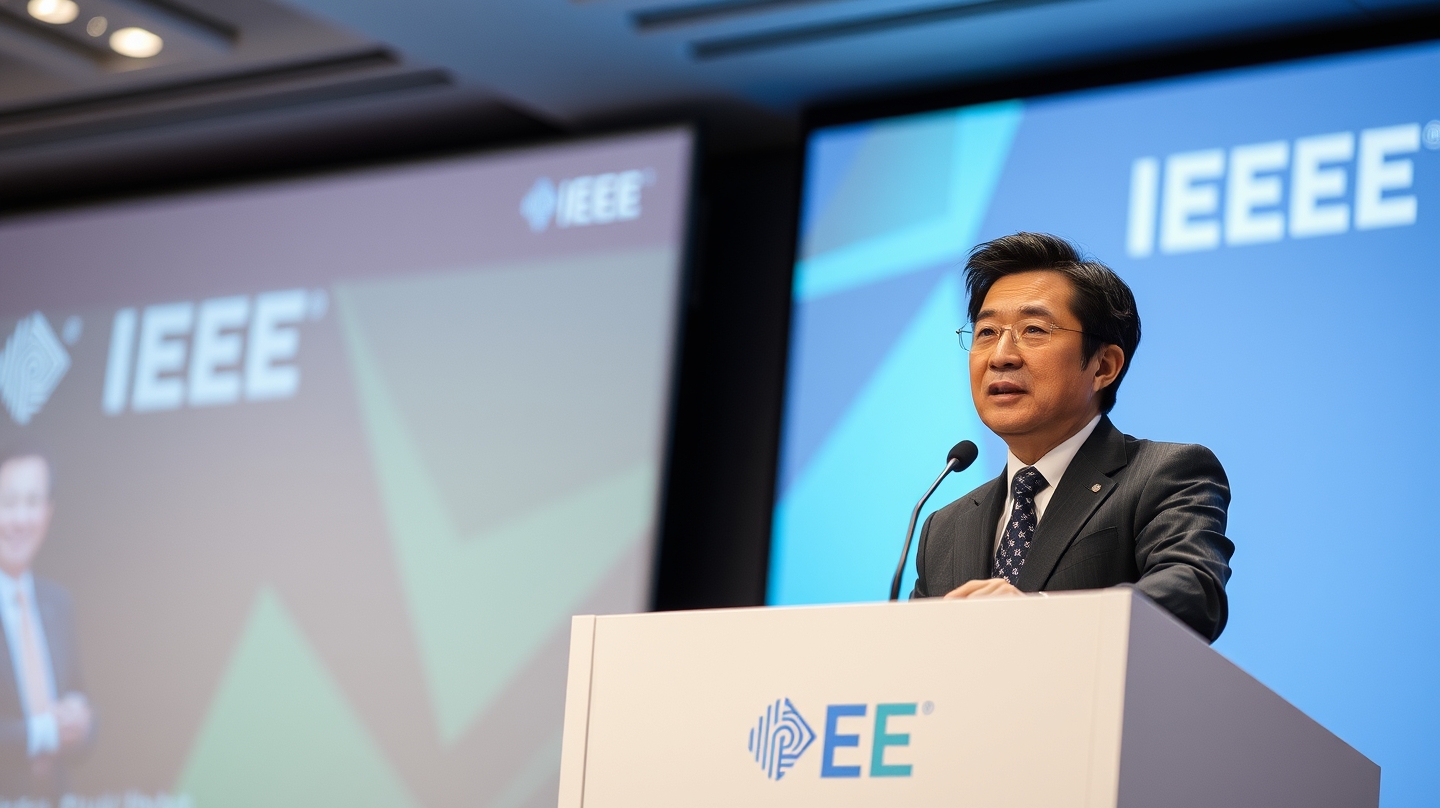
When the Institute of Electrical and Electronics Engineers announced its 2024 Richard M. Emberson Award for distinguished service, the name on the citation sparked a quiet ripple across labs, factories, and even sports stadiums: Toshio Fukuda. The honor arrives just as the technologies he helped pioneer—AI‑driven robots, micro‑nano systems, and collaborative automation—are moving from research papers into the daily flow of production lines and live broadcasts.
Fukuda’s résumé reads like a roadmap of modern robotics. With more than 2,000 peer‑reviewed papers and several foundational textbooks, he has authored the scientific underpinnings of biomedical robotic assistants, high‑speed industrial arms, and the micro‑nano manipulators that now enable precision surgery. In 1988 he co‑founded the IEEE/RSJ International Conference on Intelligent Robots and Systems (IROS), a forum that still draws thousands of engineers each year and sets the agenda for emerging standards.
Beyond academia, Fukuda’s influence extends to policy and industry. As IEEE president in 2020—the first person of Asian descent to hold the role—he steered the organization’s global outreach toward responsible AI and safety‑critical automation. His tenure as program director of Japan’s ambitious Moonshot Initiative placed him at the helm of a national effort to field advanced AI robots by 2050, a goal that now informs corporate roadmaps worldwide.
The recent Emberson Award underscores why his work matters now more than ever. Manufacturing plants across Southeast Asia and Europe are replacing legacy equipment with collaborative robots (cobots) that can learn tasks on the fly, a shift directly traceable to Fukuda’s research on adaptive control. In the media sector, the National Football League (NFL) has rolled out autonomous camera systems that track player movement without human operators, reducing production costs and delivering new angles for fans. Those systems rely on the same perception algorithms and real‑time decision frameworks pioneered in Fukuda’s labs.
Fukuda’s current role as vice‑president of research at the Egypt‑Japan University of Science and Technology illustrates another layer of impact: cross‑border knowledge transfer. By nurturing a new generation of engineers in Alexandria, he is seeding expertise that will fuel regional automation adoption, from smart agriculture to renewable‑energy grid management.
What does this convergence mean for industry? First, the speed of technology adoption is accelerating. Companies that once waited years for a robotic solution now integrate AI‑driven units within months, reshaping supply‑chain timelines. Second, the boundary between physical automation and digital media is blurring. Autonomous camera rigs, drone‑based reporting, and AI‑generated highlights are becoming standard in live sports, echoing the broader trend of automation‑driven media infrastructure.
Looking ahead, the structural insight is clear: leadership that bridges standards bodies, academia, and government—exemplified by Fukuda’s career—creates the feedback loops necessary for rapid, safe deployment of robotics. As IEEE continues to codify safety protocols and interoperability guidelines, the industry can expect fewer silos and more plug‑and‑play solutions.
For workers and consumers alike, the ripple effect is tangible. Factory operators are transitioning to supervisory roles, monitoring cobots that handle repetitive tasks. Viewers of NFL games enjoy smoother, more immersive coverage without the latency of manual camera switches. And students in Alexandria gain access to cutting‑edge research that prepares them for a job market increasingly defined by automation.
Fukuda’s honors are not just ceremonial; they signal a watershed moment where decades of robotic research are finally manifesting in everyday workflows. As the technology matures, the next chapter will likely involve tighter integration of AI, robotics, and media—an ecosystem that owes much of its foundation to the scholar who spent a career turning speculative concepts into operational reality.