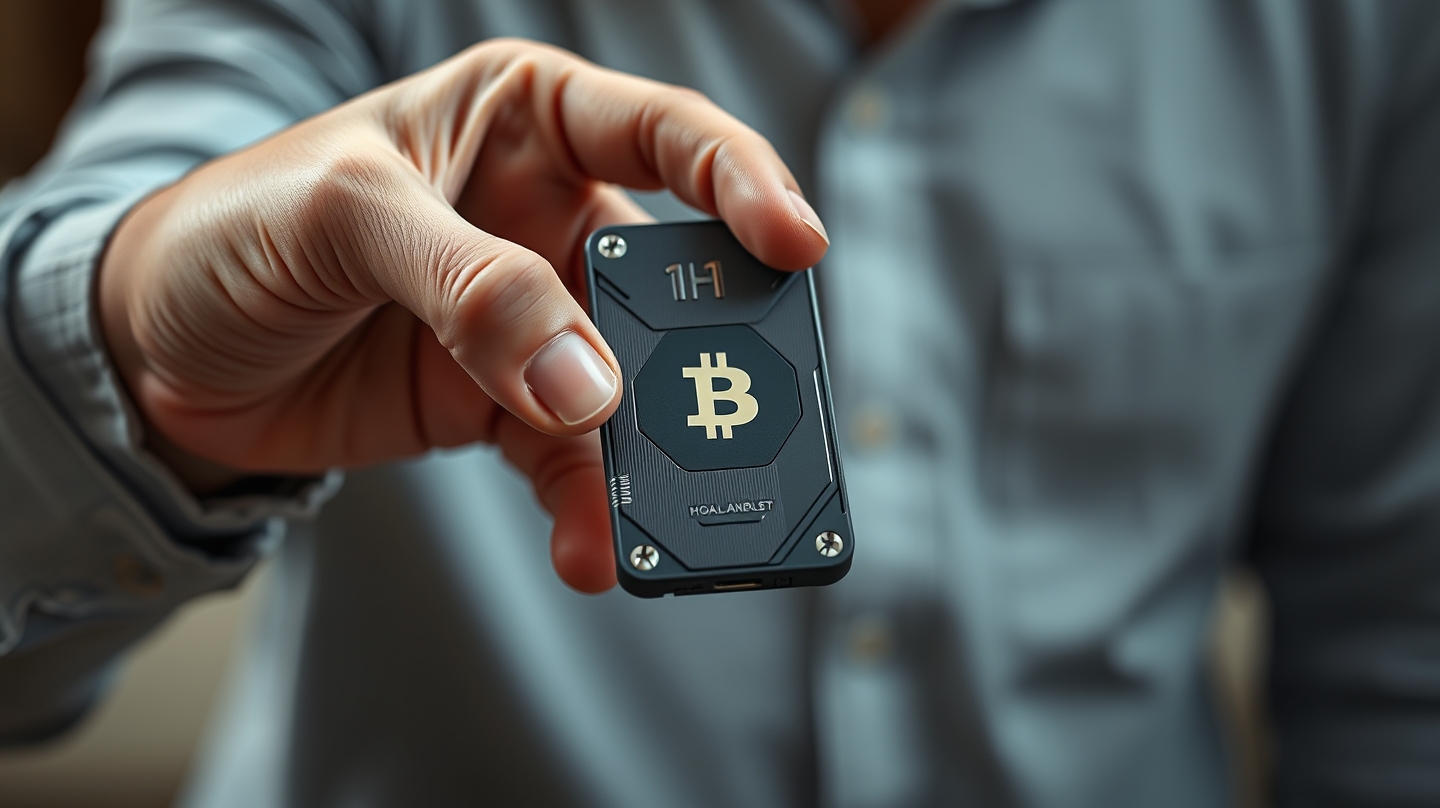
In the first half of 2026, Russian consumers bought roughly twice as many hardware cryptocurrency wallets as they did a year earlier, according to sales data from two of the country’s biggest online retailers. The surge arrives just weeks before a sweeping crypto‑regulatory framework is set to take effect on September 1, a timeline that has sparked speculation but, intriguingly, no retailer has pinpointed a single catalyst for the heightened interest.
Retail giant M.Video reported that unit sales of hardware wallets on its marketplace rose 107 % in the second quarter compared with the first quarter, while the value of those sales climbed 92 %. The company did not disclose absolute numbers, but the percentage jump signals a rapid shift in consumer behavior. Wildberries, Russia’s leading e‑commerce platform, posted an 84 % year‑on‑year increase in hardware‑wallet units sold during the first half of the year, with sales value up 60 %. The average price of a wallet on Wildberries fell 13 % to 7,900 ruble, suggesting that lower‑priced models are helping to broaden the market.
Hardware wallets store private keys on a dedicated, offline device, reducing exposure to online hacks. Russian law does not criminalise non‑custodial wallets, and they remain legal under current statutes. However, the upcoming regulations will forbid direct withdrawals from Russian digital depositories to personal wallets after a transition period ending on July 1, 2027. Post‑transition, all crypto transactions must be routed through regulated exchanges or depositories, and banks will be required to block any activity that bypasses this framework.
The pending rules also introduce a 300,000‑ruble annual cap for retail investors buying liquid cryptocurrencies through intermediaries, while still prohibiting the use of domestic crypto for payments. This hybrid approach—allowing limited retail participation but tightly controlling the flow of funds—creates a paradoxical environment where self‑custody tools like hardware wallets become both more attractive and more constrained.
Analysts see the sales spike as a pre‑emptive move by risk‑averse users who anticipate tighter controls. By securing their assets offline now, they can sidestep future compliance hurdles and preserve access to their holdings regardless of how the regulated ecosystem evolves. The trend also reflects a broader global pattern: as governments tighten on‑ramp and off‑ramp mechanisms, users increasingly turn to self‑custody solutions to retain autonomy.
Nevertheless, hardware wallets are not a panacea. They carry technical risks, as highlighted by a recent firmware flaw disclosed by security firm Coinkite on July 30. The vulnerability in the Coldcard device’s seed‑generation process was estimated to have exposed over $116 million in crypto assets worldwide. While the issue was patched quickly, it underscores that offline storage still demands diligent security practices.
From a market perspective, the rapid growth in hardware‑wallet demand could influence the strategies of Russian crypto exchanges and financial institutions. Exchanges may need to accommodate a larger base of users who already hold assets offline, potentially reshaping onboarding processes and KYC requirements. Meanwhile, the banking sector, tasked with enforcing the new withdrawal bans, might see a shift in transaction volumes as users migrate funds to self‑custody before the July 2027 deadline.
Looking ahead, the September regulatory rollout will test the resilience of Russia’s nascent crypto ecosystem. If the cap on retail purchases proves restrictive, we could see a migration toward alternative assets or cross‑border platforms that fall outside the domestic regulatory net. Conversely, a smooth transition could legitimize crypto as a modest but regulated component of the Russian financial landscape, with hardware wallets serving as a bridge between personal freedom and state oversight.
For investors, policymakers, and everyday users, the current sales data offers a concrete indicator of how regulatory uncertainty translates into consumer action. It also highlights the importance of balancing security—both technical and legal—when navigating an environment where the rules are still being written.